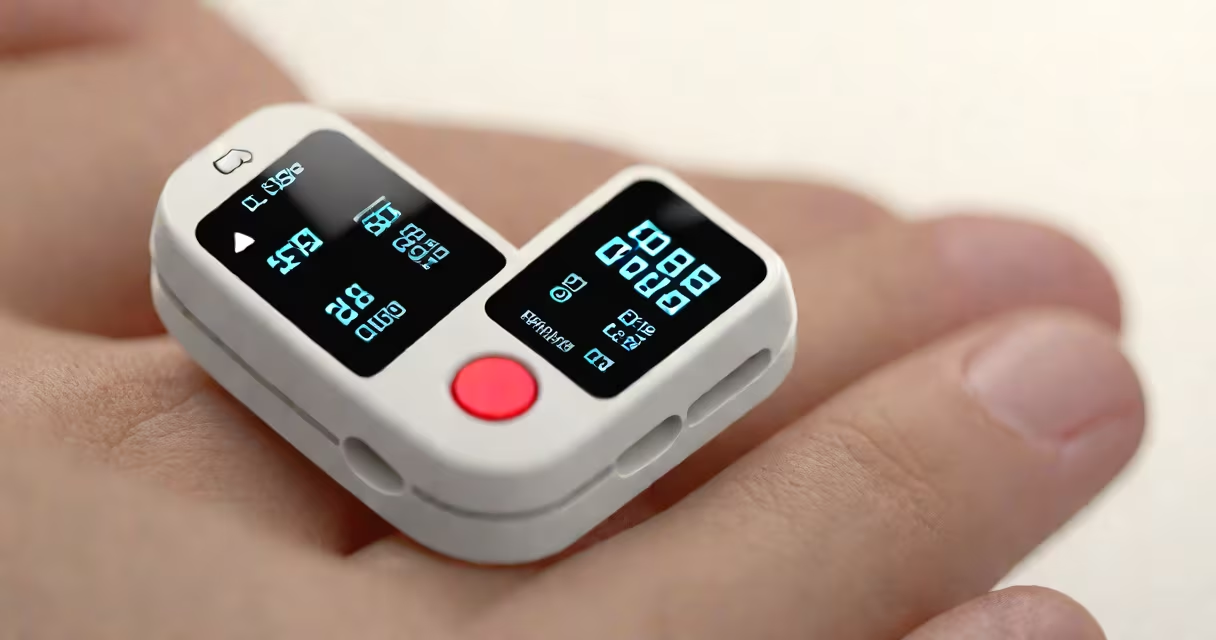
A pulse ox reading measures the percentage of hemoglobin saturated with oxygen in arterial blood, typically displayed as SpO2. This non-invasive measurement uses light absorption through the fingertip or earlobe to estimate oxygen levels in real time.
Normal SpO2 ranges from 95% to 100%. Levels below 90% indicate hypoxemia, a condition requiring medical evaluation. The device detects changes in blood volume and oxygenation during each heartbeat, providing continuous monitoring for patients with respiratory or cardiac conditions.
According to the American Lung Association, SpO2 readings below 90% suggest insufficient oxygen supply to tissues and may require supplemental oxygen. The National Institutes of Health notes that pulse oximeters are widely used in hospitals, clinics, and home settings for early detection of respiratory compromise.
Pulse oximeters use two wavelengths of light-red (660 nm) and infrared (940 nm)-to measure oxygen saturation. Oxygenated hemoglobin absorbs more infrared light and allows red light to pass through. Deoxygenated hemoglobin absorbs more red light and transmits infrared.
The sensor, usually clipped onto a fingertip, emits light through the skin and measures how much returns. The device calculates the ratio of absorbed red to infrared light, converting it into an SpO2 percentage. It also detects pulse rate by measuring pulsatile blood flow.
For accurate results, the sensor must be placed correctly-on a clean, warm finger with steady blood flow. Movement, cold extremities, nail polish (especially dark colors), and poor circulation can distort readings. A 2021 study in JAMA Internal Medicine found that dark nail polish reduced accuracy by up to 12% in certain models.
Pulse oximeters fall into two categories: handheld devices and wearable monitors. Handheld units are common in clinical settings and offer high reliability. Wearables, such as smartwatches and fitness trackers, provide continuous monitoring but vary in precision.
| Type | Typical Use | Accuracy Range | Limitations |
|---|---|---|---|
| Handheld | Hospital, clinic, home use | 92%-98% at SpO2 > 90% | Requires manual placement |
| Wearable (smartwatch) | Daily tracking, sleep monitoring | 85%-95% under motion | Less reliable during activity |
Medical-grade devices meet ISO 80601-2-61 standards. Consumer wearables often lack formal validation. The U.S. Food and Drug Administration (FDA) classifies pulse oximeters as Class II medical devices, meaning they undergo rigorous testing before market release.
One non-obvious factor affecting accuracy is skin pigmentation. Research published in Annals of Internal Medicine (2020) showed that Black patients had a higher risk of missed hypoxemia due to lower sensitivity in some pulse oximeters. Devices calibrated primarily on lighter skin tones may underestimate SpO2 in darker skin.
Many assume a pulse ox reading reflects lung function. It does not. SpO2 measures oxygen saturation, not carbon dioxide levels or ventilation efficiency. A person can have normal SpO2 while retaining CO2, especially in chronic obstructive pulmonary disease (COPD).
Another misconception is that low SpO2 always indicates a serious problem. Mild drops during sleep apnea or high-altitude exposure are common and may not require intervention. However, sustained SpO2 below 90% during waking hours warrants evaluation.
I once used a consumer-grade smartwatch during a mountain hike at 10,000 feet. The device reported SpO2 at 88%-below the threshold for concern-but my breathing felt labored. I descended and symptoms resolved. That experience taught me that context matters: a single reading doesn't tell the whole story.
Pulse ox readings are standard in managing acute respiratory illness, post-surgical recovery, and chronic conditions like COPD or heart failure. They're also used during anesthesia and in intensive care units.
At home, people with asthma, pneumonia, or long-term respiratory issues use pulse oximeters to track trends. For example, a diabetic patient with suspected sepsis might show a drop from 98% to 92% over four hours-prompting urgent care.
During the COVID-19 pandemic, the World Health Organization recommended home monitoring of SpO2 for symptomatic individuals. A drop below 92% in a resting state was a red flag for hospitalization. This practice helped reduce delays in treatment.
Understanding your pulse ox reading involves more than knowing the number. It requires awareness of baseline values, activity level, and symptoms. Always compare new readings to personal baselines, not just generic norms.