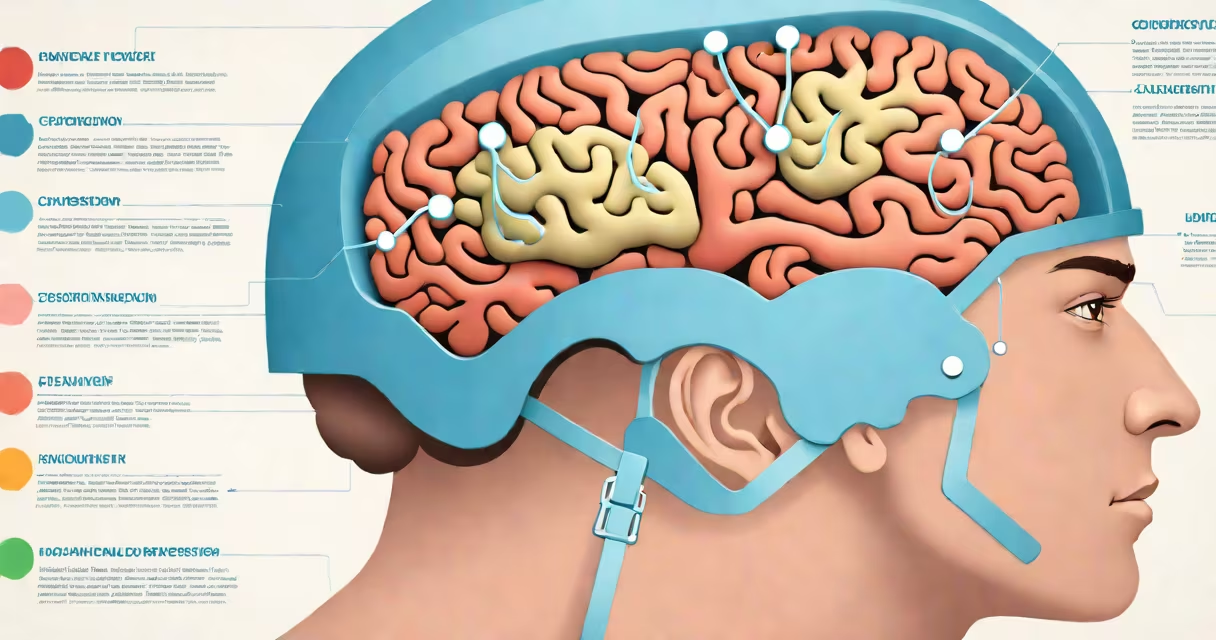
A concussion is a mild traumatic brain injury resulting from a direct blow, jolt, or sudden acceleration-deceleration force to the head. It disrupts normal brain function temporarily, causing cognitive, physical, and emotional symptoms. The Centers for Disease Control and Prevention (CDC) defines it as a brain injury that affects how the brain works, even if there's no loss of consciousness.
Concussions occur when rapid movement of the brain inside the skull stretches or damages neurons and alters neurotransmitter activity. This leads to a cascade of metabolic changes that impair neural signaling. Symptoms typically appear within minutes to hours after the event and may last days to weeks. According to the American Academy of Neurology, about 80% of concussions resolve within 10-14 days with rest and symptom management.
Despite being called "mild," a concussion is not trivial. Repeated injuries increase the risk of chronic traumatic encephalopathy (CTE), a degenerative brain disease linked to repetitive head trauma. Athletes, military personnel, and individuals involved in motor vehicle accidents are at higher risk. Early recognition and proper care reduce the likelihood of prolonged symptoms or secondary complications.
The brain floats in cerebrospinal fluid within the skull. When a sudden impact occurs-such as a fall, tackle, or car crash-the brain shifts violently against the inner skull surface. This shearing motion can stretch nerve fibers, disrupt synaptic communication, and trigger a surge in glutamate, an excitatory neurotransmitter. Excess glutamate causes excessive calcium influx into neurons, leading to energy depletion and cellular dysfunction.
As a result, the brain enters a state of metabolic crisis. Blood flow to affected areas decreases, oxygen demand increases, and cellular repair mechanisms activate. This imbalance creates the sign symptoms: headache, dizziness, confusion, memory lapses, nausea, and sensitivity to light or sound. These effects usually peak within 24 hours and gradually subside with rest.
One non-obvious fact: symptoms may not appear immediately. Up to 30% of people report delayed onset of headaches or fatigue up to 48 hours post-injury. This delay complicates early detection, especially in sports settings where athletes may downplay symptoms to stay in play. The CDC recommends removing anyone suspected of having a concussion from activity immediately and monitoring them for worsening signs.
Concussions are classified by mechanism and severity. While all involve similar neurological disruption, their causes differ:
| Type | Common Cause | Typical Setting | Incidence Rate |
|---|---|---|---|
| Direct Impact | Blow to the head | Sports, falls, assaults | 60% |
| Whiplash-Induced | Head jerk without contact | Car crashes, amusement rides | 25% |
| Rotational Force | Skull rotation causing shear stress | Football tackles, child abuse | 15% |
Rotational forces are particularly damaging because they create shear strain across brain tissue. A study published in JAMA Neurology found that rotational acceleration contributes to 70% of diffuse axonal injuries seen in concussion cases, even when there's no direct head contact.
Falls account for nearly half of all concussions in adults over 65. In children under 15, sports-related injuries make up 60% of cases. Motor vehicle collisions are the leading cause among young adults. Each scenario requires tailored evaluation and return-to-activity protocols.
Doctors do not rely on imaging to diagnose a concussion. Standard CT scans and MRIs often show no abnormalities in mild cases. Instead, diagnosis hinges on clinical criteria: a history of head trauma, presence of acute symptoms, and performance on standardized cognitive tests.
The Sport Concussion Assessment Tool (SCAT5), endorsed by the International Concussion and Head Injury Research Consortium, uses a five-part assessment: symptom checklist, cognitive screening (e.g., trail-making test), balance testing (e.g., tandem gait), coordination tasks, and neurological exam. A score below 85 out of 100 raises concern for concussion.
One common misconception is confusing concussion with other head injuries. A concussion differs from a brain bleed, which involves blood vessel rupture and may require surgery. It also differs from a spinal cord injury, which affects motor control and sensation below the neck. Unlike stroke, which results from blocked or ruptured blood vessels in the brain, concussion stems from mechanical trauma.
I once observed a high school football player who reported feeling "foggy" after a helmet-to-helmet collision. He passed the initial sideline assessment but developed worsening headache and vomiting during transport. A hospital scan ruled out hemorrhage, and he was diagnosed with a concussion. His recovery took 12 days, including a gradual return to academic and athletic activities under supervision.
Rest is the key part of early recovery. The CDC recommends avoiding physical exertion, screen time, and mentally taxing tasks for 24-48 hours after injury. Returning too soon increases symptom duration and risk of second-impact syndrome-a rare but fatal condition where a second concussion occurs before full recovery.
Rehabilitation follows a stepwise progression: symptom-limited activity → light aerobic exercise → sport-specific drills → full return to play. Each stage lasts 24 hours unless symptoms worsen. If symptoms persist beyond three weeks, a referral to a neurologist or neuropsychologist may be needed.
Long-term outcomes vary. Most people recover fully within four weeks. However, 10-20% develop post-concussion syndrome (PCS), marked by persistent headaches, fatigue, and difficulty concentrating lasting more than three months. Risk factors include prior concussion, female sex, and psychological comorbidities like anxiety or depression.
Proper management reduces long-term risks. The National Football League's concussion protocol, updated in 2023, mandates independent neurological evaluation and mandatory removal from play for any suspected concussion. Similar protocols exist in youth sports through the Youth Sports Safety Alliance.