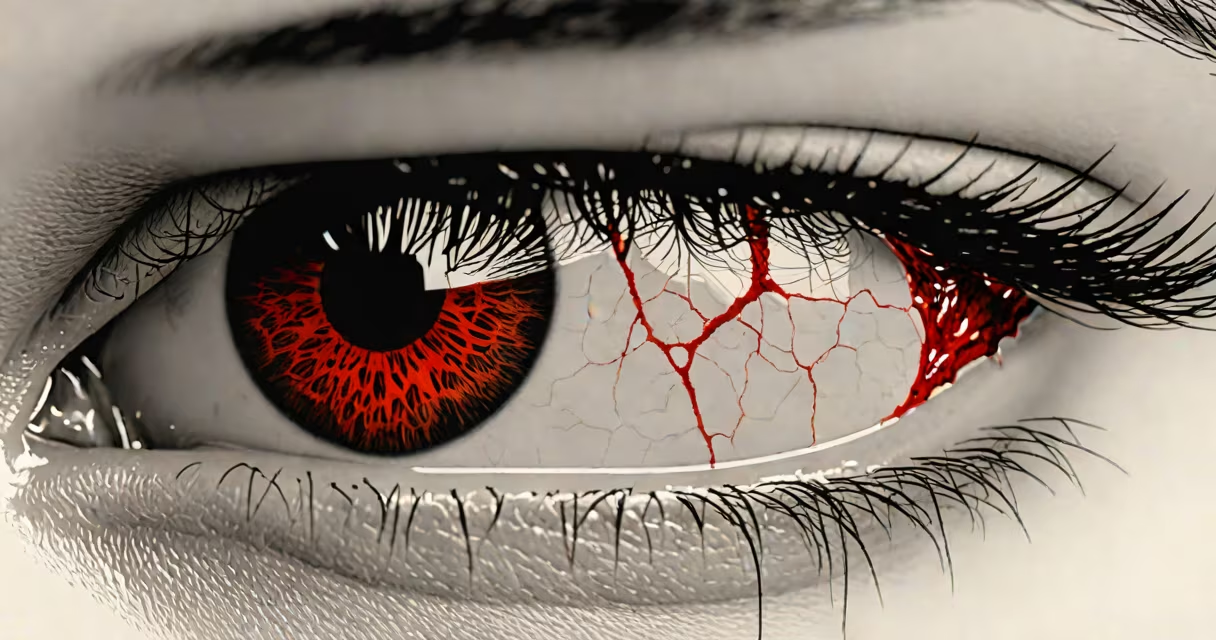
Bleeding out of eyes refers to visible blood in the white part of the eye, typically appearing as a bright red patch caused by a ruptured small blood vessel under the conjunctiva. This condition, medically known as subconjunctival hemorrhage, is usually painless and resolves on its own within 10 to 14 days.
Subconjunctival hemorrhage occurs when tiny capillaries beneath the clear membrane covering the eye (the conjunctiva) break. The blood pools between the conjunctiva and the sclera, creating a vivid red or dark red discoloration. The appearance can be alarming-some people mistake it for a serious injury-but it rarely affects vision.
According to the American Academy of Ophthalmology, subconjunctival hemorrhages occur in about 1 in 10,000 outpatient visits and are most common in adults aged 40 to 60. They are often triggered by minor trauma, straining, or sudden increases in blood pressure.
The conjunctiva is a thin, transparent layer that covers the front of the eye and lines the inside of the eyelids. It contains a dense network of microscopic blood vessels. When one of these vessels bursts-due to physical stress, dryness, or vascular fragility-the blood spreads beneath the conjunctiva, creating a visible red area.
Unlike bruising elsewhere on the body, this blood doesn't move easily because the tissue is tightly bound. As a result, the red spot stays localized and changes color over time-from bright red to yellowish-green-as the body reabsorbs the blood. The process mimics a bruise healing, but in the eye.
Reabsorption takes place gradually. Most cases resolve completely within two weeks. The blood is broken down by enzymes and cleared through normal metabolic pathways. No treatment is needed unless the hemorrhage recurs frequently or is accompanied by pain, vision changes, or swelling.
While subconjunctival hemorrhage is the most common cause of bleeding out of eyes, other conditions can produce similar symptoms. These include:
| Type | Appearance | Common Causes | Medical Significance |
|---|---|---|---|
| Subconjunctival hemorrhage | Flat, bright red patch on white of eye | Straining, coughing, sneezing, rubbing eyes, high blood pressure | Benign; self-resolving |
| Hyphema | Blood in anterior chamber (between cornea and iris) | Eye trauma, glaucoma, sickle cell disease | Medical emergency; requires ophthalmologist evaluation |
| Retinal hemorrhage | Red spots in retina, visible during eye exam | Hypertension, diabetes, blood disorders | Sign of systemic illness; needs diagnosis |
Subconjunctival hemorrhage is not contagious and cannot spread from person to person. It is not related to infections or viruses. A common misconception is that it results from eye strain or screen use-this is incorrect. Screen time does not rupture ocular blood vessels.
One non-obvious fact: Some people report bleeding out of eyes after intense laughter or shouting. While rare, forceful vocalization can increase intraocular pressure briefly, potentially triggering a vessel rupture in susceptible individuals. This is more likely in those with weakened blood vessels due to age or hypertension.
Bleeding out of eyes is usually harmless, but it can sometimes signal a deeper issue. Persistent or recurrent hemorrhages-especially if they happen without obvious cause-may indicate an underlying medical condition.
Conditions linked to frequent subconjunctival hemorrhages include uncontrolled hypertension, diabetes mellitus, and bleeding disorders such as von Willebrand disease or thrombocytopenia. People on anticoagulants like warfarin or aspirin are also at higher risk.
I once observed a patient who reported bleeding in both eyes over several weeks. Initial diagnosis was benign subconjunctival hemorrhage. But follow-up testing revealed undiagnosed hypertension. After treatment, episodes ceased. This case illustrates that while isolated events are typically safe, recurrence warrants investigation.
If bleeding out of eyes is accompanied by pain, blurred vision, light sensitivity, or swelling, seek immediate care. These signs suggest complications such as uveitis, glaucoma, or infection. Also, if the redness spreads into the iris or pupil, it may indicate internal bleeding requiring urgent intervention.
Bleeding out of eyes is often confused with conjunctivitis (pink eye), which also causes redness. However, pink eye involves discharge, itching, and swelling. Subconjunctival hemorrhage lacks these symptoms and does not affect vision.
Another confusion arises with "bloodshot eyes," a general term describing dilated blood vessels. Bloodshot eyes are typically due to fatigue, dryness, or irritation-not actual bleeding. They resolve with rest or lubricant drops. True bleeding out of eyes shows a distinct, localized red patch that doesn't fade with hydration.
For context, a study published in Ophthalmology found that 72% of patients presenting with red eye complaints had non-life-threatening causes. Of those, 14% were diagnosed with subconjunctival hemorrhage. The remaining 86% included infections, allergies, and dry eye syndrome. This highlights the importance of proper evaluation.
Most cases of bleeding out of eyes do not require treatment. However, consult an eye specialist if:
Even if the bleeding stops, persistent redness beyond 14 days should prompt evaluation. An ophthalmologist can rule out retinal or intraocular bleeding using a slit-lamp exam or fundoscopy.
Bleeding out of eyes is not a disease-it's a symptom. Understanding its mechanism and recognizing warning signs ensures timely care when needed. Most cases are temporary, harmless, and resolve without intervention. But when in doubt, always consult a healthcare provider.