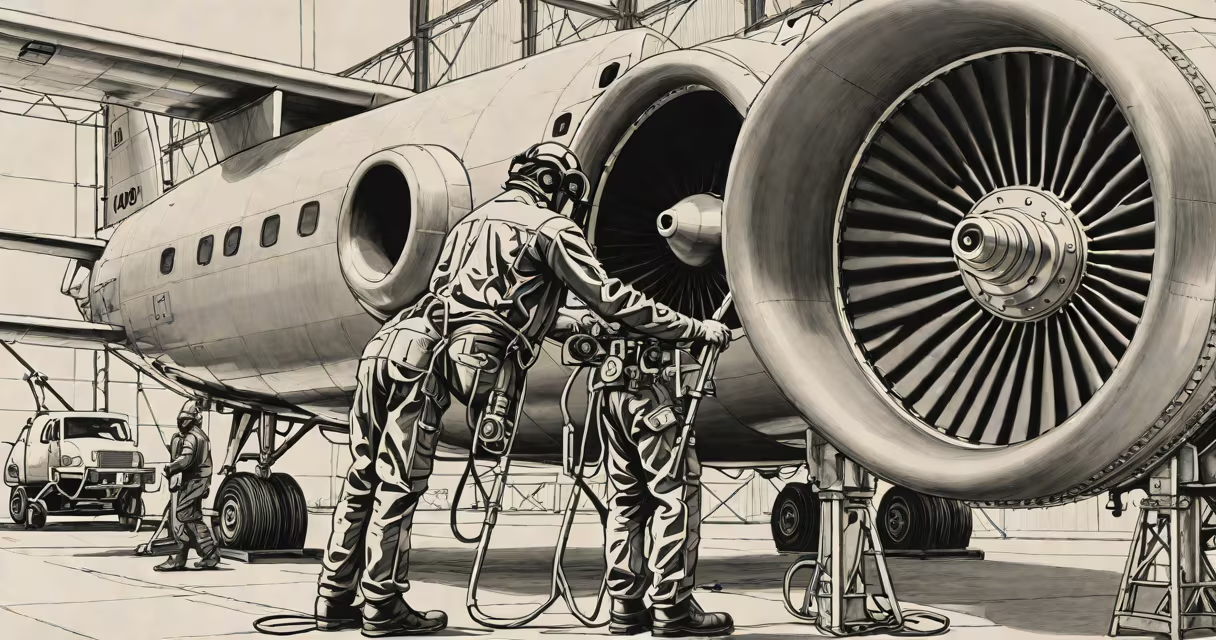
Aircraft mechanics inspect, maintain, repair, and certify aircraft systems to ensure airworthiness and compliance with Federal Aviation Administration (FAA) standards. They work on engines, landing gear, avionics, hydraulics, and structural components across commercial, military, and private aircraft.
These professionals are essential to flight safety. Every aircraft must pass a pre-flight inspection and undergo scheduled maintenance. Mechanics document all work performed and sign off on airworthiness, allowing planes to legally fly. Without them, no aircraft could operate safely.
The role demands precision, technical knowledge, and adherence to federal regulations. Mechanics must understand complex schematics, use specialized tools, and follow strict procedures. Their work prevents failures that could lead to accidents.
Mechanics begin with a visual and functional inspection of the aircraft. They check for visible damage, fluid leaks, worn parts, or loose fasteners. Using diagnostic software, they test systems like navigation, communication, and autopilot functions.
If issues arise, they isolate faults using troubleshooting guides and system diagrams. For example, a faulty altimeter may trigger a warning light. The mechanic runs a series of tests to determine whether the sensor, wiring, or control unit is defective. Once identified, they replace or recalibrate the component.
After repairs, mechanics conduct functional checks. A repaired hydraulic system must hold pressure for 15 minutes without leakage. An engine must idle smoothly and reach specified RPM levels. Only after passing all tests does the mechanic log the work and submit it for review.
Aircraft mechanics specialize based on the type of aircraft and systems they service. The FAA recognizes two primary certifications: Airframe (A) and Powerplant (P). Many mechanics earn both, becoming A&P-certified.
| Type | Focus Area | Common Aircraft | Key Tasks |
|---|---|---|---|
| Airframe (A) | Fuselage, wings, landing gear, doors | Commercial jets, regional airliners | Repair dents, replace panels, align landing gear |
| Powerplant (P) | Engines, propellers, fuel systems | Helicopters, turboprops, cargo planes | Overhaul engines, adjust fuel injectors, balance propellers |
| Avionics Technician | Navigation, communication, radar systems | Modern commercial aircraft, business jets | Install GPS units, calibrate radar, update flight computers |
Some mechanics focus on specific aircraft models. For example, a Boeing 737 technician understands the unique layout of the wing fuel tanks and the location of the anti-skid braking sensors. This model-specific expertise reduces downtime during repairs.
They work in airports, maintenance hangars, airfields, and repair facilities. Major airlines employ mechanics in central maintenance bases. Regional carriers and charter services rely on independent shops. Military bases have dedicated teams for fighter jets and transport planes.
Every aircraft must undergo a mandatory inspection every 100 flight hours or 12 months, whichever comes first. During this check, mechanics disassemble and examine critical components. For example, a turbine engine blade may be inspected under a microscope for micro-cracks. If detected, the blade is replaced before it fails mid-flight.
During a major overhaul, mechanics remove entire engine assemblies. They clean internal parts, measure wear, and replace bearings and seals. One engine teardown can take 60 hours and involve six mechanics working in shifts. After reassembly, the engine is tested on a dynamometer to verify performance.
Many assume aircraft mechanics only fix broken parts. In reality, most work involves preventive maintenance. Over 70% of inspections identify minor wear before failure occurs. Replacing a worn brake pad during a routine check prevents a costly emergency landing.
Another misconception is that mechanics only work on large jets. In fact, they maintain small single-engine planes, drones, and even vintage aircraft. A mechanic repairing a Cessna 172 must still follow the same FAA standards as one working on a 787 Dreamliner.
There's also confusion between aircraft mechanics and pilots. Pilots fly the aircraft. Mechanics keep it flying. One cannot operate without the other. But their roles are distinct: pilots manage flight operations; mechanics manage mechanical integrity.
Mechanics don't approve flights. That authority rests with certified inspectors. Mechanics perform the work. Inspectors verify it meets safety standards. A mechanic signs off on completed tasks. An inspector signs off on airworthiness.
In 2022, a regional airline reported a hydraulic leak in a Bombardier CRJ-900. The ground crew noticed fluid pooling near the left wing. The mechanic assigned to the task began by reviewing the aircraft's maintenance logs and identifying the affected system-the landing gear actuator.
Using a torque wrench and seal replacement kit, the mechanic removed the actuator housing. Inside, he found a degraded O-ring causing the leak. He replaced it with a new part compliant with FAA-approved specifications. After reassembly, he pressurized the system to 3,000 psi and monitored for 10 minutes. No drop in pressure confirmed the repair.
He documented the work in the aircraft's digital logbook. The inspector reviewed the entry, verified the part number and torque values, and approved the aircraft for return to service. The plane resumed flights within four hours.
I once spent a week observing a team at a regional airport's maintenance facility. One morning, a mechanic diagnosed a recurring electrical fault in a passenger door. The system kept triggering alarms during ground checks. After tracing wires through the fuselage, he discovered a frayed cable near the hinge.
Replacing it took 45 minutes. The team then ran a full system test. The alarm stopped. The mechanic logged the repair and updated the aircraft's maintenance schedule. He emphasized that such small fixes prevent larger failures later. "A wire that looks fine today might fail in turbulence," he said. "We catch it early."
The FAA requires all aircraft mechanics to hold a license. To qualify, candidates must complete at least 1,900 hours of hands-on training and pass written, oral, and practical exams. The FAA's Airman Certification Standards outline required competencies.
According to the Bureau of Labor Statistics, 92% of employed aircraft mechanics hold an FAA-issued certificate. Certification ensures consistency across the U.S. aviation industry. Mechanics must renew their license every five years through continuing education and recertification testing.
Failure to comply with FAA guidelines can result in license suspension. In 2021, a mechanic lost his certification after skipping a required inspection step. The incident led to a delayed flight and a formal investigation. This underscores the high stakes involved in the role.
Understanding what an aircraft mechanic does reveals a profession rooted in precision, accountability, and public safety. Their work keeps millions of passengers airborne every day. Without them, modern aviation would not function.