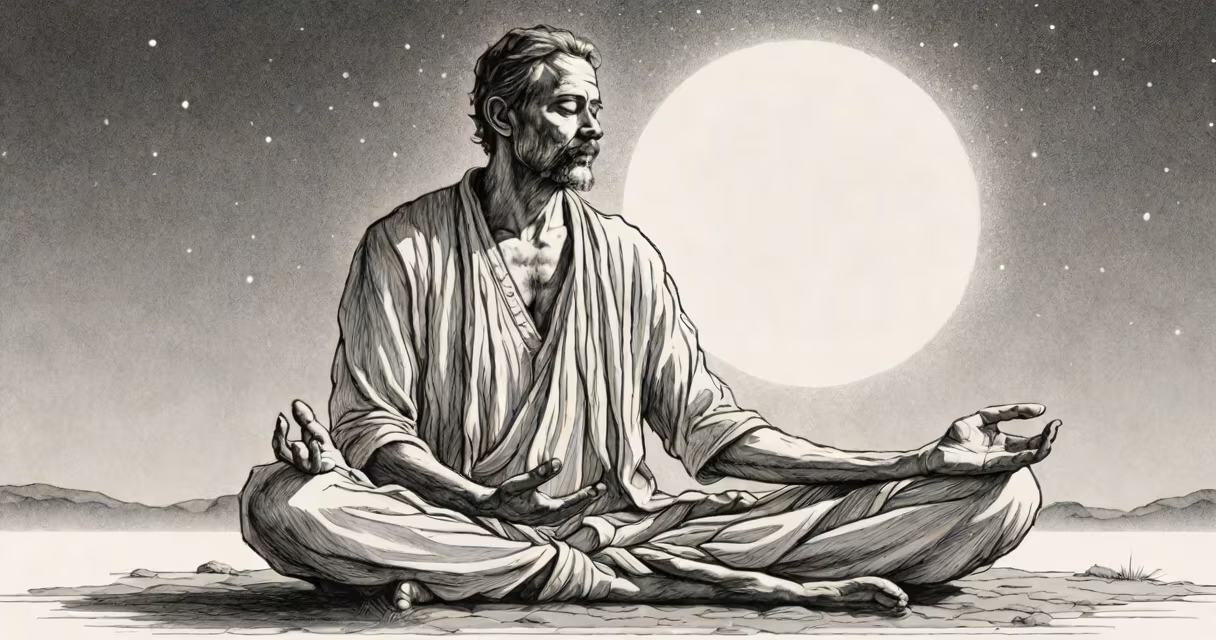
Connecting with your spirit guide means forming a conscious, intuitive relationship with a non-physical entity believed to offer insight, protection, or wisdom. This concept appears in Indigenous American, African, and shamanic traditions, as well as New Age spirituality. The guide is not a deity but a being of higher awareness, often perceived through dreams, synchronicities, or inner stillness.
Unlike religious figures, spirit guides are not worshipped. They are encountered through focused intention, emotional openness, and consistent inner listening. You don't summon them like a genie-you invite them by creating space for their presence. This process relies on personal experience, not doctrine.
According to the National Center for Complementary and Integrative Health (NCCIH), practices involving spiritual connection, such as meditation and mindfulness, are associated with reduced anxiety and improved emotional regulation. While the existence of spirit guides remains unproven by scientific methods, the psychological benefits of engaging with symbolic inner voices are well-documented.
When you attempt to connect with your spirit guide, you're not accessing a supernatural channel. Instead, you're tapping into subconscious patterns, intuition, and emotional memory. The guide emerges as a metaphor for your deeper self-the part of you that knows what's right even when logic fails.
Common methods include journaling before sleep, silent meditation, breathwork, or ritual acts like lighting candles or placing offerings. These aren't magic rituals-they're tools to reduce mental noise. When distractions fade, subtle signals become clearer: a sudden feeling of warmth, a recurring image, a word that appears in your mind out of context.
For example, someone struggling with career decisions might meditate daily for ten minutes, focusing on "What do I need to hear?" After three days, they dream of a crow landing on a tree branch. In many cultures, crows symbolize transformation and foresight. Waking with that image, they reflect: "The crow isn't telling me to quit my job-it's saying I'm ready to change." That insight leads to a new path.
Spirit guides aren't uniform. They appear in forms shaped by culture, personal history, and emotional state. Common archetypes include:
| Type | Characteristics | Common Signs |
|---|---|---|
| Animal Guide | Animals symbolizing traits like strength, clarity, or adaptability. Often linked to totem traditions. | Repeated animal sightings, dreams, or sudden interest in a specific species. |
| Elemental | Manifestations of earth, water, fire, or air. Seen in nature-based spiritual systems. | Feeling calm near rivers, sensing wind during decision-making, or dreaming of storms. |
| Ancestral | Deceased relatives or cultural ancestors offering continuity and wisdom. | Recurring family stories, sudden memories of a grandparent's voice, or dreams of a familiar home. |
| Archetypal | Universal symbols like light, silence, or a voice without form. Found in mysticism and philosophy. | A sense of "knowing" without reasoning, or a sudden clarity during crisis. |
These aren't rigid categories. A person may receive messages through multiple forms simultaneously. One woman reported hearing her late mother's voice while standing in a forest during a thunderstorm-her guide appeared as both a human presence and a rushing wind.
Many assume connecting with a spirit guide requires special training, rare visions, or mystical experiences. This is false. The process is accessible to anyone willing to sit quietly and listen.
Another myth is that guides always speak. In reality, messages are often indirect. A guide might not say "leave your job," but send a series of coincidences-a missed train, a friend mentioning a similar opportunity, a song playing at the right moment. Recognizing these patterns is part of the skill.
Some confuse spirit guides with external entities like angels or demons. According to Dr. Michael Shermer, founder of the Skeptic Society, "The brain generates narratives to explain uncertainty. What feels like a 'guide' may be cognitive bias in action." Still, the subjective experience matters. If a person feels supported by a perceived guide, the effect is real-even if the source is internal.
Start small. Choose a consistent time and place-five minutes, morning or evening. Sit upright, close your eyes, and breathe slowly. Focus on your heart center. Ask: "What do I need to know right now?" Do not expect answers. Just wait.
After a week, begin recording impressions. Not all will feel meaningful. But over time, patterns emerge. One man wrote: "Day 3: saw a red bird. Day 6: heard a bell. Day 10: felt cold on my left shoulder." He later learned his father died in a fire-red birds were his father's favorite, bells rang at his funeral, and he'd always felt cold on that side.
Trust the process. If nothing happens for weeks, continue. The absence of sensation is itself a signal. Silence isn't failure-it's preparation.
I once sat in a park for 14 days, asking the same question. On the 15th day, a squirrel dropped an acorn near my feet. I laughed. Then I realized: I'd been trying to force meaning. The message wasn't in the event-it was in my reaction. I stopped seeking and began listening.
"Connect with your spirit guide" is not a substitute for therapy, medical care, or practical planning. It doesn't replace evidence-based decisions. If you're facing a health crisis, consult a doctor-not a dream.
It's also not about controlling outcomes. A guide won't tell you which job to take or who to marry. It offers perspective, not direction. You remain responsible for your choices.
Finally, it's not a performance. You don't need to be "spiritually advanced" to begin. The practice is not about achieving enlightenment-it's about showing up with honesty.
"Connect with your spirit guide" describes a personal, introspective practice rooted in attention, patience, and trust. It's not a technique to master-it's a way of being. Whether the guide is internal or external, the act of listening strengthens self-awareness and resilience.
For those exploring inner clarity, the path begins not with answers, but with questions. Sit. Breathe. Listen. The rest follows.