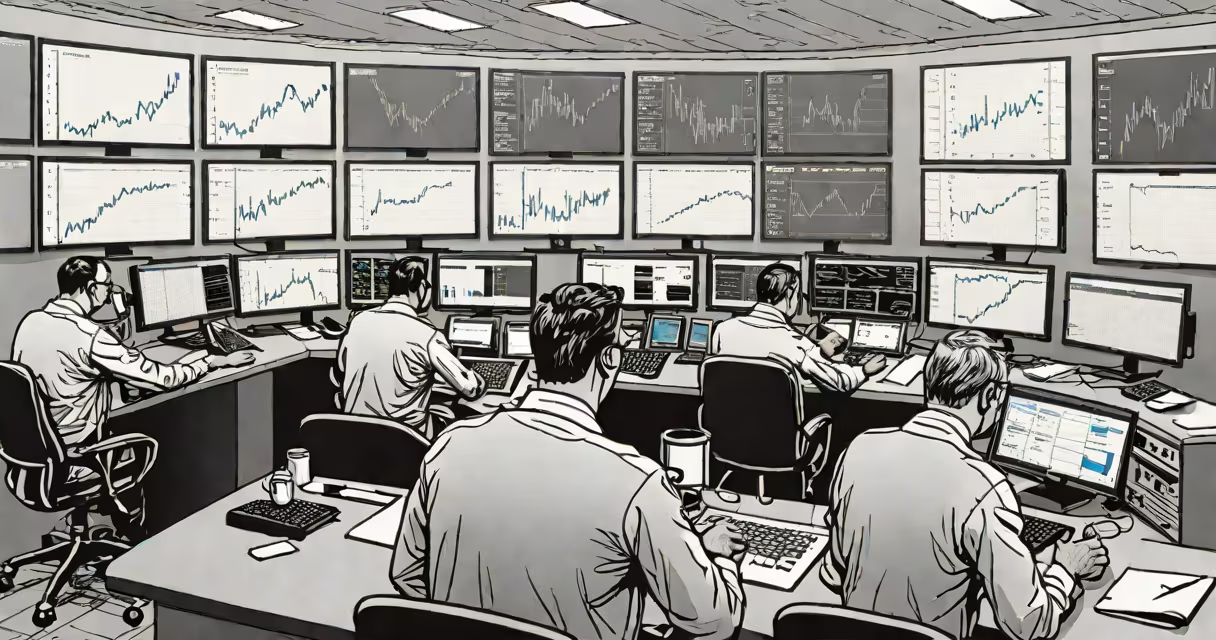
Commodity trading training is structured education that teaches individuals how to trade physical goods such as crude oil, natural gas, wheat, corn, gold, and copper through regulated futures and spot markets. It covers market mechanics, technical and fundamental analysis, risk control, and execution strategies used by institutional traders.
Traders analyze supply-demand imbalances, weather patterns, geopolitical events, and macroeconomic indicators to predict price movements. They place trades via exchanges like the Chicago Mercantile Exchange (CME) or Intercontinental Exchange (ICE), using contracts that obligate delivery or cash settlement at a future date.
Training programs vary from free webinars to multi-week certifications. They often include simulated trading environments, real-time data access, and mentorship. The goal is to build decision-making skills under pressure and reduce emotional bias in high-stakes scenarios.
Most programs begin with foundational concepts: what commodities are, how they differ from stocks or currencies, and how their prices are set. Traders learn that commodities are standardized contracts traded on exchanges, not physical goods delivered unless specified.
For example, a crude oil contract on the CME represents 1,000 barrels. Prices move based on global demand, OPEC decisions, U.S. shale output, and currency fluctuations. A trader might go long (buy) if they expect higher demand due to rising industrial activity in Asia.
Advanced modules cover hedging-using derivatives to protect against price swings. A farmer might sell wheat futures to lock in a price before harvest, protecting against a drop. A bakery buying flour might buy wheat futures to secure input costs. Training explains how both sides use the market to manage risk.
Training formats differ by intensity, cost, and focus. Below are common categories:
| Type | Duration | Focus | Best For |
|---|---|---|---|
| Introductory webinars | 1-2 hours | Market basics, terminology, exchange structure | Beginners with no finance background |
| Self-paced online courses | 4-12 weeks | Technical analysis, chart patterns, risk management | Those studying independently |
| Live instructor-led bootcamps | 2-6 weeks | Real-time trading simulations, daily review sessions | Fast-track learners aiming for job readiness |
| University or certification programs | 6 months - 2 years | Financial modeling, econometrics, regulatory compliance | Career changers seeking formal credentials |
Some programs emphasize specific sectors. Energy trading training focuses on oil, gas, and electricity. Agricultural training covers grains, livestock, and softs like coffee and sugar. Metals programs cover gold, silver, copper, and lithium-critical for battery production.
A key distinction: commodity trading training is not the same as investing in commodity ETFs. ETFs track index performance; trading involves active buying and selling of contracts with use. Traders can lose more than their initial deposit due to margin requirements.
Financial institutions, hedge funds, and commodity trading firms use structured training to onboard new analysts and traders. Firms like Cargill, Glencore, and Trafigura require employees to complete internal programs before handling live positions.
Individuals pursue commodity trading training to enter the field, supplement income, or manage personal portfolios. According to the Commodity Futures Trading Commission (CFTC), over 1.2 million open interest contracts were held in U.S.-based commodity futures in 2023-up 18% from 2020-indicating growing participation.
One program offered by the CME Group includes a $500 virtual account and 30 days of live market data. Participants trade simulated crude oil and natural gas contracts while receiving feedback on entry/exit timing, position sizing, and loss mitigation. After completing the course, 68% of users reported improved confidence in reading volatility spikes.
Many assume commodity trading is gambling. That's incorrect. While trades involve risk, successful traders rely on data-driven models, historical price behavior, and statistical probability-not luck.
Another myth: "Only large banks can trade commodities." This is outdated. With platforms like Interactive Brokers, TD Ameritrade, and NinjaTrader, retail traders can access the same data feeds and execute trades in real time. In 2022, 34% of CME Group's volume came from non-member participants, including individual traders.
A lesser-known fact: most commodity traders don't hold contracts to delivery. Less than 2% of futures contracts result in physical delivery. Most are closed out before expiration. Traders profit from price differences between entry and exit points, not from taking possession of barrels of oil or bushels of wheat.
I once attended a live demo session hosted by a former energy trader. He showed how a 2% move in crude oil futures could generate a 20% return on margin capital-while also risking a 100% loss if stop-losses weren't set. The lesson wasn't about winning-it was about surviving the first 10 trades.
Start with free resources from the CFTC and the National Futures Association (NFA). These organizations publish educational guides on market risks, fraud prevention, and ethical standards. The NFA requires all registered brokers to provide clients with a disclosure document outlining potential losses.
Compare curricula. A solid program covers: daily market analysis, trade journaling, backtesting strategies, and understanding order types (market, limit, stop). It should explain how spreads work-such as the difference between nearby and deferred crude oil contracts-and why basis risk matters in agricultural trading.
Once trained, apply knowledge gradually. Begin with small positions and scale only after consistent profitability over 30 consecutive days. Track metrics like win rate, average gain/loss ratio, and maximum drawdown. These numbers reveal whether your edge is real or coincidental.
Commodity trading training is not a shortcut to wealth. It's a discipline requiring continuous learning, emotional control, and adherence to a clear plan. Those who treat it as a skill-like learning a language or playing chess-tend to last longer in the market than those chasing quick wins.