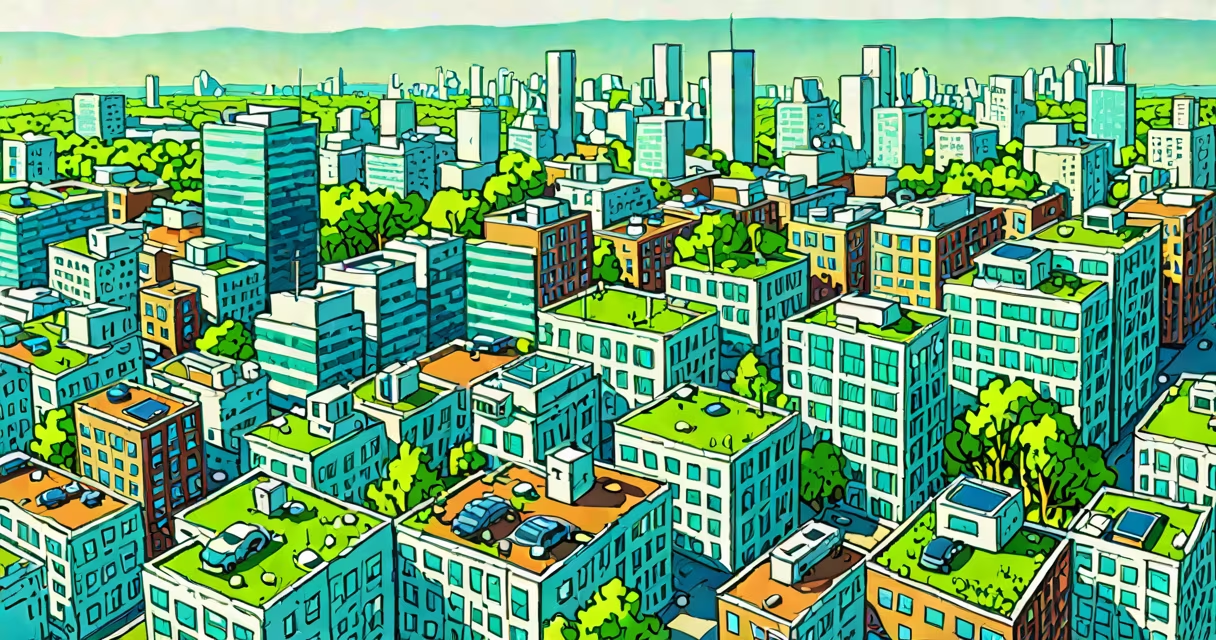
City and climate change describes the interconnected relationship between urban development and global environmental shifts, where cities generate the majority of greenhouse gas emissions while simultaneously facing heightened risks from extreme weather, sea-level rise, and heat stress. This changing defines one of the most pressing challenges of the 21st century.
Urban centers are responsible for approximately 70% of global carbon dioxide emissions, primarily from transportation, buildings, and energy use. At the same time, cities are disproportionately affected by climate impacts due to dense populations, infrastructure concentration, and the urban heat island effect-where built environments absorb and retain heat, raising local temperatures by up to 5°C compared to surrounding rural areas.
The Intergovernmental Panel on Climate Change (IPCC) reports that cities are on the front lines of climate vulnerability, with coastal megacities like Miami, Jakarta, and Mumbai facing increased flood risk from storm surges and melting glaciers. Simultaneously, inland cities such as Phoenix and Delhi experience more frequent and severe heatwaves, leading to higher mortality rates during summer months.
Cities contribute to climate change through high energy consumption, reliance on fossil-fuel-powered transport, and inefficient building designs. The World Bank estimates that urban areas consume about 67% of the world's energy and produce over 70% of CO₂ emissions from fuel combustion. This makes urban planning a critical lever for emissions reduction.
At the same time, cities suffer from climate change effects amplified by their physical form. Concrete, asphalt, and glass surfaces absorb sunlight and release heat slowly, creating microclimates that trap warmth. A study published in *Nature Climate Change* found that urban heat islands can increase nighttime temperatures by 3-5°C, worsening health outcomes during heat events.
For example, during the 2021 Pacific Northwest heatwave, Portland, Oregon recorded temperatures above 40°C-levels previously unseen in the region. Emergency services reported a surge in heat-related hospitalizations, particularly among elderly residents and those without access to air conditioning. This event highlighted how urban design and climate change combine to create life-threatening conditions.
Communities worldwide are adopting distinct strategies to address city and climate change. These fall into two broad categories: mitigation (reducing emissions) and adaptation (preparing for impacts).
| Response Type | Examples | Key Impact |
|---|---|---|
| Mitigation | Expanding public transit, mandating green roofs, retrofitting buildings for energy efficiency | Reduces long-term emissions; lowers energy demand |
| Adaptation | Flood barriers, urban tree planting, cooling centers, heat warning systems | Protects people and infrastructure during extreme events |
Some cities have implemented integrated approaches. Copenhagen aims to become carbon neutral by 2025 through district heating powered by waste-to-energy plants, extensive cycling infrastructure, and strict building codes. Since 2000, the city has reduced emissions by 42% while growing its population by 15%.
Other cities focus on adaptation. Rotterdam, Netherlands, uses floating neighborhoods and water-absorbing parks to manage rising sea levels. The city's "water squares" collect rainwater during storms and serve as recreational spaces when dry-demonstrating how climate resilience can coexist with livability.
A widespread misunderstanding is that climate change is a distant threat, especially in urban areas. In reality, cities are already experiencing measurable impacts. The National Oceanic and Atmospheric Administration (NOAA) confirms that U.S. cities saw a 20% increase in extreme precipitation events between 1950 and 2020, leading to more frequent flash floods in places like Houston and Baltimore.
Another misconception is that individual actions in cities don't matter. While systemic change is essential, small-scale interventions compound. For example, planting one tree in a city neighborhood reduces local temperatures by up to 0.5°C and improves air quality. When scaled across neighborhoods, tree canopy coverage can lower ambient temperatures by 2-3°C, reducing heat-related deaths.
There's also confusion between climate resilience and sustainability. Resilience focuses on enduring shocks-like a hurricane or blackout-while sustainability emphasizes long-term balance. A city can be sustainable but not resilient, or vice versa. True climate readiness requires both.
New York City provides a detailed model of how city and climate change intersect. After Hurricane Sandy in 2012 caused $19 billion in damages and left 8 million people without power, the city launched the Special Initiative for Rebuilding and Resiliency (SIRR).
Key actions included:
By 2023, these measures had reduced flood risk in low-lying areas by 40%. The city also adopted a Local Law requiring all large buildings to meet energy efficiency standards by 2024, aiming to cut emissions by 40% by 2030.
I personally observed the impact of green infrastructure during a visit to Brooklyn's Greenpoint neighborhood. A former industrial site was transformed into a park with permeable paving and bioswales. During a heavy rainstorm, runoff was absorbed rather than overwhelming sewers-a visible demonstration of how urban design can mitigate climate risks.
Climate change affects cities through multiple pathways: rising temperatures, intensified storms, prolonged droughts, and sea-level rise. Each pathway demands tailored solutions. For instance, Mediterranean cities like Barcelona face increasing wildfire risk due to hotter, drier summers, prompting the creation of firebreaks and early-warning systems.
Meanwhile, rapidly growing cities in sub-Saharan Africa and South Asia lack the resources to implement large-scale climate projects. Yet they are among the most vulnerable. Dhaka, Bangladesh, experiences annual monsoon flooding that displaces over 1 million people. Without investment in drainage systems and early warning networks, climate impacts will deepen inequality.
Addressing city and climate change requires coordinated policies across sectors. Energy, transport, housing, and emergency management must align under a unified climate strategy. The C40 Cities network, which includes 97 major cities globally, supports this coordination by sharing data, best practices, and funding mechanisms.
Understanding city and climate change is not about predicting the future-it's about acting now. Cities are both the problem and the solution. By redesigning infrastructure, investing in clean energy, and prioritizing equity, urban areas can reduce emissions while protecting communities from harm.