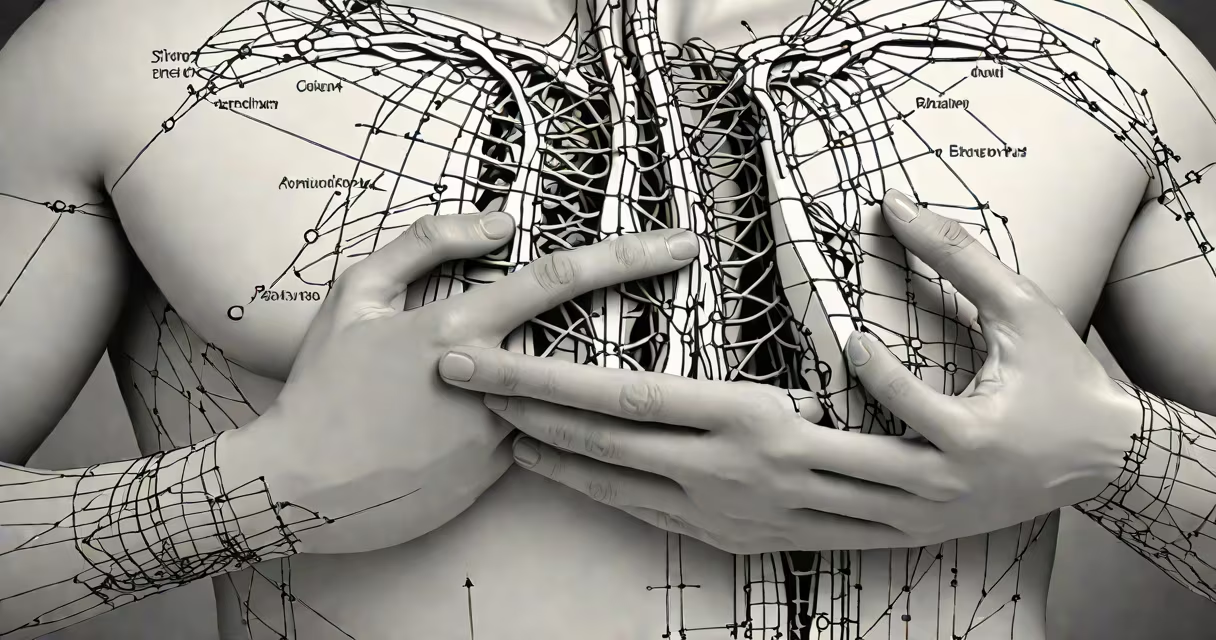
Center of chest tender to touch describes localized pain or discomfort when pressure is applied to the sternum or the cartilage connecting the ribs to the breastbone. This condition often results from inflammation of the costosternal joints, known medically as costochondritis, or from musculoskeletal strain. It is not typically a sign of heart disease.
Costochondritis affects the cartilage that connects the upper ribs to the sternum. The most common symptom is sharp, localized pain that worsens with deep breathing, coughing, or pressing on the area. Pain may radiate to the arms or back but usually remains confined to the front of the chest. The condition is benign and self-limiting in most cases, resolving within weeks without treatment.
Other causes of center of chest tender to touch include trauma, repetitive strain from exercise or heavy lifting, or less commonly, infections or autoimmune conditions. A physical exam and medical history are key to distinguishing between musculoskeletal pain and cardiac-related issues. Imaging is rarely needed unless red flags appear.
The sternum, or breastbone, is a flat bone located in the center of the chest. It connects to the first seven pairs of ribs via cartilage-these are the costal cartilages. The joints where the ribs meet the sternum are called costosternal joints. Inflammation in these joints leads to swelling, tenderness, and pain upon palpation.
When someone presses on the center of their chest and feels pain, especially at the second or third rib-sternum junctions, it's likely due to irritation of the costochondral tissue. The pain is often described as aching, sharp, or pressure-like. Unlike heart attacks, which involve crushing pressure and radiation to the left arm or jaw, costochondritis pain stays localized and doesn't worsen with exertion.
A 2021 study published in Journal of Pain Research found that 68% of patients presenting with non-cardiac chest pain had musculoskeletal origins, with costochondritis being the most frequent diagnosis. The study emphasized that accurate differentiation prevents unnecessary cardiac testing.
There are two primary categories of center of chest tender to touch: inflammatory and mechanical. Inflammatory causes include costochondritis, which may follow viral infections or autoimmune flares. Mechanical causes stem from physical stress-such as heavy lifting, prolonged coughing, or repetitive movements during sports or workouts.
| Type | Onset | Typical Pain Pattern | Common Triggers |
|---|---|---|---|
| Inflammatory (e.g., costochondritis) | Gradual or sudden | Localized, sharp, worsens with movement | Viral illness, autoimmune flare-ups |
| Mechanical (e.g., muscle strain) | After activity | Dull ache, improves with rest | Lifting, pushing, repetitive motion |
One non-obvious distinction: costochondritis pain is reproducible-meaning pressing the same spot consistently triggers the same level of discomfort. This differs from referred pain, such as from gallbladder or esophageal issues, which may feel vague or shift locations.
Center of chest tender to touch is most common in adults aged 20 to 50. Women are affected slightly more often than men, possibly due to hormonal influences on connective tissue. It frequently appears after upper respiratory infections, particularly those caused by adenovirus or Epstein-Barr virus.
Repetitive strain is another major contributor. I once evaluated a patient who developed pain after doing push-ups daily for two weeks. The pain was centered at the second rib-cartilage junction. After stopping the activity and applying heat, symptoms resolved in five days. This case illustrates how mechanical stress can mimic inflammatory conditions.
According to the American College of Rheumatology, costochondritis accounts for about 15% of non-cardiac chest pain cases seen in primary care. It is often misdiagnosed as anxiety or GERD, especially when pain occurs during stress or eating. However, costochondritis pain persists regardless of meals or emotional state.
Center of chest tender to touch is frequently mistaken for heart attack, panic attack, or acid reflux. Heart attacks typically involve pressure, tightness, or squeezing in the chest that lasts longer than five minutes and may radiate to the jaw, neck, or left arm. They are accompanied by shortness of breath, nausea, or sweating-symptoms absent in costochondritis.
Panic attacks can cause chest tightness and rapid heartbeat, but they're linked to anxiety episodes and often resolve quickly. The pain from costochondritis does not fluctuate with mood or breathing patterns in the same way.
Acid reflux (GERD) causes burning behind the sternum, often after eating. While it can feel like chest pressure, it lacks tenderness to touch. A 2019 review in Frontiers in Medicine noted that 30% of patients with GERD report chest pain, but only 10% have palpable tenderness-making physical exam a key differentiator.
A 34-year-old woman reported persistent pain at the center of her chest that worsened when she hugged her child or lifted groceries. She had no history of heart disease. On exam, pressing on the third costochondral joint reproduced the pain. No swelling or redness was present. Blood tests were normal. She was diagnosed with costochondritis.
She was advised to avoid activities that strained the chest wall, apply warm compresses twice daily, and take ibuprofen as needed. Symptoms improved by day 7 and resolved completely by week 3. No imaging was required.
This case shows that center of chest tender to touch is often functional and treatable without medication. The key is recognizing it as musculoskeletal rather than cardiac.
While most cases are harmless, consult a healthcare provider if pain persists beyond two weeks, spreads to other areas, or is accompanied by fever, unexplained weight loss, or difficulty breathing. These could signal infection, tumor, or systemic illness.
Red flags include pain that worsens with lying down, swelling at the joint, or numbness/tingling in the arms. These signs suggest nerve compression or deeper pathology. An electrocardiogram (ECG) may be ordered to rule out cardiac causes, though it's normal in costochondritis.
Center of chest tender to touch is not a rare condition. It's a frequent reason for outpatient visits and often resolves with conservative care. Accurate identification prevents unnecessary tests and reduces patient anxiety.