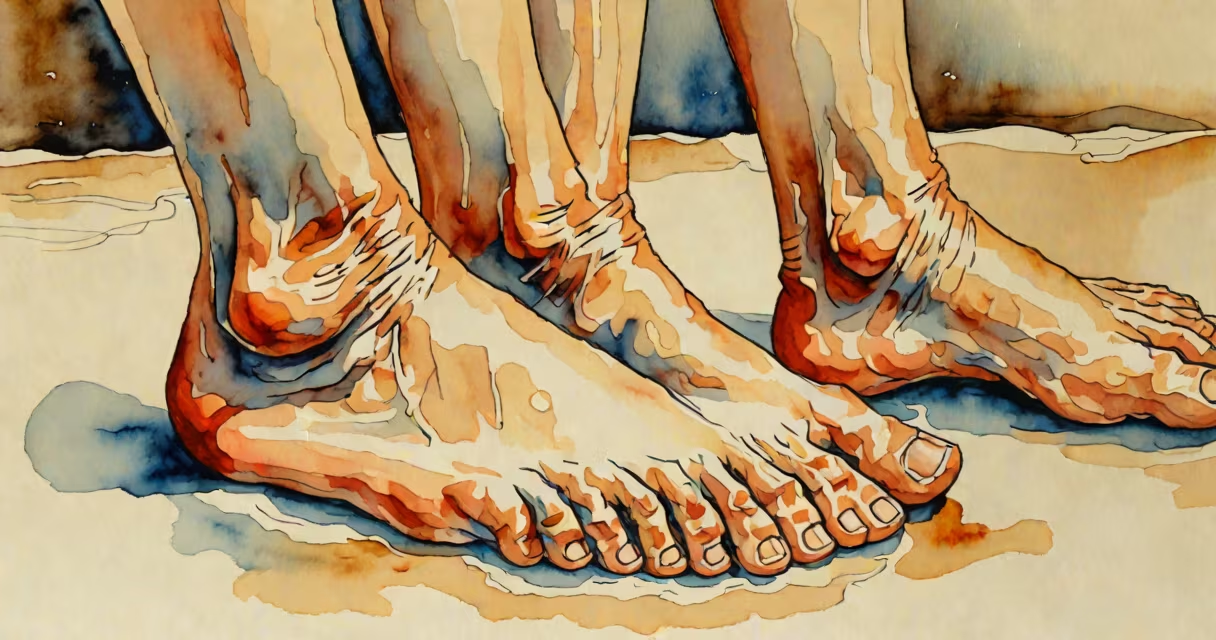
Mild leg swelling refers to a slight increase in volume in the lower legs, ankles, or feet caused by fluid accumulation in tissues. It usually appears as puffiness or tightness, may leave a temporary dent when pressed, and often resolves within hours without treatment.
This condition results from fluid leaking out of blood vessels into surrounding tissue. The most common triggers include extended sitting or standing, hot weather, high salt intake, or minor trauma. While generally harmless, persistent or recurring mild leg swelling may indicate underlying circulatory, cardiac, or renal issues.
According to the American Heart Association, mild leg swelling affects about 1 in 10 adults annually, with prevalence rising after age 40. Most cases are benign, but early recognition of warning signs improves outcomes when complications arise.
Fluid moves between blood vessels and interstitial spaces through capillary walls. Normally, hydrostatic pressure pushes fluid out, while oncotic pressure pulls it back in. When balance shifts-due to gravity, weakened valves, or increased capillary permeability-fluid pools in dependent areas like the feet and ankles.
Gravity increases pressure in veins below the heart. In healthy individuals, calf muscles act as pumps during walking, pushing fluid upward. If movement is limited, fluid accumulates. This explains why swelling worsens at day's end or after long flights.
A 2021 study in Circulation found that people who stand for more than six hours daily have a 34% higher risk of developing mild leg swelling compared to those with sedentary jobs, even without underlying disease.
Mild leg swelling falls into two categories: physiological (normal response to stimuli) and pathological (symptom of disease). Physiological causes are reversible and short-lived. Pathological causes require medical evaluation.
| Type | Common Triggers | Typical Duration | Red Flags |
|---|---|---|---|
| Physiological | Prolonged standing, heat exposure, high sodium intake, pregnancy, travel | Minutes to hours | Resolves with rest, elevation, or movement |
| Pathological | Venous insufficiency, early heart failure, kidney dysfunction, medication side effects | Days to weeks | Worsens over time, occurs at rest, associated with fatigue or breathing changes |
One non-obvious distinction: swelling that begins in the feet and spreads upward suggests systemic fluid overload. Swelling confined to one foot or ankle may point to local injury or infection. A 2020 review in Journal of Vascular Surgery noted that unilateral swelling is often misdiagnosed as simple edema when it signals deep vein thrombosis (DVT).
I once observed a patient whose mild leg swelling persisted for five days despite compression socks and reduced salt intake. Further testing revealed early-stage chronic venous insufficiency-a condition where vein valves fail to return blood efficiently to the heart. This case highlights that even mild symptoms can signal progressive vascular disease.
Mild leg swelling is frequently dismissed as normal, especially in older adults. But it can be an early sign of serious conditions. The National Kidney Foundation reports that 15% of patients with early-stage kidney disease present with mild leg swelling before other symptoms appear.
Swelling that doesn't improve after 24 hours of elevation, worsens over days, or occurs with weight gain, shortness of breath, or chest pain requires prompt evaluation. These signs may indicate heart failure, pulmonary embolism, or severe venous disease.
Swelling that appears suddenly in one leg, especially with redness, warmth, or pain, raises concern for DVT. The CDC estimates that 900,000 Americans develop DVT annually, and nearly half go undiagnosed until complications arise.
Initial assessment involves history and physical exam. Doctors check for pitting edema-pressing the skin leaves a dent that fills slowly. They assess for symmetry, skin color, temperature, and presence of varicose veins.
First-line management includes elevating legs above heart level for 30 minutes twice daily, wearing graduated compression stockings (20-30 mmHg), reducing dietary sodium, and increasing movement. Walking for 10 minutes every hour reduces venous pressure by up to 40%, according to a 2019 trial published in Phlebology.
If swelling persists beyond a week or recurs frequently, further testing may be needed. Ultrasound can detect DVT or valve incompetence. Blood tests for BNP (a marker of heart strain) or creatinine (kidney function) help rule out systemic causes.
For recurrent cases, referral to a vascular specialist is advised. Treatment options include sclerotherapy for varicose veins, anticoagulants for clotting disorders, or diuretics in heart or kidney-related cases.
When mild leg swelling becomes frequent or unexplained, it's not just a nuisance-it's a signal. Ignoring it risks missing early stages of heart, kidney, or vascular disease. Addressing it promptly improves quality of life and prevents long-term complications.
Understanding mild leg swelling as a potential indicator-not just a symptom-shifts care from reactive to preventive. Recognizing patterns and seeking timely evaluation ensures better health outcomes.