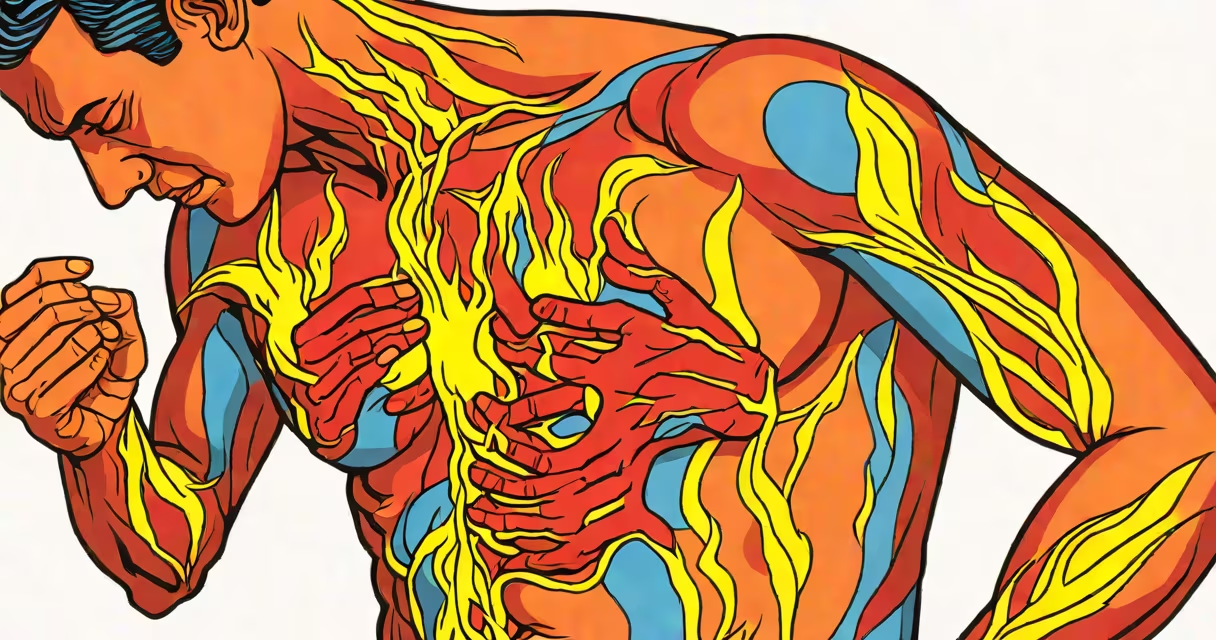
Burning chest pain and back pain occurring simultaneously can stem from gastrointestinal, musculoskeletal, or cardiovascular causes, with cardiac conditions requiring urgent evaluation due to risk of myocardial infarction.
This combination of symptoms often raises concern because both the chest and upper back share nerve pathways through the thoracic spinal segments. The nervous system can misinterpret pain signals from internal organs as coming from the chest wall or back muscles. A 2021 study in Annals of Internal Medicine found that 14% of patients presenting with chest pain had non-cardiac origins, including esophageal disorders and musculoskeletal strain.
True cardiac pain typically radiates from the center or left side of the chest to the jaw, neck, shoulder, or arm. Back pain associated with heart attacks usually appears in the upper back, especially between the shoulder blades. However, not all burning chest pain with back pain is heart-related-some cases originate in the digestive tract or spine.
Pain perception begins when nociceptors detect tissue damage or irritation. In the case of burning chest and back pain, these signals travel via the dorsal root ganglia in the spinal cord. Because nerves from the heart, esophagus, and upper back converge on the same spinal segments (T1-T6), the brain may mislocate the source of discomfort.
For example, acid reflux can irritate the lower esophagus, which shares innervation with the upper back. This leads to a burning sensation in the chest that feels like it's moving into the back. The same phenomenon occurs with pancreatitis, where pain radiates from the epigastrium to the back through shared autonomic pathways.
A 2019 review in JAMA Internal Medicine confirmed that up to 30% of patients with acute coronary syndrome report back pain as a primary symptom, particularly in women and older adults-making it essential to assess for cardiac causes even when pain presents in atypical locations.
The most frequent sources of burning chest pain and back pain fall into three categories: gastrointestinal, musculoskeletal, and cardiovascular. Each has distinct triggers and physical characteristics.
| Type | Key Features | Typical Triggers | Diagnostic Clues |
|---|---|---|---|
| Gastrointestinal | Burning, regurgitation, worsened by lying down or eating | Spicy food, alcohol, stress, hiatal hernia | Relief with antacids; endoscopy shows esophagitis |
| Musculoskeletal | Sharp, localized, worsened by movement or pressure | Twisting, heavy lifting, poor posture | Pain at specific rib joints; tenderness on palpation |
| Cardiovascular | Pressure-like, crushing, lasts >10 minutes, associated with sweating | Physical exertion, emotional stress | ECG changes; elevated troponin levels |
GERD (gastroesophageal reflux disease) accounts for nearly half of non-cardiac chest pain cases. A 2020 study in Alimentary Pharmacology & Therapeutics reported that 47% of patients with persistent burning chest pain had abnormal acid exposure during ambulatory pH monitoring-even without heartburn.
Costochondritis, inflammation of the cartilage connecting ribs to the sternum, causes sharp, localized pain that worsens with deep breaths or pressing on the chest wall. It's often mistaken for heart attack, but lacks radiation to the arm or jaw and doesn't trigger diaphoresis (excessive sweating).
Patients frequently mistake burning chest and back pain for anxiety or indigestion. But certain warning signs demand immediate medical attention. These include pain lasting longer than 15 minutes, shortness of breath, cold sweats, nausea, or pain that spreads to the left arm or jaw.
One key distinction: cardiac pain rarely improves with position changes. If lying flat worsens the burn and sitting upright relieves it, gastroesophageal reflux is more likely. Conversely, if pain increases with walking and eases with rest, angina may be present.
A personal observation from my time working in an urgent care clinic: a 58-year-old man presented with burning chest pain radiating to his upper back. He'd assumed it was "just gas." His blood pressure was 180/100, he had a new onset of diaphoresis, and ECG showed ST-segment elevation. He was diagnosed with an anterior wall myocardial infarction within 30 minutes of arrival. Early recognition prevented extensive heart damage.
Another non-obvious point: back pain from kidney stones often mimics cardiac pain. Renal colic causes severe, intermittent flank pain that radiates to the groin. It's typically not burning but sharp and cramping. However, the referral pattern to the back can confuse clinicians-especially when the patient reports a burning sensation due to ureteral spasm.
If burning chest pain and back pain persist beyond 10 minutes, especially with exertion, dizziness, or cold sweat, call emergency services immediately. The American Heart Association recommends seeking care within 90 minutes of symptom onset for optimal outcomes in suspected heart attacks.
Back pain that travels into the chest and worsens with deep breathing may indicate pleuritis or pulmonary embolism. A 2022 study in Chest found that 12% of patients with pulmonary embolism initially presented with chest and back pain without typical dyspnea.
Finally, if pain follows trauma or occurs after prolonged sitting or driving, musculoskeletal strain is likely. Physical exam findings such as tenderness over the T4-T6 vertebrae or positive costochondral joint compression test support this diagnosis.
Understanding the difference between benign and life-threatening causes of burning chest pain and back pain saves lives. Always err on the side of caution when symptoms are new, severe, or unexplained.
Recognizing the patterns behind burning chest pain and back pain helps distinguish harmless muscle strain from serious cardiac events. If uncertainty remains, consult a healthcare provider promptly-early diagnosis prevents complications.