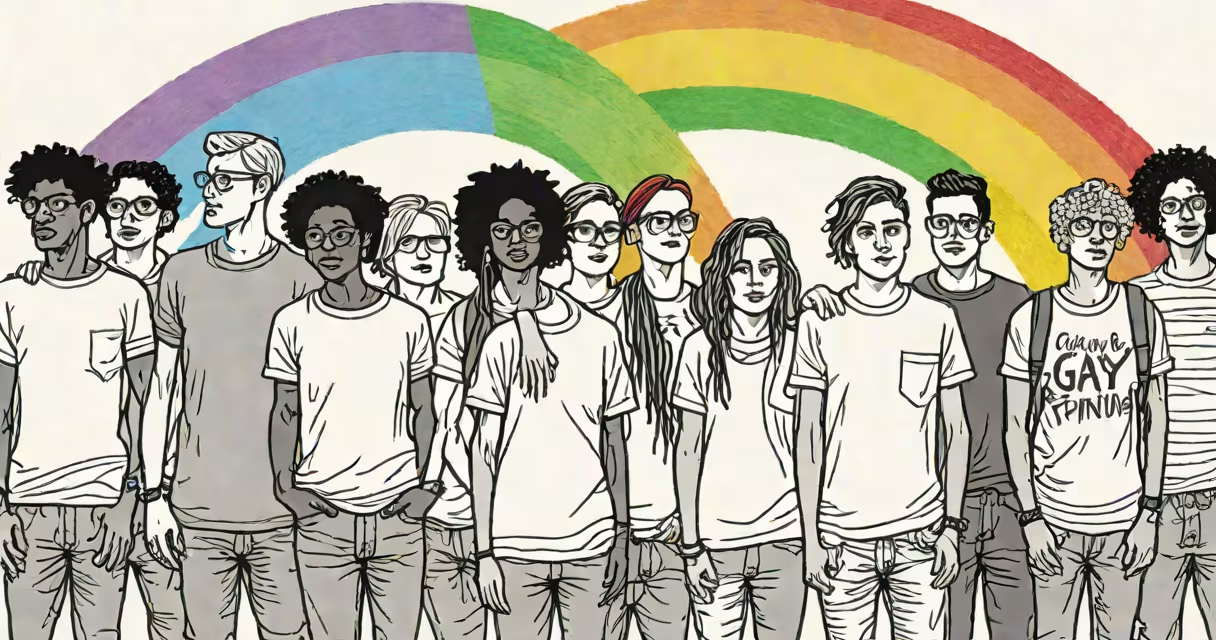
Yes, you can be gay and genderfluid. These identities exist independently and can coexist in one person. Being gay describes your romantic or sexual attraction to people of the same gender, while being genderfluid refers to a gender identity that shifts over time. They are not mutually exclusive.
Sexual orientation and gender identity are distinct aspects of a person's identity. One does not determine the other. A person may feel attracted to men, women, non-binary individuals, or anyone regardless of gender. At the same time, they may experience their gender as changing-sometimes male, sometimes female, sometimes neither, sometimes both. This combination is valid and recognized within LGBTQ+ communities.
The American Psychological Association states that "sexual orientation refers to a person's pattern of romantic or sexual attraction to men, women, both, neither, or multiple genders." Similarly, the National Center for Transgender Equality defines genderfluidity as "a gender identity that changes over time or in different contexts." These definitions confirm that identity components can operate separately.
Sexual orientation is about who you're attracted to. Gender identity is about who you are. A gay man may identify as male, but a gay person who identifies as genderfluid may experience their gender as shifting between masculine, feminine, or non-binary. Their attraction remains toward men, but their internal sense of self is not fixed.
For example, someone might describe themselves as "gay and genderfluid." They are attracted to men, but their gender identity fluctuates-sometimes feeling male, sometimes feeling neither male nor female, sometimes embracing a mix. This does not contradict their gay identity. The attraction stays consistent even as their gender expression evolves.
Genderfluid people can have any sexual orientation. Some are heterosexual, some are bisexual, some are pansexual, and some are gay. There is no rule that says a genderfluid person must be attracted to a specific gender. The combination of gay and genderfluid is common and documented in research and lived experience.
Genderfluidity isn't a single fixed state. It exists along a spectrum of experiences. Some people report daily shifts in gender, others notice changes over weeks or months. Some experience fluidity only in certain settings-like at home versus at work.
| Identity Type | Description | Example |
|---|---|---|
| Fluid in Expression Only | Gender identity remains stable, but clothing, pronouns, or presentation change. | Uses she/her one day, he/him the next, but feels consistently female internally. |
| Fluid in Identity | Internal sense of gender shifts over time. | Identifies as male for a month, then non-binary, then genderless, then back to male. |
| Fluid in Both Identity and Expression | Both internal gender and outward presentation shift. | Changes pronouns and appearance based on mood or environment. |
Being gay and genderfluid often means going through both social expectations and personal understanding. A person may be attracted to men but not always feel comfortable expressing that attraction in ways aligned with traditional masculinity. Their gender fluidity may influence how they present, but not their core attraction.
One widespread misunderstanding is that genderfluid people are "confused" or "just experimenting." This is incorrect. Research from the Williams Institute shows that genderfluid individuals are not more likely to be uncertain about their identity than those with fixed gender identities. Fluidity is a valid identity, not a phase.
Another myth is that being gay requires a fixed male or female identity. That's false. Gay identity is defined by attraction, not gender. A person can be attracted to men while identifying as non-binary or genderfluid. The term "gay" applies to anyone whose primary romantic or sexual orientation is toward people of the same gender, regardless of their own gender identity.
A lesser-known fact: many genderfluid people report that their sexual orientation remains stable even as their gender identity shifts. A study published in the journal *Sexual and Relationship Therapy* found that 68% of genderfluid participants reported consistent sexual orientation over time, despite changes in gender identity. This supports the idea that orientation and identity are independent.
I once met a person at a Pride event who identified as gay and genderfluid. They described their gender as shifting between male and non-binary depending on the day. On Mondays, they felt most aligned with male pronouns. By Thursday, they'd switch to they/them. Their attraction remained consistently toward men. They said, "I love men. That hasn't changed. My gender does. But that doesn't make my love less real."
This story reflects a common reality. Many people live openly as gay and genderfluid. They are not choosing one identity over another-they are integrating both. Their lives are not contradictory; they are whole.
Understanding that you can be gay and genderfluid is not just about labels-it's about validation. It's about knowing that your feelings, attractions, and identity are legitimate, even when they don't fit neatly into boxes.
There is no single way to be gay or genderfluid. There is no hierarchy of authenticity. What matters is honesty with yourself and respect for others' lived experiences. Your identity is yours to define.