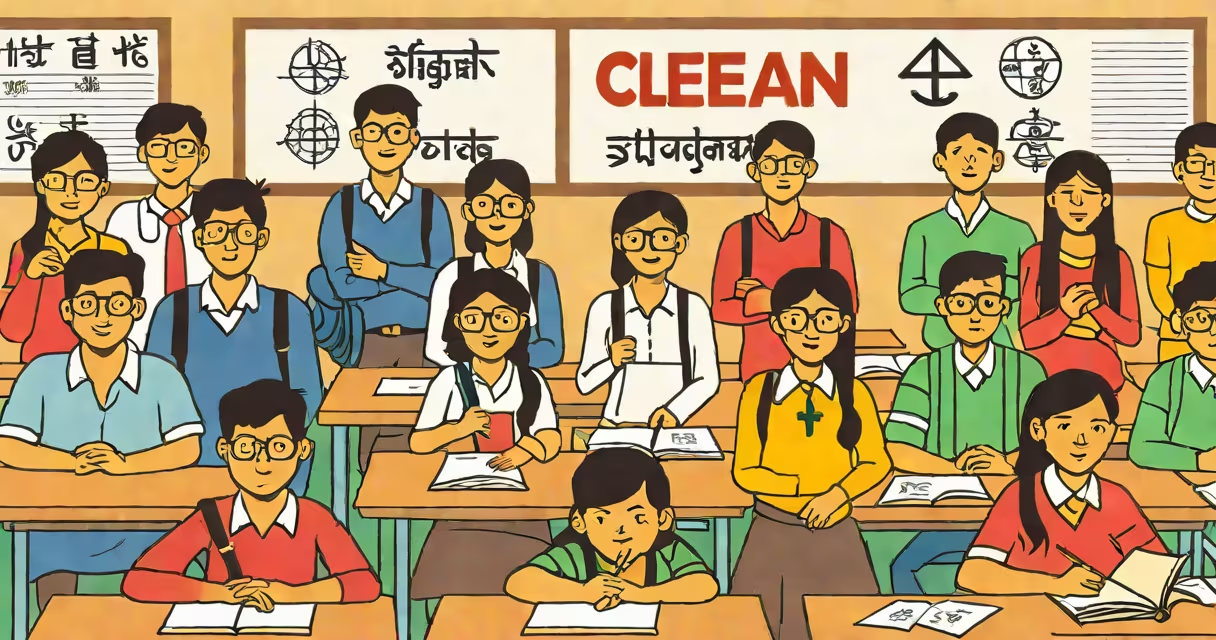
A migrant student is a child or adolescent who has relocated across national borders due to displacement caused by war, violence, persecution, or extreme poverty, and who continues their education in a new country. These students often face disrupted schooling, language barriers, and legal uncertainties that affect their academic progress and mental health.
The term applies to individuals who have left their home country under duress or necessity, including refugees, asylum seekers, and economic migrants. Unlike international students who move voluntarily for higher education, migrant students typically arrive without prior planning and may lack formal documentation. According to UNHCR, over 35 million children worldwide were displaced by conflict in 2023, many of whom fall under this category.
These students are not a monolithic group. Some arrive with family, others unaccompanied. Their educational experiences vary widely based on host country policies, local school systems, and available support services. In countries like Germany and Canada, specific programs exist to integrate migrant students into mainstream classrooms within weeks of arrival.
Upon arrival in a new country, migrant students must go through complex systems to enroll in school. In the United States, public schools are required by law to admit all children regardless of immigration status, per the Supreme Court ruling in Plyler v. Doe (1982). This means a migrant student can attend kindergarten through 12th grade even without legal residency.
However, access does not guarantee success. A 2021 OECD report found that migrant students in OECD countries scored, on average, 30 points lower in reading and math compared to native-born peers. The gap stems from delayed enrollment, limited language proficiency, and trauma-related learning disruptions. For example, a Syrian refugee girl arriving in Istanbul in 2016 had missed three years of school and needed six months of intensive Turkish language instruction before joining a regular class.
Many schools now use placement assessments to determine academic level and language needs. Some districts assign mentors or counselors to help students adjust socially and academically. In Toronto, the Board of Education provides bilingual liaisons and culturally responsive curricula to ease transitions. These supports improve retention and reduce dropout rates among migrant youth.
Migrant students differ based on migration context. The following table outlines key categories and their distinct challenges:
| Type | Common Reasons for Migration | Typical Educational Barriers | Support Examples |
|---|---|---|---|
| Refugee | War, political persecution, violence | Disrupted schooling, trauma, lack of credentials | UNHCR resettlement programs, trauma-informed teaching |
| Economic migrant | Poverty, job scarcity, family reunification | Language gaps, informal education history | Adult literacy classes, vocational training pathways |
| Asylum seeker | Seeking protection while awaiting decision | Legal uncertainty, delayed enrollment | Temporary school access, legal aid partnerships |
| Unaccompanied minor | Separated from family during flight | Psychological distress, lack of guardianship | Child welfare coordination, specialized counseling |
One non-obvious distinction: not all migrant students qualify for refugee status. Many families flee economic collapse but do not meet the legal threshold for asylum. In Mexico, over 60% of Central American migrant children entering U.S. border shelters were classified as "economic migrants," not refugees, despite facing similar risks.
Another overlooked issue is credential recognition. A 17-year-old from Afghanistan who completed Grade 10 in Kabul may still need to repeat grades in a German school due to differences in curriculum standards. This leads to frustration and disengagement. Some countries, like Sweden, have established national equivalency frameworks to assess foreign qualifications more efficiently.
One widespread myth is that migrant students are a burden on public education systems. Research from the Migration Policy Institute shows that migrant students contribute positively to school diversity and long-term economic growth. In 2022, immigrant-origin students in the U.S. earned 28% of bachelor's degrees, despite making up only 13% of the population.
Another misconception is that all migrant students speak the host country's language. In reality, only 40% of newly arrived migrant students in EU countries achieve basic proficiency in the local language within two years. Schools that assume fluency often misplace students in inappropriate grade levels, leading to academic failure.
I once observed a middle school in Berlin where a 12-year-old from Somalia was placed in a 6th-grade math class despite having studied algebra in Mogadishu. His teacher initially assumed he was behind, but after a diagnostic test, he was moved to advanced math. This case illustrates how assumptions about skill level can derail integration efforts.
National and regional policies play a critical role in shaping outcomes. Countries with inclusive education frameworks see better results. For example, Canada's Federal Government allocates $1.2 billion annually to support refugee settlement, including education. As a result, 78% of refugee youth in Canada complete high school, compared to 63% in the U.S.
Local initiatives also make a difference. In New York City, the Department of Education runs the "Newcomer Academy" program, which offers sheltered instruction in English, social-emotional learning, and college readiness. Over 80% of participants graduate on time, outperforming city averages.
Despite progress, systemic gaps remain. A 2023 UNESCO study found that only 50% of migrant students in low-income countries attend secondary school, compared to 90% in high-income nations. This disparity reflects unequal global investment in education for displaced populations.
Understanding what is a migrant student requires recognizing both their resilience and the structural obstacles they face. Their success depends not just on individual effort, but on policies that ensure equitable access, accurate assessment, and sustained support.