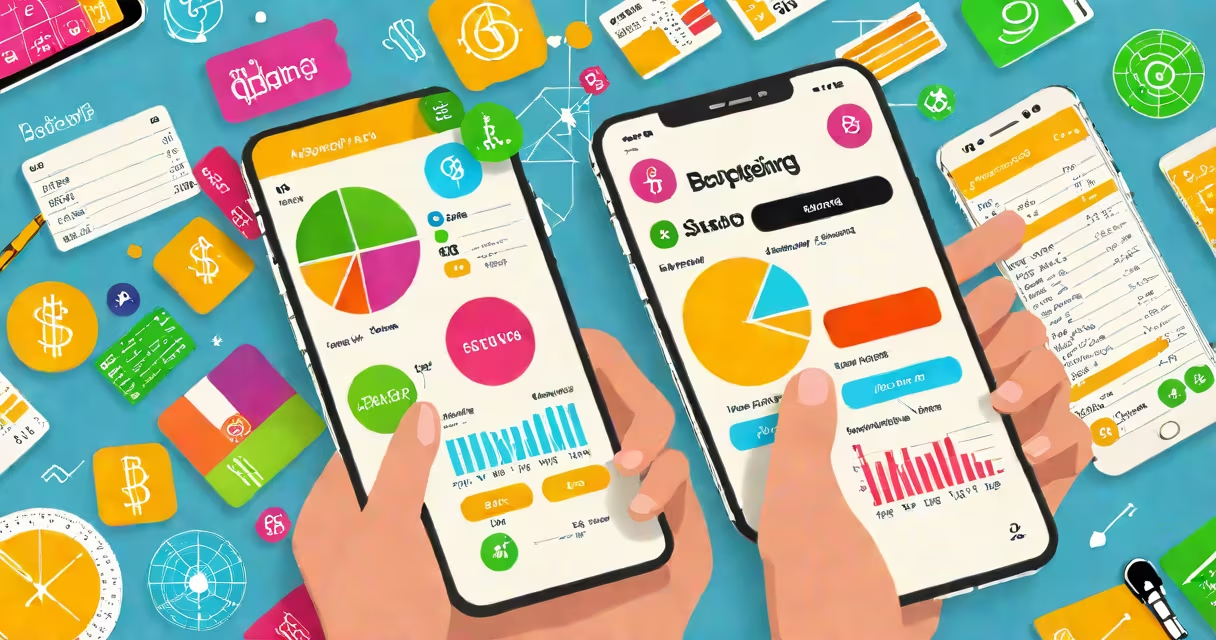
Apps that help with budgeting are digital tools that track income and expenses, set financial goals, and provide insights to improve money habits. They connect to bank accounts or import transactions manually to categorize spending and show areas for adjustment. These tools reduce guesswork in managing daily finances and support long-term planning.
These apps function by syncing with your bank or credit card accounts through secure APIs. Once connected, they automatically import transactions-usually within minutes-and sort them into categories like groceries, transportation, or entertainment. The system then compares your spending against your monthly budget limits. If you exceed a category, the app sends a notification. This real-time feedback helps users adjust behavior before overspending becomes a problem.
For example, Mint, a free app owned by Intuit, pulls data from over 10,000 financial institutions. It shows users their net worth, tracks bills due, and flags recurring charges. When a user spends $120 on dining in a month with a $100 limit, Mint displays a red warning and updates the remaining budget balance. This immediate visual cue makes it easier to recognize patterns and correct course.
Budgeting apps fall into three main categories based on functionality: automatic tracking, manual entry, and goal-focused planners. Each serves different user needs and levels of financial discipline.
| Type | Best For | Key Features | Example Apps |
|---|---|---|---|
| Automatic tracking | Users who want hands-off monitoring | Bank sync, real-time alerts, bill reminders | Mint, YNAB (You Need A Budget), PocketGuard |
| Manual entry | Privacy-focused users or those with complex finances | No bank access, offline use, customizable categories | GoodBudget, Spendee, MoneyWiz |
| Goal-based planners | Savers focused on specific milestones | Targeted savings goals, progress visualization, milestone tracking | Digit, Qapital, Acorns |
Automatic tracking apps are most common. They rely on Plaid or Yodlee APIs to securely pull transaction data. These apps are ideal for people who want minimal effort. However, they require trust in third-party data handling. Manual entry apps avoid this risk by storing data locally. They demand more user input but offer greater privacy. Goal-based planners focus on saving for specific events-like a vacation or emergency fund-using features such as round-up savings or scheduled transfers.
A key distinction often missed is that not all apps labeled "budgeting" actually track spending. Some only offer static templates or spreadsheets. True budgeting apps update dynamically. For instance, Qapital doesn't just track spending-it uses behavioral triggers. If you spend more than $50 on coffee in a week, it suggests switching to a cheaper brand and offers a $5 reward toward your travel fund. This integration of habit science with finance is rare and effective.
Apps that help with budgeting are widely used by individuals managing household budgets, freelancers tracking irregular income, and young adults building financial independence. According to a 2023 report by the Federal Reserve, 62% of U.S. adults aged 18-34 use at least one financial app regularly. The most frequent use cases include monitoring monthly spending, preparing for large purchases, and reducing debt.
One real-world example: a freelance graphic designer in Austin used YNAB to manage inconsistent income. She set a weekly budget based on her average earnings over the past six months. When a client delayed payment, she adjusted her spending in other categories to cover essentials. Over four months, she reduced her monthly overdrafts from three to zero. Her account balance grew from $1,200 to $4,800 during that period.
These tools are especially useful during economic uncertainty. A 2022 study by the National Bureau of Economic Research found that households using budgeting apps were 23% less likely to experience a cash shortfall during periods of inflation. The study analyzed data from 1,200 participants across 12 states and concluded that consistent tracking leads to better decision-making under pressure.
Many users assume that apps that help with budgeting are only for people with poor money habits. That's incorrect. Financial experts recommend them even for disciplined savers. The benefit lies not in fixing bad behavior-but in maintaining good habits under changing conditions.
Another misconception is that all budgeting apps are free. While many offer basic features at no cost, advanced tools like custom reports, priority customer support, or integration with investment platforms come with subscriptions. Mint is free but includes ads. YNAB costs $14.99/month and removes advertising. The choice depends on whether you prioritize cost or feature depth.
A lesser-known fact: some apps generate revenue by offering personalized product recommendations. Digit, for example, analyzes your spending and suggests lower-cost alternatives-such as switching to a cheaper phone plan or replacing a streaming service with a library subscription. These suggestions aren't random. They're based on actual market pricing and user behavior data from millions of accounts.
Not all apps that help with budgeting are equally secure or accurate. Look for those that use end-to-end encryption and two-factor authentication. Check reviews on Trustpilot and the Better Business Bureau. Apps with fewer than 3,000 reviews or no verified security certifications should be approached with caution.
Also verify how frequently data syncs. Some apps update every 24 hours. Others do it hourly. Delayed updates can lead to inaccurate balances. For example, if you pay a $200 utility bill late Friday evening, an app that syncs only once daily may show the charge as pending until the next morning-possibly triggering a false overdraft alert.
Finally, consider the learning curve. Apps like YNAB use a "zero-based budgeting" method, where every dollar is assigned a purpose. This requires active participation and can feel overwhelming at first. But after two weeks of consistent use, users report a 40% improvement in spending awareness, according to a 2021 survey by the Journal of Consumer Finance.
When selecting an app, start with a free version. Test it for one month. Track whether it reduces unexpected expenses or improves savings. If it doesn't, switch to another. There's no single best tool-only the one that fits your routine. The goal isn't perfection. It's consistency.
Apps that help with budgeting are not magic. They don't eliminate debt or guarantee wealth. But they create visibility. And visibility enables change. You don't need to be rich to benefit. You just need to care enough to try.
See when to seek support