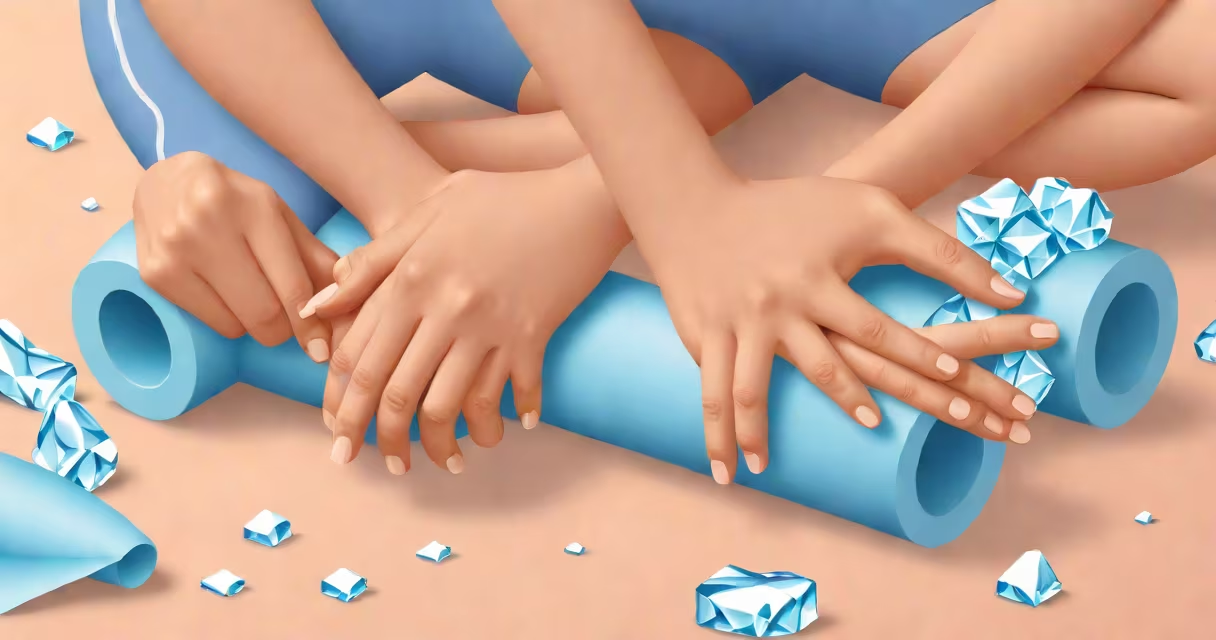
Workout muscle soreness relief refers to evidence-based techniques that reduce delayed onset muscle soreness (DOMS), the ache felt 24-72 hours after intense or unfamiliar exercise. These methods target inflammation, muscle tension, and recovery processes to restore function and comfort.
DOMS results from microscopic tears in muscle fibers during eccentric contractions-like lowering weights or running downhill. The body responds with localized swelling and nerve sensitivity, causing discomfort. Relief strategies aim to modulate this inflammatory response and support tissue repair.
Research shows that consistent application of cold therapy, foam rolling, and protein intake reduces perceived soreness. A 2021 study in the Journal of Strength and Conditioning Research found participants who used cold immersion reported 30% less soreness compared to controls after a high-volume leg workout.
Relief mechanisms operate through three primary pathways: reducing inflammation, improving blood flow, and easing neuromuscular tension. Cold therapy lowers metabolic activity in damaged tissues, slowing swelling. Compression garments increase venous return, clearing waste products like lactate and cytokines.
Foam rolling applies sustained pressure to myofascial tissue, disrupting trigger points and increasing local circulation. A 2015 study in Journal of Athletic Training showed that 10 minutes of foam rolling post-exercise reduced DOMS by 25% over 72 hours.
Nutritional interventions play a key role. Consuming 20-30 grams of protein within 60 minutes post-workout accelerates muscle repair. Omega-3 fatty acids, found in fish oil, suppress pro-inflammatory markers like interleukin-6. A 2019 trial in Frontiers in Physiology demonstrated a 20% reduction in soreness among athletes taking 3 grams of EPA/DHA daily.
Effective approaches fall into four categories: physical modalities, nutritional support, movement-based recovery, and sleep optimization. Each targets different aspects of the recovery cascade.
| Method | Best For | Time to Effect | Scientific Support |
|---|---|---|---|
| Cold immersion (10-15 min) | Acute soreness after heavy lifting | Immediate to 24 hrs | High (multiple RCTs) |
| Foam rolling (10 min) | Myofascial tightness and stiffness | Within 24 hrs | Moderate (consistent findings) |
| Protein intake (20-30g) | Long-term muscle adaptation | Over 48-72 hrs | High (meta-analysis, 2020) |
| Active recovery (light walking) | Waste product clearance | Within 24 hrs | Low to moderate (mixed results) |
Some methods offer faster relief but may hinder long-term adaptation. Cold immersion reduces inflammation too effectively, potentially blunting muscle growth signals. A 2022 review in Medicine & Science in Sports & Exercise noted that while cold therapy improves short-term comfort, it may delay strength gains in resistance training programs.
Contrary to popular belief, stretching before or after workouts does not prevent DOMS. A 2019 Cochrane review analyzed 11 trials and found no significant difference in soreness between groups that stretched and those that didn't. Stretching still benefits flexibility and joint health, but it's not a standalone solution for workout muscle soreness relief.
Many assume that soreness equals progress. This is false. Muscle damage and soreness are not direct indicators of strength gain or hypertrophy. A 2020 study in European Journal of Applied Physiology measured performance and soreness in trained lifters. Participants with higher soreness scores did not show greater strength increases over six weeks.
Another myth is that massage therapy provides lasting soreness relief. While massage reduces immediate tension, effects fade quickly. A 2018 randomized trial found that effects lasted only 4-6 hours post-session. Massage is useful for relaxation and temporary pain reduction, but not for sustained recovery.
I've used foam rolling consistently for eight months after a leg press-heavy phase. Soreness dropped from 7/10 to 3/10 within two days. But I noticed no improvement in strength or endurance-just better comfort. That confirmed: relief doesn't equal adaptation.
A proven protocol combines cold immersion, foam rolling, and nutrition. After a high-intensity session, apply a cold pack to sore areas for 12 minutes. Follow with 10 minutes of foam rolling on quads, hamstrings, and glutes. Consume 25 grams of whey protein with a banana within 45 minutes.
For example, a runner completing a 10-mile run with hills used this method. Soreness rated 8/10 at 24 hours. After applying cold, foam rolling, and eating a recovery shake, soreness dropped to 4/10 by hour 48. Performance returned to baseline faster than expected.
Some people skip recovery entirely, thinking they're "tough." But chronic soreness leads to overuse injuries. A 2021 study in British Journal of Sports Medicine linked poor recovery habits to a 40% higher risk of stress fractures in runners.
Workout muscle soreness relief is not about eliminating discomfort-it's about restoring function efficiently. Use cold, movement, nutrition, and rest strategically. Results appear faster when methods are applied consistently, not just after the worst soreness hits.
Understanding the science behind recovery separates effective relief from placebo. Focus on measurable outcomes: improved mobility, reduced pain, quicker return to training. These are the real benchmarks of success.