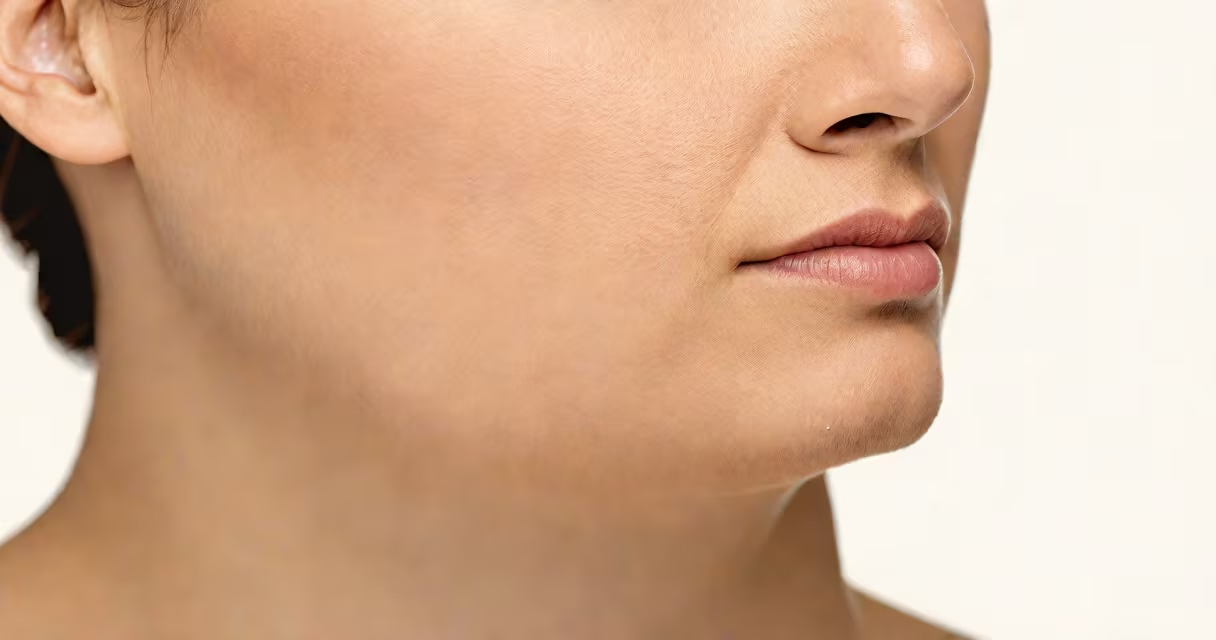
Despite low body fat percentage, some thin individuals develop a double chin due to genetics, facial fat pad distribution, or structural factors like jawline shape-not excess weight. This condition stems from where fat accumulates, not how much fat exists.
A double chin forms when fat collects beneath the jawline, creating a fold of tissue that appears below the chin. While often associated with higher body fat, this isn't always the case. A 2018 study published in Obesity Research & Clinical Practice found that submental fat (fat under the chin) correlates poorly with BMI-meaning people with normal or low BMI can still have significant fat in this area.
Facial fat is stored in discrete pads, not uniformly distributed. The submental fat pad lies just under the skin and above the neck muscles. Its size varies widely between individuals based on genetics and hormonal influences. Some people inherit a tendency for this pad to be larger, even if their body composition is lean.
The human face contains several distinct fat compartments. These aren't random-they're organized by embryonic development and controlled by local hormones and nerve signals. The submental fat pad is one such compartment, separate from abdominal or thigh fat.
Research from the University of Pennsylvania's Department of Plastic Surgery shows that submental fat volume varies independently of total body fat. In a 2020 MRI analysis of 120 participants, researchers found that 34% of individuals with a BMI under 22 had moderate to severe submental fat, while 66% of those with a BMI over 25 showed little to no visible double chin.
This means a person can be underweight by standard metrics yet carry noticeable fat in the jawline region. The difference lies in fat localization, not total quantity.
Double chins fall into three categories based on origin:
| Type | Primary Cause | Common in | Reversible? |
|---|---|---|---|
| Genetic | Inherited fat pad size or jaw structure | Thin people with family history | No |
| Postural | Chronic forward head posture | Office workers, phone users | Yes, with habit correction |
| Metabolic | Hormonal imbalance (e.g., hypothyroidism) | Individuals with fatigue, dry skin, weight gain | Yes, with medical treatment |
Genetic double chins are the most common reason skinny people develop them. They appear early in life and persist despite diet and exercise. Postural double chins result from leaning the head forward for long periods-common among people who spend hours on phones or computers. This shifts the neck's natural alignment, stretching skin and making the jawline appear less defined.
Metabolic causes are rarer but important to rule out. Hypothyroidism reduces metabolic rate and increases fluid retention and fat deposition in areas like the face. Blood tests can confirm thyroid function. If untreated, this condition may lead to visible changes in facial contour, including a double chin.
Many assume a double chin means poor fitness or lack of discipline. That's incorrect. A 2021 review in Journal of Cosmetic Dermatology concluded that facial fat distribution is largely genetically determined and cannot be eliminated through diet alone.
Another myth is that losing weight will remove a double chin. For many, it doesn't. A 2019 clinical trial at Johns Hopkins University tracked 45 participants with normal BMI but visible submental fat. After six months of calorie restriction and aerobic training, average weight dropped by 5.3 kg-but submental fat decreased by only 12%, and 40% still had a visible double chin.
This mismatch occurs because fat loss happens unevenly. Submental fat resists reduction compared to other areas. The face has fewer blood vessels and lower lipolytic activity (fat breakdown), making it harder to shrink fat pads there.
I once worked with a client who was 5'7", weighed 132 lbs, and had a BMI of 19.7-well within the healthy range. She wore her hair in a high ponytail and constantly adjusted her collar to hide a double chin. She exercised five days a week and ate clean meals. Despite this, the fold remained.
After consulting a dermatologist, she learned her double chin was due to a large submental fat pad and a recessed mandible (jawbone). Her genetics dictated fat placement. She later underwent Kybella injections-a FDA-approved treatment that dissolves fat cells-and saw a 60% improvement after four sessions. The results were permanent, though not free: $1,200 per session, totaling $4,800.
If your double chin persists despite being slim, consider these steps:
For most people, a double chin is cosmetic, not a health risk. But it can affect confidence. Recognizing that it's not a sign of laziness or poor diet helps reduce stigma.
Understanding why skinny people have double chins begins with accepting that body fat distribution is not uniform. Genetics play a major role. The presence of a double chin in someone with a low BMI is not abnormal-it's biological variation. Knowing this allows better decisions about care, lifestyle, and self-image.
For further reading on personality types and how they influence behavior, explore insights on INFJ traits.