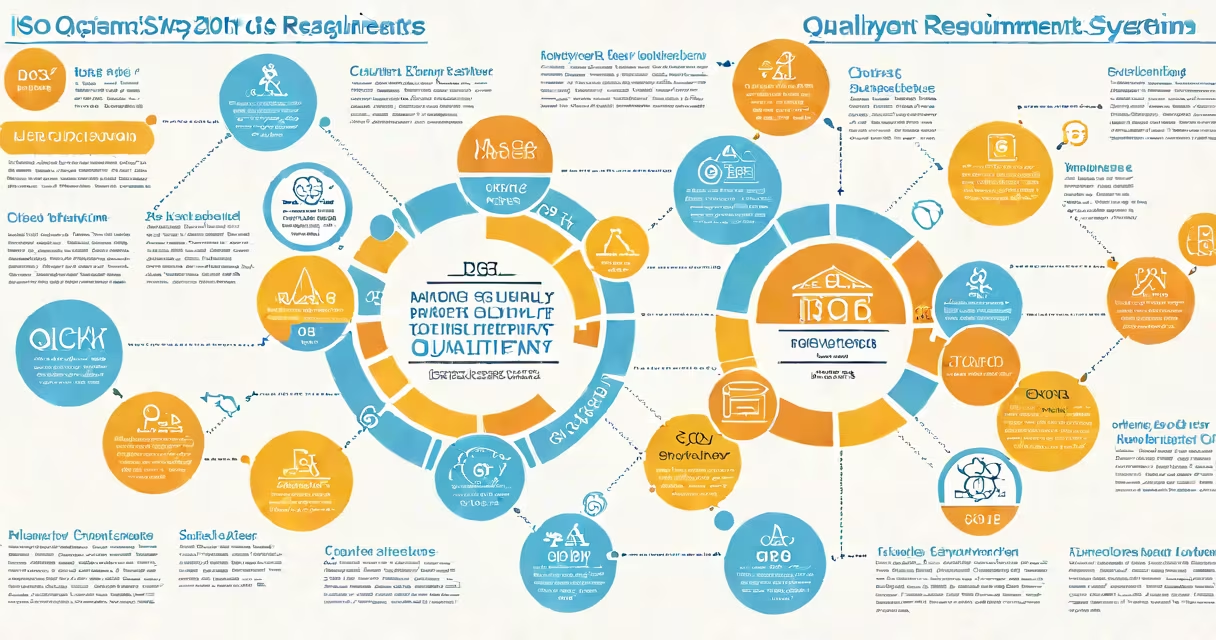
ISO 9001:2015 QMS requirements are the mandatory criteria for establishing, maintaining, and improving a quality management system that ensures consistent delivery of products and services meeting customer and regulatory expectations.
The standard applies to all organizations, regardless of size or sector, and replaces the 2008 version with a stronger focus on leadership, risk-based thinking, and process outcomes. It specifies requirements for a systematic approach to managing activities that affect quality, including planning, execution, monitoring, and continuous improvement.
Organizations must demonstrate compliance through documented evidence, internal audits, and management reviews. Certification to ISO 9001:2015 is awarded by accredited third-party bodies after successful assessment. The standard does not prescribe specific procedures but defines what must be achieved.
The standard uses a high-level structure (Annex SL) shared with other ISO management system standards, making integration with environmental, safety, or financial systems easier. This structure includes ten sections, with clauses 4 through 10 containing the core operational requirements.
Clause 4 defines the context of the organization, requiring identification of internal and external factors affecting quality objectives. Clause 5 mandates leadership accountability, requiring top management to demonstrate commitment by setting quality policy, assigning responsibilities, and ensuring resources are available.
Clause 6 focuses on planning, requiring organizations to identify risks and opportunities related to quality objectives. For example, a medical device manufacturer must assess supply chain disruptions or changes in FDA regulations. These assessments inform action plans to prevent negative impacts and exploit favorable conditions.
ISO 9001:2015 divides requirements into four categories: contextual, leadership, process, and performance. Each serves a distinct purpose in building a resilient quality system.
| Requirement Type | Key Focus | Example |
|---|---|---|
| Contextual | Understanding internal/external factors | Identifying new import tariffs affecting raw material costs |
| Leadership | Top management responsibility | CEO approving annual quality objectives and budget |
| Process | Planning and control of operations | Documented procedure for handling customer complaints within 48 hours |
| Performance | Monitoring, analysis, and improvement | Monthly review of defect rates and corrective actions taken |
Documentation is not required for every process, but records must exist to prove conformity. A small software firm may not document every coding step but must retain logs showing peer review and testing results for each release.
One non-obvious requirement is the emphasis on "context of the organization" (Clause 4). Many organizations overlook this, assuming they only need to address customer needs. But the standard requires assessing legal, technological, economic, and social factors that influence quality outcomes. A food processor must consider local health regulations, climate change impacts on ingredient sourcing, and evolving consumer preferences around allergens.
Over 1 million certificates have been issued globally since 2015, according to ISO's official statistics. Industries such as aerospace, automotive, healthcare, and manufacturing commonly adopt the standard due to supplier contract demands.
For example, a subcontractor in the automotive supply chain must meet ISO 9001:2015 to qualify for contracts with OEMs like Ford or Toyota. Failure to comply excludes them from bidding. Even service providers-such as IT support firms or logistics companies-must implement the standard to win government or enterprise contracts.
Smaller businesses benefit too. A family-owned bakery in Portland, Oregon, implemented ISO 9001:2015 to reduce batch inconsistencies. After mapping production steps and tracking ingredient variance, they reduced customer returns by 40% in six months and won a contract with a regional grocery chain.
Many confuse ISO 9001:2015 with ISO 9000 or ISO 9004. ISO 9000 provides terminology and concepts; ISO 9004 offers guidance on performance excellence beyond certification. Only ISO 9001 contains mandatory requirements for certification.
Another misconception is that the standard requires extensive paperwork. In reality, the 2015 revision removed prescriptive documentation language. Organizations now choose what to document based on risk and effectiveness. A startup developing mobile apps may maintain only a quality manual, process maps, and audit reports-not hundreds of forms.
I once observed a mid-sized electronics assembler fail their initial audit because they misunderstood "risk-based thinking." They had documented risks for equipment failure but ignored supplier delivery delays. The auditor flagged this gap. After adding supplier performance metrics and contingency plans, they passed on the second attempt.
Some assume ISO 9001:2015 applies only to manufacturing. But it's equally relevant to education, consulting, and public administration. A university admissions office using the standard improved application processing time by 30% through standardized workflows and staff training.
A mid-sized engineering consultancy in Denver wanted to achieve ISO 9001:2015 certification. Here's how they applied the requirements:
After eight months of implementation, they passed the certification audit. Their client retention rate increased by 22% within a year.
Organizations seeking templates to align with iso 9001 2015 qms requirements can access structured tools designed for clarity and compliance. These templates cover quality manuals, process maps, risk registers, and audit checklists, reducing setup time and ensuring consistency across departments.
ISO 9001:2015 QMS requirements are not a checklist to tick off. They are a living system that evolves with organizational goals and market demands. Success comes not from perfect documentation, but from consistent application, leadership engagement, and a culture of continual improvement.