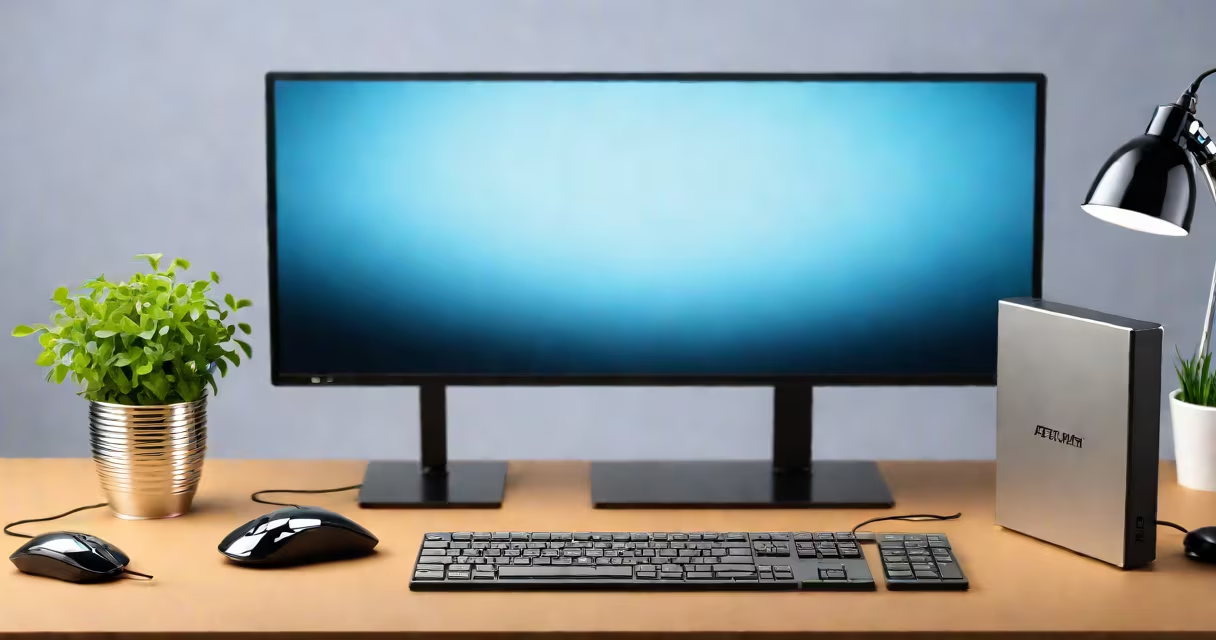
Computers process data, run software, control machines, store information, and enable communication across devices. They perform tasks ranging from simple calculations to complex simulations, serving roles in homes, businesses, science, and entertainment.
At their core, computers execute instructions stored in memory. A central processing unit (CPU) interprets these commands, while input devices like keyboards and mice send data, and output devices such as screens and speakers display results. Storage units retain programs and files. This system enables everything from browsing the web to managing global supply chains.
Modern computers aren't limited to desktops or laptops. Embedded systems in cars, thermostats, medical devices, and smart appliances rely on microprocessors to function. These systems often operate silently, handling tasks like temperature regulation or engine timing without direct user interaction.
When you type a search query, your computer sends the request through a network to a server. The server retrieves relevant web pages, processes them, and returns the results. Your device renders the page using graphics processors and displays it on screen-all within seconds.
Each step involves hardware and software working together. The operating system manages access to memory, storage, and peripherals. Applications like word processors or video editors use CPU cycles and RAM to manipulate data. Graphics cards accelerate rendering for games or design software.
For example, a video editor uses a computer to decode raw footage, apply filters, adjust color grading, and export a final file. This process demands high-speed processing, large memory capacity, and fast storage. Without dedicated hardware, such tasks would take hours or days.
Computers serve diverse fields with specialized functions:
| Industry | Primary Computer Use | Example Application |
|---|---|---|
| Healthcare | Medical imaging and patient records | MRI scans processed by AI algorithms to detect tumors |
| Finance | Transaction processing and risk modeling | High-frequency trading systems executing trades in microseconds |
| Manufacturing | Robot control and quality inspection | Automated assembly lines guided by machine vision systems |
| Education | Learning management and interactive lessons | Students using simulation software to model physics experiments |
These applications rely on both general-purpose and specialized computing. Supercomputers analyze climate models, while edge devices in IoT networks collect sensor data locally to reduce latency.
Computers handle four broad categories of work:
Some tasks blur boundaries. A graphic designer uses a computer to manage client communications, schedule deadlines, and invoice payments-all within integrated software suites.
People often assume computers "think" or make decisions independently. They don't. A computer follows programmed logic. When a recommendation appears on Netflix, it's based on algorithms trained on millions of viewing patterns-not intuition.
Another error is equating speed with capability. A useful gaming PC may outperform a basic laptop in rendering, but that doesn't mean it's better for accounting. Purpose matters more than raw performance.
A lesser-known fact: many computers run on open-source software. Linux powers 90% of the world's supercomputers and most cloud servers. The Apache HTTP Server handles over 40% of websites globally. These systems are free, customizable, and widely audited for security.
I once built a home weather station using a Raspberry Pi-a small single-board computer. It collected temperature, humidity, and wind data every 15 minutes, sent it to a local server, and displayed graphs online. The entire setup cost under $50 and ran on solar power. That project showed me how accessible computing can be-even for non-programmers.
Computers cannot replace human judgment in ethical decisions. They lack emotional awareness, cultural context, or moral reasoning. While AI can suggest diagnoses, doctors still evaluate symptoms, patient history, and social factors before treatment.
They also don't maintain themselves. A computer requires regular updates, backups, and maintenance. A hard drive failure can erase years of work if no redundancy exists. Human oversight remains essential.
Finally, computers don't create original ideas. They generate outputs based on existing data. An AI art generator combines visual elements from training images to produce new ones-but those images are not inventions. They're remixes.
Computers are used for processing information, automating workflows, enabling communication, and supporting creativity. Their role spans from controlling household devices to running global financial systems. Understanding what they do-and what they don't-helps clarify their real-world impact.