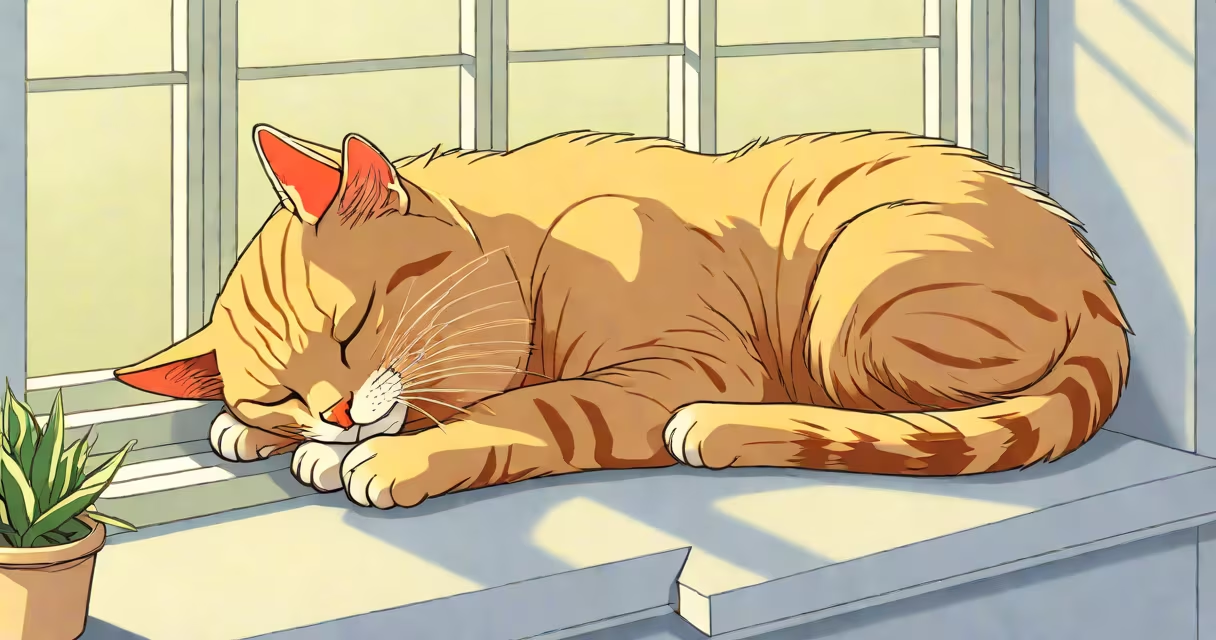
Cats sleep in unusual positions-curled into tight balls, sprawled on their backs, or balanced precariously on edges-because these postures serve survival, thermoregulation, and muscle recovery functions shaped by evolution. Their anatomy and instinctual behaviors drive these choices, not randomness.
Domestic cats spend 12 to 16 hours daily sleeping, often in short bursts. This pattern stems from their wild ancestors, who needed to conserve energy between hunting attempts. A cat's sleep cycle includes light sleep, deep sleep, and REM phases, during which they may twitch or move suddenly-signs of dreaming. These cycles influence how and where they rest.
When a cat curls into a compact ball, it minimizes surface area exposed to cold air, reducing heat loss. The American Society for the Prevention of Cruelty to Animals (ASPCA) notes that cats maintain body temperature through fur density and posture, especially in cooler environments. A study published in Animal Behaviour found that cats in colder climates adopt tighter postures more frequently than those in warmer regions.
Many odd sleeping positions are rooted in predator-prey dynamics. Wild cats like the African wildcat (Felis lybica) evolved to remain alert even while resting. A cat lying on its side with ears forward can react quickly to movement. This posture allows rapid transition to standing or fleeing-critical for avoiding danger.
Other positions reflect comfort and safety. A cat sleeping on its back exposes its belly-a vulnerable area. Only a secure environment triggers this relaxed state. According to the Cornell Feline Health Center, this position indicates trust and low stress levels. A cat that sleeps on your lap or bed likely views you as part of its social group.
Some cats perch on narrow surfaces like window sills or bookshelves. This behavior isn't random. Elevated spots offer visibility and escape routes. A 2021 study in Frontiers in Psychology showed that indoor cats prefer sleeping at heights, even when ground-level options are available. Height reduces perceived threat and improves environmental awareness.
Understanding typical cat postures reveals insight into their physical and emotional states. Below are key positions and their meanings:
| Position | Physical Meaning | Emotional/Behavioral Signal |
|---|---|---|
| Curled ball (fetal position) | Minimizes heat loss; protects important organs | Comfortable, safe, conserves energy |
| On back with legs in the air | Relaxes muscles; allows cooling | Trusting environment; high comfort level |
| Stretched out (starfish pose) | Maximizes surface area for cooling | Warm environment; relaxed, possibly drowsy |
| Perched on edge (e.g., windowsill) | Provides vantage point; avoids ground-level threats | Alert; monitoring surroundings |
These positions aren't interchangeable. A cat that curls tightly in a cold room likely feels safe. One stretching out on a heated tile floor is regulating body temperature. Misreading posture as "weird" ignores context-each position serves a purpose.
Many owners assume a cat's odd sleeping stance signals illness or discomfort. But most unusual positions are normal. For example, a cat sleeping upside-down on a couch may appear awkward-but this position allows the cat to rest while still watching the room. It's not a sign of distress; it's a strategic choice.
Another common misunderstanding: cats sleeping with their heads tucked under their bodies. This isn't laziness-it's thermoregulation. The head holds a high concentration of blood vessels. Tucking it close reduces heat loss. The National Institute of Health (NIH) reports that mammals regulate core temperature through behavioral adjustments, including positioning.
A non-obvious fact: cats don't always sleep deeply. During light sleep, they may twitch or move their paws-this is normal. A cat might appear to be in a deep sleep but is actually in a state of semi-alertness. This allows them to respond to sudden stimuli, such as a door creak or bird call. Confusing this with restlessness leads to unnecessary concern.
Consider Luna, a 4-year-old domestic shorthair living in a suburban home. She spends 14 hours asleep each day. Her routine includes:
Luna's movements follow natural patterns. She chooses positions based on temperature, security, and sensory input. Her behavior aligns with research from the University of California, Davis, which found that cats adjust sleep posture based on ambient temperature and perceived risk.
I once observed a cat named Oliver sleep on a narrow shelf above a doorway. He remained perfectly still for nearly two hours. When a person walked past, he didn't flinch. His eyes were half-closed, but his ears rotated toward sounds. This wasn't a random pose-it was a calculated choice to stay hidden while remaining aware. He had chosen a spot with good visibility and minimal exposure.
Some people think cats sleep in weird positions because they're disoriented or unwell. But signs of illness include prolonged lethargy, difficulty waking, or changes in appetite. A cat that moves normally between positions and responds to stimuli is healthy.
Finally, not all odd positions are intentional. Some cats develop temporary postures due to muscle stiffness or joint pain. If a cat consistently avoids certain positions or shows discomfort when moving, consult a veterinarian. But frequent, varied, and reversible postures are normal.
Understanding why cats sleep in weird positions reveals deeper truths about their biology, instincts, and relationships. These postures aren't quirks-they're adaptations. Recognizing them helps owners support their cats' well-being and strengthen bonds.