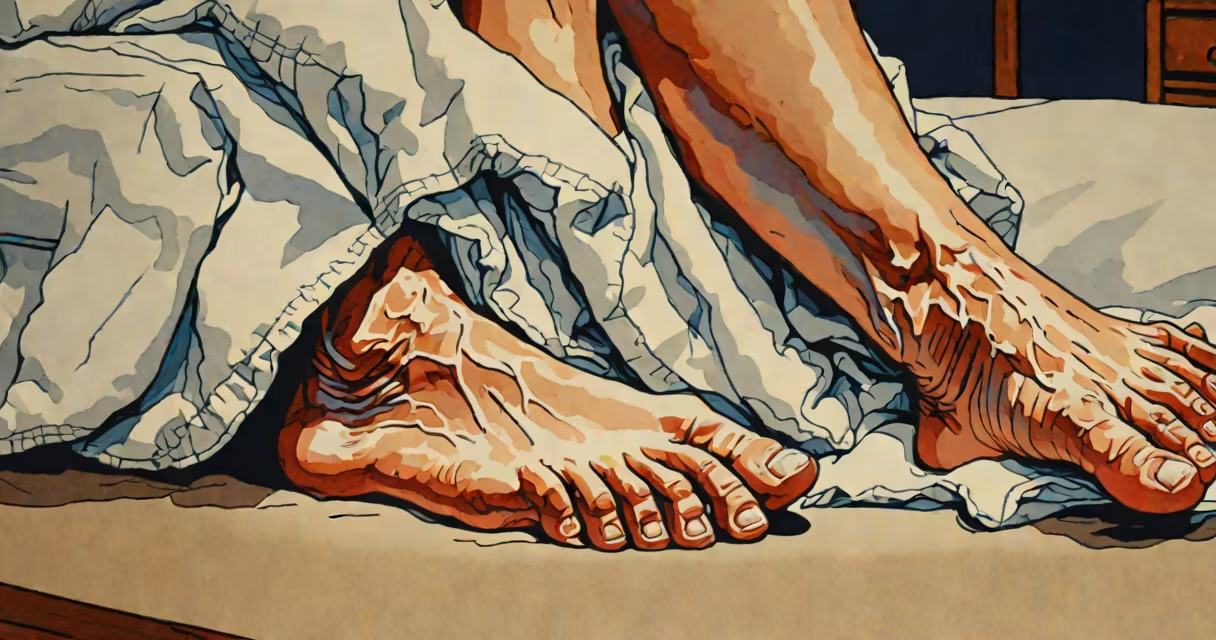
A muscle cramp in sleep is a sudden, painful contraction of a muscle that occurs while lying down or resting, most commonly in the calf, foot, or thigh. These episodes typically last seconds to minutes and resolve on their own. They are distinct from muscle soreness or strain and are not caused by physical exertion.
Cramps during sleep result from abnormal nerve signaling that causes sustained muscle fiber activation. The exact mechanism remains unclear, but contributors include dehydration, electrolyte imbalances (especially low potassium, calcium, or magnesium), reduced blood flow, and nerve irritation. Some people experience them frequently; others rarely do.
According to the American Academy of Neurology, about 60% of adults report at least one nocturnal cramp in their lifetime, with higher rates in older adults and pregnant women. Cramps are not dangerous in isolation but can disrupt sleep and cause discomfort. Persistent or severe cases may indicate underlying conditions such as peripheral artery disease or spinal stenosis.
During sleep, muscles relax and metabolic activity slows. But in some individuals, nerve signals misfire, triggering a reflexive contraction. This is believed to stem from altered excitability in motor neurons, possibly due to changes in ion balance across cell membranes.
When calcium levels drop in muscle cells, calcium leaks out of storage sites and triggers contraction. Without adequate magnesium to regulate calcium release, the muscle stays contracted. Dehydration reduces fluid volume around nerves and muscles, increasing irritability. A 2017 study in Neurology found that people with frequent cramps had lower serum magnesium levels compared to controls.
Another factor is prolonged static positioning. Lying with the foot pointed downward (plantar flexion) stretches the calf muscles and increases tension. This position is common during sleep and may explain why cramps often wake people from deep sleep.
While cramps can affect any muscle group, the most common locations are:
Triggers vary widely. Common ones include:
Some medications increase risk. A 2020 review in Journal of Clinical Medicine linked statins (used for cholesterol) to a 1.5-fold increased incidence of nocturnal cramps. Patients on these drugs reported cramping more than twice as often as those not taking them.
| Type | Common Location | Typical Trigger |
|---|---|---|
| Idiopathic | Calf, foot | Unknown cause; most common type |
| Exercise-related | Legs, feet | Daytime activity leading to fatigue |
| Medication-induced | Any limb | Diuretics, statins, beta-blockers |
| Neuropathic | Spine-associated areas | Nerve compression, e.g., sciatica |
muscle cramp in sleep is not the same as muscle soreness, which develops hours after exercise and resolves within days. It is also not a sign of a heart attack or stroke, despite the pain sometimes mimicking chest or limb ischemia.
A common myth is that cramps are caused solely by lack of potassium. While low potassium contributes, research shows it's less significant than magnesium and calcium imbalances. A 2019 study in European Journal of Applied Physiology found that correcting magnesium deficiency reduced cramp frequency by 40%, while potassium supplementation had minimal effect.
Another misconception is that stretching before bed prevents all cramps. While stretching the calf and hamstring muscles daily can reduce occurrence, it doesn't eliminate risk. A 2021 randomized controlled trial showed that participants who stretched nightly had a 25% lower rate of cramps, but 35% still experienced them.
At age 68, Mary began waking up three times weekly with sharp pain in her left calf. She had no history of injury or intense exercise. Blood tests revealed low serum magnesium (0.6 mmol/L, normal range 0.7-1.1). She was prescribed oral magnesium glycinate (300 mg/day).
After four weeks, cramps decreased to once every two weeks. After eight weeks, they stopped entirely. Her doctor noted that she also drank less than 1 liter of water daily and increased her intake to 2 liters. Both hydration and magnesium corrected the imbalance.
This case illustrates that multiple factors often interact. No single fix works universally. Identifying root causes through symptom tracking and lab testing improves outcomes.
Immediate relief involves gently stretching the affected muscle. For calf cramps, stand and press the foot flat against the floor while leaning forward. Hold for 15-30 seconds until the spasm eases. Walking briefly can also help.
Long-term prevention includes:
If cramps persist despite lifestyle changes, consult a healthcare provider. Underlying issues like nerve compression or vascular insufficiency may require imaging or referral to a neurologist.
Understanding muscle cramp in sleep as a multifactorial phenomenon-rooted in physiology, nutrition, and behavior-allows for targeted solutions. It is not a sign of weakness or poor fitness. With proper care, most people achieve relief and improved sleep quality.