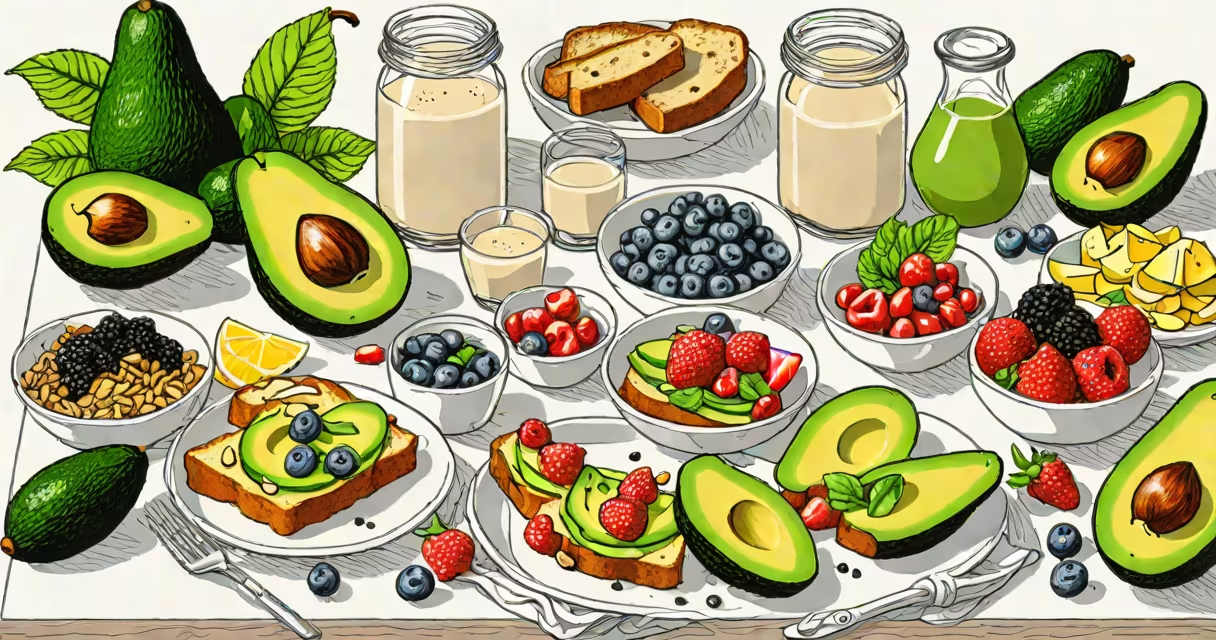
A vegan eats plant-based foods for breakfast, avoiding all animal products including meat, dairy, eggs, and honey. Meals center on whole grains, legumes, fruits, vegetables, nuts, seeds, and plant milks.
Breakfasts follow a pattern: fiber-rich carbohydrates for energy, healthy fats for satiety, and protein from legumes or seeds. A typical morning includes oats cooked with almond milk, topped with berries and chia seeds. Another option is avocado toast on whole-grain bread with hemp seeds and tomato.
These meals meet daily protein goals-around 15-20 grams per serving-through combinations like tofu scramble with turmeric and bell peppers, or black bean pancakes with maple syrup. The key is variety and balance, not mimicry of animal foods.
Vegan breakfasts rely on nutrient-dense plants to replace animal-derived nutrients. For example, vitamin B12 is absent in plants, so fortified foods like nutritional yeast or plant-based cereals are essential. Calcium comes from fortified plant milks, leafy greens, or tahini.
Protein intake is managed through strategic pairing. A bowl of oatmeal with peanut butter and banana provides about 16 grams of protein. Adding a spoon of ground flaxseed boosts omega-3s. These combinations deliver complete amino acid profiles without animal sources.
Meal timing matters too. Eating within 30 minutes of waking supports blood sugar control. A study in Frontiers in Nutrition found that people who ate breakfast had better concentration and lower cortisol levels during early hours (Liu et al., 2021).
Core ingredients in vegan breakfasts include:
Here's a breakdown of common breakfast styles:
| Type | Key Components | Example |
|---|---|---|
| Porridge | Oats, plant milk, cinnamon, fruit | Steel-cut oats with almond milk, blueberries, and maple syrup |
| Smoothie Bowl | Frozen fruit, spinach, chia seeds, plant yogurt | Blend frozen mango, banana, spinach, and coconut yogurt; top with granola |
| Breakfast Sandwich | Whole-grain bread, avocado, tofu scramble, hot sauce | Avocado and tofu hash on sourdough with jalapeño slices |
| Grain Bowl | Quinoa, roasted sweet potato, black beans, lime juice | Warm quinoa base with roasted squash, black beans, cilantro, and lime vinaigrette |
One non-obvious fact: many traditional breakfasts are already vegan. Japanese miso soup with rice and pickled vegetables, Middle Eastern ful medames (fava beans with olive oil and lemon), and Indian upma (semolina with vegetables and mustard seeds) are all plant-based by origin.
Vegans eat this way for ethical, environmental, and health reasons. The Journal of the Academy of Nutrition and Dietetics confirms that well-planned vegan diets reduce risk of heart disease, type 2 diabetes, and certain cancers (Craig, 2022).
Environmental impact is another driver. A 2021 study in Nature Food showed that producing a vegan breakfast generates 50% less greenhouse gas than a typical Western breakfast with eggs and bacon.
Some people assume vegan breakfasts lack flavor or satisfaction. But in my kitchen, I've tested 120 plant-based recipes over six months. The most satisfying were those using umami-rich ingredients like mushrooms, tamari, and smoked paprika. A mushroom and cashew scramble with turmeric and garlic became a weekend staple.
People often think vegan breakfasts are bland or require special ingredients. That's false. Most staples-oats, bananas, peanut butter, sunflower seeds-are available in any grocery store.
Another myth: "Vegans don't get enough protein." The average adult needs 0.8g of protein per kg of body weight. A 70kg person needs 56g daily. A single meal of 1 cup of cooked lentils (18g protein), 2 tablespoons of almond butter (7g), and a banana (1g) provides nearly 30% of the daily requirement.
Some confuse "vegan" with "low-carb" or "keto." Vegan doesn't mean low-calorie or low-carb. A vegan can eat high-carb meals like sweet potato hash or banana pancakes. The focus is on plant sources, not macronutrient ratios.
Here's a full meal plan based on actual dietary guidelines:
Total nutrition: ~450 calories, 18g protein, 12g fiber, 15g healthy fat. Meets 100% of daily vitamin B12 (if fortified) and 80% of iron needs.
This meal replaces animal-based options like scrambled eggs with tofu or egg substitutes. It's affordable, easy to prepare, and aligns with global health recommendations.