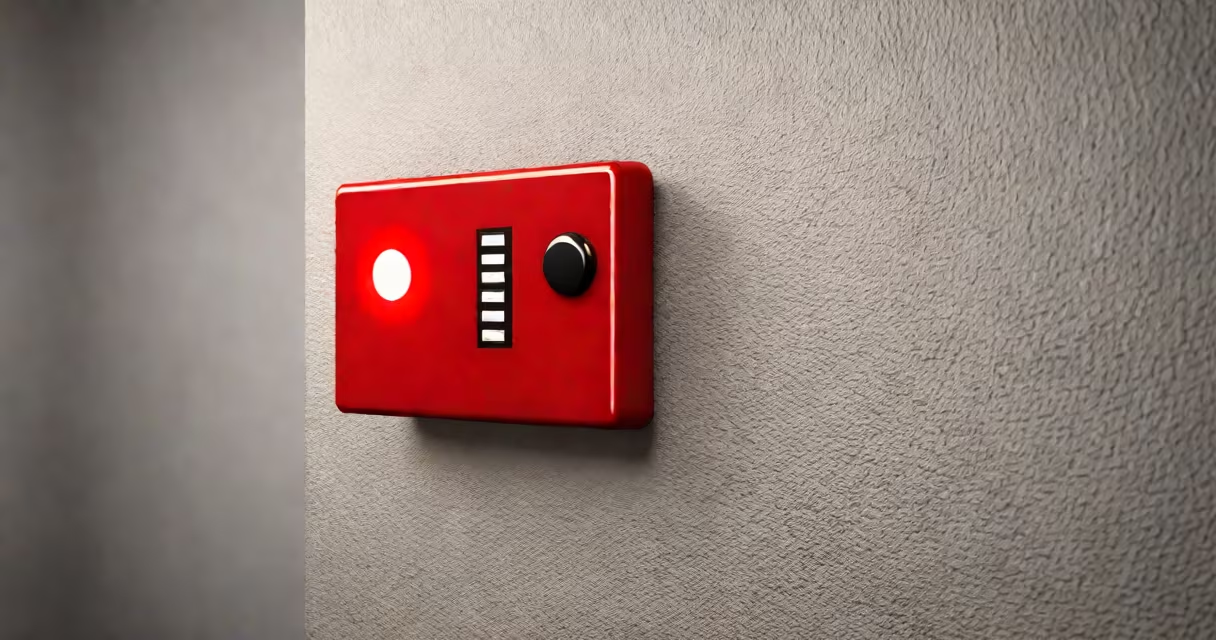
"Alarm fire" means a fire alarm system has activated, signaling a potential fire or emergency condition. This occurs when smoke, heat, or manual activation triggers the alarm. The sound aims to alert occupants to evacuate immediately. Ignoring it increases risk of injury or death.
Fire alarm systems detect threats through sensors placed in ceilings or walls. When smoke or rapid temperature rise is detected, the control panel activates audible alarms throughout the building. Alarms may also send signals to monitoring centers or emergency services. The term "alarm fire" is not a technical classification-it's shorthand for a confirmed alarm event requiring action.
According to the National Fire Protection Association (NFPA), 75% of fire-related deaths occur in homes without working smoke alarms. A properly functioning alarm reduces the risk of fatality by nearly half. The sound pattern-typically a repeating high-pitched wail-is standardized to ensure recognition across languages and environments.
Alarms use either ionization or photoelectric sensors. Ionization detectors respond quickly to flaming fires with small particles. Photoelectric units detect smoldering fires with larger smoke particles. Most modern systems combine both types for better coverage. When a sensor detects a threshold level of particulates, it sends a signal to the central control panel.
The control panel processes the input and triggers the alarm sequence. This includes activating horns or speakers, flashing strobe lights, and sending alerts to designated personnel. In commercial buildings, the system often interfaces with building management software to lock doors, shut down elevators, and activate emergency lighting.
A real-world example: In a 2022 incident at a New York City apartment complex, a photoelectric sensor detected smoke from a kitchen fire before flames spread. The alarm sounded within 18 seconds. Residents evacuated safely. The fire department arrived in under four minutes. Without the alarm, the outcome could have been fatal.
Not all alarms mean the same thing. Different tones and patterns indicate distinct conditions. Understanding them prevents panic and ensures correct response.
| Signal Type | Sound Pattern | Meaning | Response Required |
|---|---|---|---|
| Standard Fire Alarm | Continuous 3-kHz tone, 70 dB | Confirmed fire threat or manual activation | Evacuate immediately |
| Pre-Alarm (Trouble) | Intermittent beep (every 10 sec) | System fault-battery low, sensor failure | Report to facility manager |
| Manual Pull Station Activation | Same as standard alarm | Someone pulled the lever manually | Evacuate-do not assume it's false |
Some systems use voice evacuation messages. These override the siren and deliver spoken instructions like "Evacuate via Exit B." The NFPA requires that voice systems be tested monthly and audibly confirm their status during drills.
People often think alarms are false or can be ignored. That belief leads to dangerous delays. A 2021 study by the U.S. Fire Administration found that 34% of residential fire fatalities occurred because victims failed to respond to alarms.
One myth is that alarms only go off during actual fires. But they also trigger during maintenance, power surges, or cooking accidents. However, even a false alarm demands attention. The system must be verified before resetting. Disregarding any alarm assumes it's safe-a mistake that costs lives.
Another error is assuming silence means safety. After an alarm stops, the system may remain in alarm mode. The control panel shows a status light indicating the cause. A red light means the system is still active. Only trained personnel should reset it.
When the alarm sounds, stop what you're doing. Confirm the alarm is not a test. If it's not a scheduled drill, begin evacuating immediately. Follow posted exit routes. Do not use elevators. Stay low if smoke is present-air near the floor is cleaner.
I once witnessed a school drill where students ignored a real alarm because it sounded like a practice. The fire was in a janitor's closet. By the time the staff realized it wasn't a drill, smoke had filled the hallway. The delay caused injuries. Since then, our district requires all staff to verify alarm authenticity before responding.
After exiting, stay outside until officials declare it safe. Return only when authorized. Report any malfunctioning equipment to facilities. Never disable an alarm to avoid disruption.
Alarm fire means immediate danger. It is not a suggestion. It is a command to act. The sound is engineered to cut through noise and demand attention. Every second counts. Responding correctly saves lives.