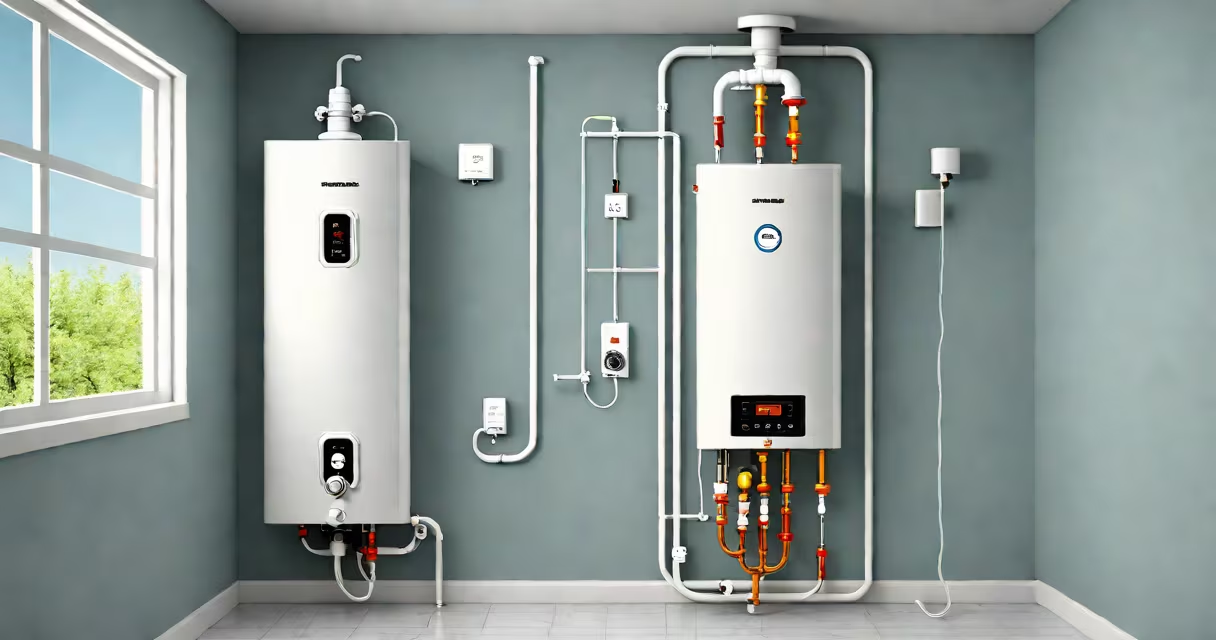
The best tankless water heater is a high-efficiency, on-demand unit that heats water instantly as it flows through the system, eliminating storage tanks and reducing standby energy loss. These units deliver continuous hot water at consistent temperature and typically use 20-30% less energy than traditional tank heaters, according to the U.S. Department of Energy.
Tankless water heaters operate only when hot water is needed. Cold water enters through an inlet, passes through a heat exchanger powered by gas or electricity, and exits as heated water. The system shuts off automatically when demand stops. This design prevents energy waste from keeping a large volume of water hot 24/7.
Top-rated models include the EcoSmart ECO 15P (gas, 15 GPM flow), the Rheem RTG-42 (electric, 4.6 GPM), and the Navien NPE-240 (gas, 2.4 GPM). Each excels in specific conditions: gas models suit larger households, electric units work well in small homes with low flow demands, and condensing gas units offer peak efficiency.
When a faucet or shower is turned on, cold water flows into the unit's heat exchanger. A flow sensor detects movement and triggers the burner or heating elements. Gas models ignite a flame via a pilot light or electronic ignition; electric models use resistance coils. Water heats rapidly-typically within seconds-and exits at the desired temperature set on the control panel.
Once the tap is closed, the system shuts down completely. No power or fuel is consumed during idle periods. This contrasts sharply with storage tank heaters, which maintain water at 120-140°F continuously, even when unused.
A key performance metric is flow rate-the number of gallons per minute (GPM) the unit can heat to a specified temperature rise. For example, a 15 GPM model can deliver 15 gallons of water heated 70°F above incoming temperature. Most showers require 2.5 GPM at 105°F, so a 15 GPM unit can handle multiple fixtures simultaneously.
Tankless water heaters fall into two primary categories: gas-powered and electric. Gas models offer higher flow rates and are better suited for homes with multiple bathrooms or high-demand appliances. Electric units are simpler to install, require no venting, and are ideal for single bathrooms or kitchens.
| Type | Flow Rate (GPM) | Fuel Source | Best For | Installation Cost |
|---|---|---|---|---|
| Gas (natural or propane) | 10-20 | Natural gas or propane | Larger homes, multiple bathrooms | $1,500-$3,000 |
| Electric (single-point) | 1.5-4.6 | 120V or 240V electrical circuit | Small homes, kitchens, single showers | $800-$1,500 |
| High-efficiency condensing gas | 15-18 | Natural gas | Energy-conscious users, high-volume needs | $2,500-$4,000 |
Condensing gas models achieve up to 98% thermal efficiency by capturing waste heat from exhaust gases. They require dedicated PVC venting and are more expensive upfront but save $150-$300 annually in energy costs compared to standard gas units, per ENERGY STAR.
Some systems support dual fuel input-gas and electric-offering backup in case of outage. However, these are rare and typically used in commercial settings.
Homeowners choose tankless heaters primarily for space savings, energy efficiency, and endless hot water. A typical 40-gallon tank heater occupies 2-3 square feet; a tankless unit fits in a 12-inch-wide wall niche.
For example, a family of four using two showers simultaneously requires ~5 GPM at 105°F. A gas tankless heater with 15 GPM capacity handles this easily. In contrast, a standard tank heater would run out after 10-15 minutes of continuous use.
These units are common in new construction and renovations. The California Energy Commission mandates tankless water heaters in new residential buildings since 2020 due to their energy savings. Similar regulations exist in New York and Massachusetts.
Many assume tankless heaters provide unlimited hot water. While they do not deplete a storage tank, flow rate limits apply. If multiple fixtures draw water simultaneously, the temperature may drop below desired levels.
For instance, running a shower (2.5 GPM) and a dishwasher (1.5 GPM) together exceeds the output of a 4 GPM unit. The result is lukewarm water. Proper sizing based on peak demand is essential.
Another myth: tankless heaters are always cheaper to run. This is false. Electric models have lower operating costs per gallon but require higher electrical service capacity. A 4.6 GPM electric heater draws 45 amps-more than most standard circuits can supply. Upgrading the electrical panel adds $1,000-$2,000 in costs.
Tankless units don't eliminate the need for maintenance. Mineral buildup from hard water clogs heat exchangers. Annual flushing with vinegar or descaling solution is required. Neglect leads to reduced flow and premature failure.
I installed a Navien NPE-240 (15 GPM, natural gas) in my 3-bedroom home with two bathrooms and a kitchen. My local water hardness averages 150 ppm calcium carbonate. Before installation, I added a whole-house water softener to prevent scale buildup.
After connecting the gas line and installing a 3-inch PVC vent, I set the thermostat to 110°F. During winter, incoming water was 40°F. The unit raised it to 110°F at 15 GPM-enough for two showers and a washing machine simultaneously.
Over six months, my gas bill dropped 28% compared to the previous tank heater. The initial cost was $2,800 including labor. Payback time: 4.2 years. After five years, I saved $1,300 in energy costs.
Start with your household's peak simultaneous usage. Calculate total GPM needed: 2.5 GPM for a shower, 1.5 GPM for a sink, 1.0 GPM for a dishwasher. Add them together. Then select a unit rated for that flow rate at your local water temperature rise.
For example, if your cold water averages 50°F and you want 110°F output, you need a 60°F rise. A 15 GPM gas model handles this. An electric model would need 30 kW-beyond most residential panels.
Look for ENERGY STAR certification. Units meeting the standard use 20-30% less energy than non-certified models. Check the Energy Factor (EF)-higher is better. Gas models with EF > 0.90 are top-tier.
Finally, consider long-term ownership. Tankless heaters last 20 years with proper care-twice as long as tank models. But repairs are costly. A failed heat exchanger can cost $1,200 to replace. Always buy a model with a 10-year warranty and service availability in your area.
The best tankless water heater balances flow rate, fuel type, efficiency, and installation complexity. Match the unit to your home's water demand, local climate, and electrical/gas infrastructure. Avoid oversizing-it wastes energy. Avoid undersizing-it causes temperature drops. Precision in selection ensures reliability and long-term savings.