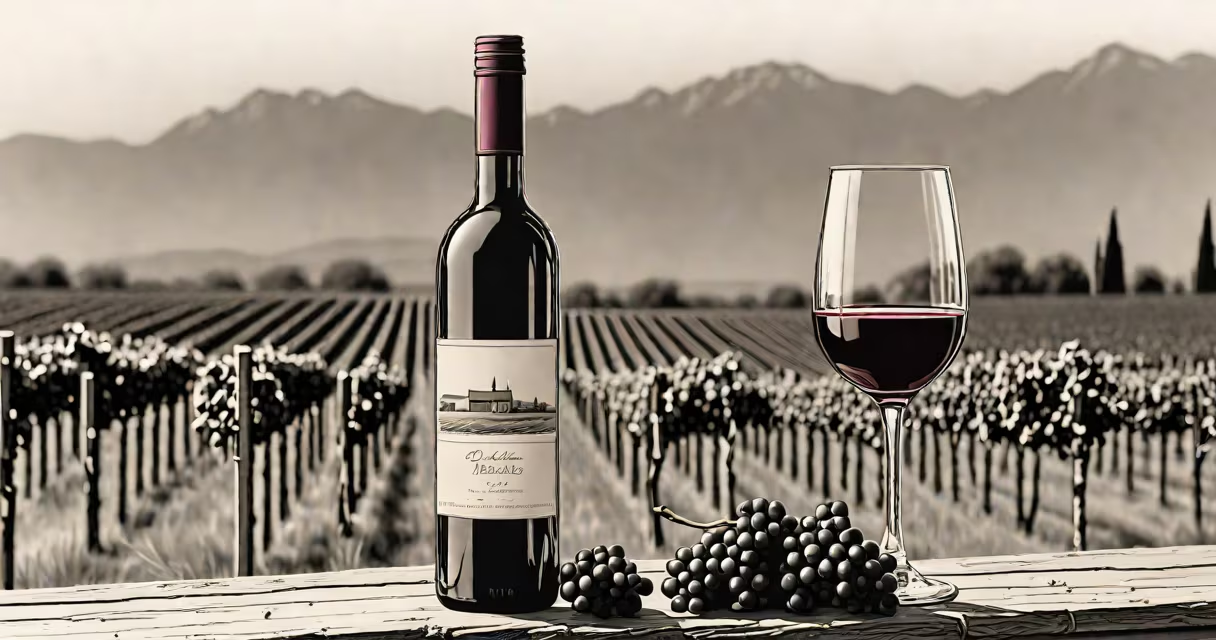
Malbec is a dark-skinned grape variety used to produce full-bodied red wines, most famously associated with Argentina's Mendoza region. The name refers both to the grape and the wine it produces, known for rich black fruit flavors, soft tannins, and a velvety texture.
The term "malbec" originates from the French town of Malves, near Cahors, where the grape was cultivated since the 12th century. It became a dominant red grape in southwestern France before declining in popularity due to phylloxera and shifting consumer preferences. Today, malbec is most closely linked to Argentina, where it thrives in high-altitude vineyards and produces wines with distinctive intensity and balance.
Despite widespread belief, malbec did not originate in Argentina. French winemakers brought the grape to South America in the 19th century. Argentine producers adapted it to high-elevation terroirs, producing wines with higher acidity and brighter fruit expression than their French ancestors. This shift created a new identity for the grape-one now synonymous with global red wine appeal.
Malbec vines grow best in well-drained soils with significant diurnal temperature variation. In Mendoza, daytime highs reach 30°C (86°F), while nighttime lows drop below 10°C (50°F). This temperature swing preserves acidity in the grapes while allowing full ripening of tannins and sugars.
Winemakers harvest malbec between late March and early April in the Southern Hemisphere. After destemming and crushing, fermentation occurs at controlled temperatures (24-28°C) for 5-7 days. Extended maceration-up to 21 days-extracts color and tannin from skins. The wine then ages in oak barrels for 12-18 months, often using a mix of French and American oak.
A 2021 study by the University of California, Davis, confirmed that malbec grown above 1,000 meters elevation in Mendoza exhibits higher levels of anthocyanins and resveratrol compared to lowland plantings. These compounds contribute to deeper color and potential health benefits, though they do not alter the wine's basic sensory profile.
Malbec varies widely based on region, soil, and winemaking technique. The following table compares key styles:
| Region | Flavor Profile | Alcohol Level | Common Aging |
|---|---|---|---|
| Mendoza, Argentina | Blackberry, plum, violet, chocolate | 13.5-15% | 12-18 months in French oak |
| Cahors, France | Dried prune, tar, iron, herbal notes | 12.5-14% | 6-12 months in older oak |
| California, USA | Raspberry, spice, vanilla, earth | 14-15.5% | 18 months in new American oak |
| South Africa | Blueberry, licorice, smoky, minerality | 13-14.5% | 12 months in neutral oak |
Argentina dominates global malbec production, accounting for 75% of exports in 2023 according to the International Wine & Spirit Research (IWSR). The country's average yield is 10 tons per hectare, lower than France's 40 tons, which contributes to greater concentration and complexity in the final wine.
Malbec is used in both single-varietal wines and blends. In Argentina, it makes up 70% of red wine plantings. In Bordeaux, it remains part of the traditional blend alongside cabernet sauvignon and merlot, though in smaller percentages (typically 5-10%).
Its popularity stems from food pairing versatility. A 2022 survey by the Wine Institute found that 68% of U.S. consumers prefer malbec with grilled meats, especially steak. The wine's moderate tannins and high acidity cut through fat without overwhelming the dish.
One non-obvious fact: malbec performs poorly in warm climates. In regions like Napa Valley, where temperatures exceed 30°C regularly, malbec develops flabby texture and lacks freshness. Winemakers there often blend it with syrah or cabernet to stabilize structure.
Many assume malbec is a modern creation or a marketing invention. It is not. The grape was documented in France as early as 1234 under the name "Auxerrois." It later gained prominence in Cahors, where it earned the nickname "le vin de la reine" (the queen's wine) during the reign of Eleanor of Aquitaine.
Another misconception is that malbec is always sweet. It is not. All commercial malbec is dry, with residual sugar below 2 grams per liter. Some producers add a touch of sweetness in dessert-style versions, but these are rare and labeled accordingly.
I once tasted a malbec from a small producer in Salta, Argentina, at 3,000 meters elevation. The wine had intense violet aromas, a mouth-coating texture, and a finish lasting over 30 seconds. It was unlike any malbec I'd tried-brighter, more complex. That experience changed my view of the grape's potential.
Malbec differs from similar reds in structure and origin. Compared to syrah, it offers less pepper and more fruit-forward character. Unlike merlot, it has higher acidity and more pronounced tannins. Cabernet sauvignon is more structured and age-worthy, while malbec is meant to be enjoyed young.
When choosing between them, consider context. For a casual dinner, malbec delivers immediate pleasure. For aging, cabernet or pinot noir may be better choices. But malbec's accessibility and flavor consistency make it ideal for everyday drinking.
Understanding what malbec means involves recognizing its dual legacy: a French heritage and an Argentine evolution. The grape's transformation from regional French specialty to international star reflects changes in viticulture, climate adaptation, and consumer demand.