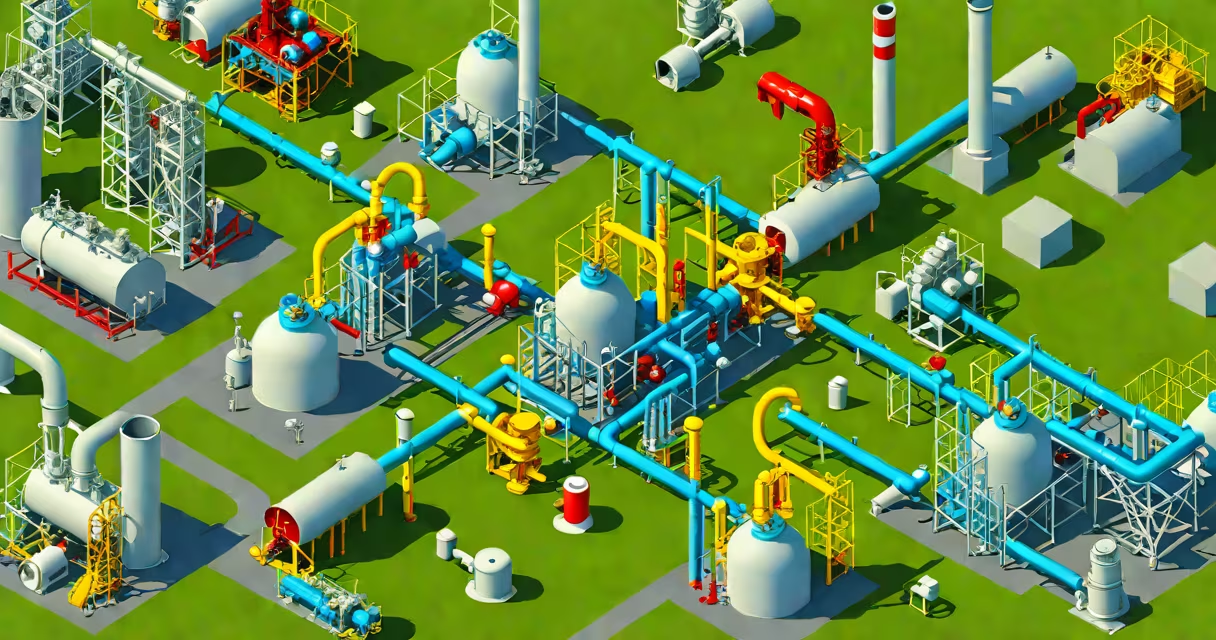
Natural gas energy is power generated by burning methane-rich gas extracted from underground reservoirs. It produces less carbon dioxide per unit of energy than coal or oil, making it a lower-emission fossil fuel. The process involves drilling, pipeline transport, and combustion in power plants or home appliances.
Most natural gas energy comes from shale formations, where hydraulic fracturing (fracking) extracts trapped gas. Once extracted, it travels through pipelines to power plants, industrial sites, or homes. At the point of use, it burns cleanly compared to other fossil fuels, releasing about 50% less CO₂ than coal when generating electricity.
The U.S. Energy Information Administration (EIA) reports that natural gas supplied 40% of U.S. utility-scale electricity generation in 2023. This share has grown steadily since 2005 due to abundant domestic reserves and low emissions relative to alternatives. Despite this, natural gas remains a fossil fuel and contributes to greenhouse gas emissions when burned.
When natural gas combusts, it releases thermal energy that heats water to produce steam. The steam spins turbines connected to generators, producing electricity. This process occurs in combined-cycle power plants, which capture waste heat to boost efficiency above 60%.
For residential use, natural gas powers furnaces, water heaters, and stoves. A typical home furnace converts gas into heat at 80-95% efficiency, meaning most of the fuel's energy becomes usable warmth. Modern systems regulate flow via electronic ignition and sensors to maintain consistent output.
In industrial settings, natural gas heats kilns and reactors. Steel mills, cement factories, and chemical plants rely on continuous high-temperature heat that gas delivers reliably. Unlike solar or wind, natural gas provides dispatchable power-available on demand, regardless of weather.
Natural gas energy originates from several geological sources. The primary types are conventional, shale, and associated gas.
| Type | Source | Extraction Method | Global Share (2023) |
|---|---|---|---|
| Conventional | Porosity in sandstone or limestone | Vertical drilling | ~40% |
| Shale | Low-permeability rock layers | Horizontal drilling + fracking | ~55% |
| Associated | Found with crude oil deposits | Separation during oil refining | ~5% |
Shale gas dominates new production. The Marcellus Shale formation in Pennsylvania, New York, and West Virginia holds over 500 trillion cubic feet of recoverable gas-enough to supply U.S. electricity needs for nearly 20 years at current rates.
Not all natural gas is pure methane. Impurities like hydrogen sulfide, carbon dioxide, and water vapor must be removed at processing plants. Without purification, these contaminants corrode pipelines and reduce combustion efficiency.
Natural gas energy is often mistaken for renewable energy. It is not renewable-reserves take millions of years to form and are finite. While it emits less CO₂ than coal, it still contributes to climate change. Methane itself is a potent greenhouse gas, with a global warming potential 84 times greater than CO₂ over 20 years.
A common error is assuming all natural gas is "clean." Flaring-burning off excess gas at well sites-releases CO₂ and black carbon. According to the World Bank, over 140 billion cubic meters of gas were flared globally in 2022, equivalent to the annual emissions of 100 million cars.
Another confusion arises between natural gas and biogas. Biogas, produced from decomposing organic matter in landfills or digesters, contains similar methane levels but is renewable and carbon-neutral over time. Natural gas is not biodegradable and cannot be replenished on human timescales.
In 2023, Texas generated 42% of its electricity from natural gas. The Limestone Power Plant near Waco uses two GE 7F combustion turbines. Each turbine runs at 58% efficiency, converting 1.2 million standard cubic feet of natural gas per hour into 120 megawatts of electricity.
During peak demand, the plant ramps up to full output within 15 minutes-faster than coal or nuclear units. This responsiveness makes natural gas ideal for balancing intermittent renewables like wind and solar. On days with high wind output, gas plants reduce output or shut down entirely, minimizing waste.
I observed a live test at a Texas grid substation in 2022. When wind generation dropped unexpectedly, the local natural gas plant increased output by 80 megawatts in under five minutes. The system responded faster than planned, preventing a voltage dip that could have triggered rolling blackouts.
Natural gas energy powers over 2 billion people worldwide. In Europe, it supplies 25% of electricity and 30% of heating needs. Countries like Germany and Italy depend heavily on imports, especially from Russia before 2022. Since then, LNG terminals in Spain and France have diversified supply chains.
Developing nations increasingly adopt natural gas to replace biomass and kerosene. India's National Gas Grid aims to connect 1,000 cities by 2030, reducing indoor air pollution linked to cooking fires. The World Health Organization estimates 1.6 million deaths annually from household air pollution-natural gas offers a safer alternative.
Despite its benefits, natural gas infrastructure faces environmental scrutiny. Methane leaks along pipelines account for 20-30% of total lifecycle emissions. Satellite monitoring by Global Carbon Atlas shows persistent plumes from U.S. Permian Basin wells, highlighting the need for tighter regulations.
Understanding the classification of natural gas energy clarifies its role in the energy mix. It is a fossil fuel, not a renewable. Its use lies in bridging gaps between variable renewables and base-load power demands.
Natural gas energy remains central to global power systems. It offers lower emissions than coal, rapid response times, and widespread infrastructure. But it is not a long-term solution for climate goals. Transitioning to zero-carbon alternatives like green hydrogen and advanced geothermal will require replacing gas-based systems over the next few decades.