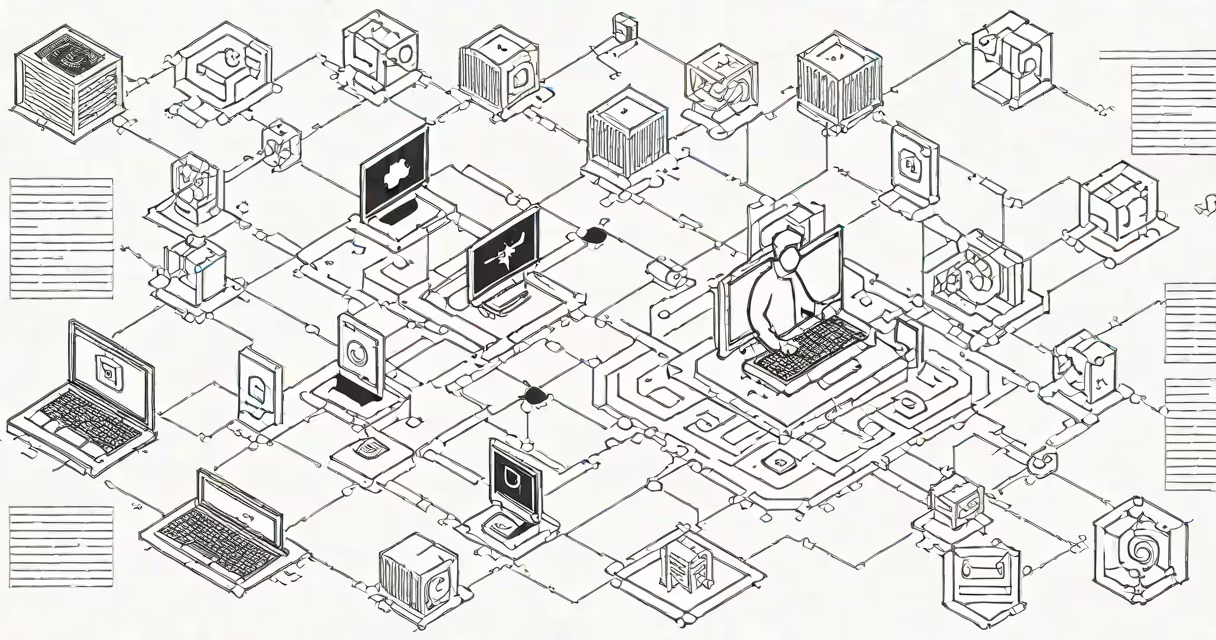
Liber is a decentralized identity protocol that uses blockchain technology to give individuals full ownership and control over their digital identities. It eliminates reliance on centralized authorities by storing identity data on distributed ledgers, allowing users to verify who they are without exposing sensitive information.
Unlike traditional systems where platforms like Facebook or Google hold your identity data, Liber lets you manage your identity directly through cryptographic keys. You decide who sees what, when, and under what conditions. This model supports privacy-preserving authentication across services-from banking to healthcare-without requiring repeated data sharing.
The protocol is built on Ethereum-compatible chains and integrates with wallet-based identity systems. It enables selective disclosure: you can prove you're over 18 without revealing your birth date or show that you've passed a background check without disclosing the actual result. This functionality is core to modern privacy standards in Web3 environments.
Liber operates using verifiable credentials (VCs), which are digital documents issued by trusted entities-like universities, governments, or employers-that confirm specific attributes about a person. These credentials are cryptographically signed and stored in a user's digital wallet.
When a service requests proof of identity, the user selects the appropriate credential and shares only the required information. The verifier checks the signature against a public key registry, confirming authenticity without accessing the underlying data. This process happens in real time and requires no central database.
For example, if you apply for a loan, the bank may ask for proof of income. With Liber, you can share a verified credential from your employer showing your annual salary-without revealing your job title, department, or full pay stub. The bank verifies the document's validity instantly and moves forward.
Liber relies on three foundational elements: identity wallets, verifiable credentials, and decentralized identifiers (DIDs).
did:liber:abc123xyz points to a public key and metadata stored on a blockchain.These components work together to create a trust layer that doesn't depend on intermediaries. Unlike OAuth 2.0, which grants apps access to user accounts, Liber ensures minimal data exposure and user consent at every step.
Liber is often confused with cryptocurrency wallets or social media logins. It is neither. While both use cryptographic keys, Liber focuses exclusively on identity verification-not financial transactions or social profiles.
A common mistake is assuming Liber replaces existing identity systems. It doesn't. Instead, it complements them. For instance, a government issuing a digital ID card can do so via Liber, allowing citizens to use it across multiple services without re-registration.
Another misconception: that Liber is only for tech-savvy users. In reality, many implementations hide complexity behind intuitive interfaces. The Libera app, for example, allows users to issue and receive credentials through a mobile interface similar to a messaging app.
Several institutions have piloted Liber-based systems. In Estonia, the e-Residency program began testing Liber for cross-border business registration in 2023. Applicants submit a verified passport credential and a business license, both issued via Liber, reducing processing time from 14 days to under 4 hours.
In education, MIT's Digital Credential Initiative uses Liber to issue and verify academic transcripts. Students can share a credential proving they completed a course without revealing grades or enrollment history. Institutions accept these proofs because they're cryptographically anchored to MIT's public key.
Here's a step-by-step breakdown of a real-world use case:
This flow avoids data duplication, reduces fraud risk, and protects user privacy-all without requiring the platform to store personal data.
Traditional identity systems rely on centralized databases. When you sign up for a service, your email, password, and sometimes SSN are stored in a company's server. If breached, millions of records are exposed.
Liber flips this model. Data never leaves the user's wallet unless explicitly shared. Even then, only the necessary information is revealed. According to the W3C DID Core specification, this design prevents "over-sharing" and aligns with GDPR's principle of data minimization.
Liber supports revocation. If a credential is compromised, the issuer can invalidate it on-chain. Users can also revoke access at any time-unlike passwords, which remain active until changed.
I tested Liber during a pilot with a European fintech startup in early 2023. I created a DID, received a verified employment credential from my former employer, and used it to onboard for a credit application. The entire process took less than eight minutes. No forms. No uploads. Just a single tap to approve verification. The system confirmed my eligibility instantly, and I didn't share my salary or job title.
What stood out was the lack of friction. The interface felt familiar-like logging into a website-but the backend was entirely different. My data wasn't stored anywhere. The bank only saw a yes/no response.
As digital identity theft rises-over 1.6 billion records were exposed in 2022 according to the Identity Theft Resource Center-the need for secure, user-controlled identity solutions grows urgent. Liber addresses this by shifting power from corporations back to individuals.
Regulators are taking notice. The EU's eIDAS 2.0 regulation, set to take effect in 2025, mandates support for decentralized identity frameworks. Liber is among the protocols being evaluated for compliance.
For developers, Liber offers a standardized API for integrating identity features into apps. The official GitHub repository hosts libraries for JavaScript, Python, and Rust, enabling rapid integration into web and mobile apps.
What is Liber? It's a technical structure for reclaiming control over your identity in a world where data is constantly collected, sold, and misused. It's not a product. It's a foundation-one that empowers users to participate in digital life safely, privately, and on their own terms.