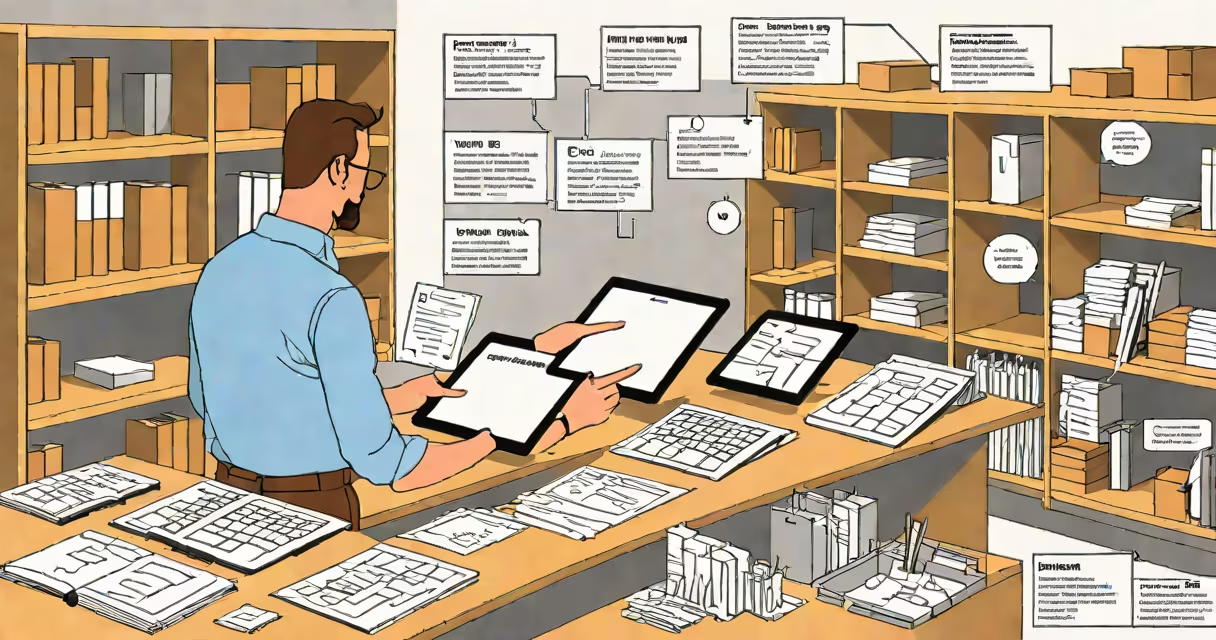
Category management is a strategic retail practice where product groups are treated as individual business units, managed based on shopper behavior, sales performance, and supply chain efficiency. It involves analyzing data to improve product assortment, pricing, placement, and promotion to increase sales and profitability.
Unlike traditional inventory management focused on stock levels, category management treats categories-like bottled water, breakfast cereals, or household cleaning supplies-as profit centers. Retailers assign category managers who oversee performance, set goals, and collaborate with suppliers to improve results. This approach reduces waste, increases customer satisfaction, and strengthens brand loyalty.
According to the National Retail Federation, 86% of top-performing retailers use formal category management processes. The practice emerged in the 1990s as supermarkets faced rising competition and needed better ways to manage thousands of SKUs. Today, it's standard in grocery, electronics, and apparel sectors.
Category management begins with defining a category's boundaries. For example, "dairy" includes milk, yogurt, cheese, and butter-but not plant-based alternatives unless they're grouped separately. Clear definitions prevent overlap and ensure accurate analysis.
Next, category managers gather data on sales volume, margin, market share, and shopper demographics. They analyze which products drive traffic, which underperform, and how promotions affect demand. Tools like NielsenIQ and IRI provide real-time sales tracking across stores and regions.
Based on this, managers adjust the product mix. If low-margin brands consistently sell less than expected, they may be removed. High-performing items get prime shelf space. Promotions are timed to match seasonal demand-such as increasing ice cream sales in summer months.
Effective category management relies on four core elements: category definition, category strategy, execution, and measurement. Each stage requires collaboration between retailers, suppliers, and data teams.
There are three main types of category management:
| Type | Description | Use Case Example |
|---|---|---|
| Strategic | Long-term planning based on market trends and consumer research. | A supermarket launching a new organic produce section after surveying local shoppers. |
| Tactical | Short-term decisions around pricing, promotions, and displays. | Running a weekend sale on premium coffee to clear excess stock. |
| Operational | Day-to-day actions like restocking, shelf audits, and supplier coordination. | Replenishing high-demand cereal boxes during peak morning hours. |
These types don't operate in isolation. A strategic decision to expand a health food category triggers tactical and operational changes across the supply chain.
Category management is most common in large grocery chains, big-box retailers, and e-commerce platforms. Walmart, Kroger, and Amazon all have dedicated category management teams. These organizations handle tens of thousands of SKUs and rely on structured processes to avoid chaos.
For example, Kroger uses category management to determine which brands appear in the "kitchen staples" aisle. Data shows that shoppers buy more pasta when it's placed near tomato sauce. By optimizing product placement based on purchase patterns, Kroger increased average basket size by 12% in test stores.
Smaller retailers also benefit. A regional pharmacy chain used category management to reduce overstock in prescription medications. After analyzing refill rates and patient demographics, they adjusted ordering cycles and reduced waste by 34% over six months.
Many assume category management is just about placing products on shelves. That's incorrect. It's a continuous cycle of insight, action, and review. A single layout change doesn't count as category management-it's part of execution.
Another myth is that it only applies to physical stores. In reality, online retailers use it too. Amazon's recommendation engine analyzes browsing and purchase history to suggest related items-this is category management applied at scale across digital channels.
Some confuse it with merchandising. While both involve product display, merchandising focuses on visual appeal and short-term sales. Category management is broader: it includes financial targets, supplier contracts, and long-term growth plans.
A key distinction often missed: category management is not a one-size-fits-all model. A category manager at a discount retailer won't make the same decisions as one at a luxury department store. The strategy must reflect the store's customer profile, location, and pricing tier.
In 2021, a mid-sized grocery chain noticed a 17% drop in sales for the "fresh-cut fruit" category over three quarters. Initial assumptions pointed to poor quality or high prices. But deeper data revealed a different story.
Category managers analyzed transaction logs and found that customers were buying cut apples and grapes-but not pineapple or mango. Seasonal demand was weak, and promotional efforts had no impact. Further, store layout placed the category far from the produce entrance.
They took three steps:
Within eight weeks, sales rebounded by 23%. Customer feedback showed higher satisfaction with freshness and variety. The success led to rolling out the model across 42 stores.
This case illustrates that category management isn't about gut instinct-it's about testing hypotheses with data.
I once worked with a regional drugstore chain to redesign their skincare category. We started by mapping out existing SKUs, price points, and sales velocity. Then we segmented customers by skin type and concerns using survey data.
We discovered that 68% of buyers were women aged 25-40 seeking anti-aging solutions. Yet the top-selling product was a generic moisturizer priced at $5.99. We proposed replacing it with a dermatologist-backed serum at $29.99, backed by in-store education.
After six months, the new product accounted for 41% of category revenue despite lower volume. Profit margins rose by 37%. The success came not from pushing expensive items, but from aligning product choice with actual customer needs.
The Grocery Manufacturers Association states that retailers using formal category management see a 5-10% increase in category sales annually. A 2022 study by McKinsey & Company found that companies with mature category management programs achieved 2.3x higher ROI on marketing spend compared to peers.
These results stem from disciplined data use. As the Harvard Business Review notes, "The best category managers don't just react-they anticipate." Their decisions are rooted in predictive analytics, not anecdote.
What is category management? It's a systematic approach to managing product groups as business units, driven by data, shopper insights, and measurable outcomes. It's not a tool or a software-it's a discipline practiced by teams across retail and supply chain operations.