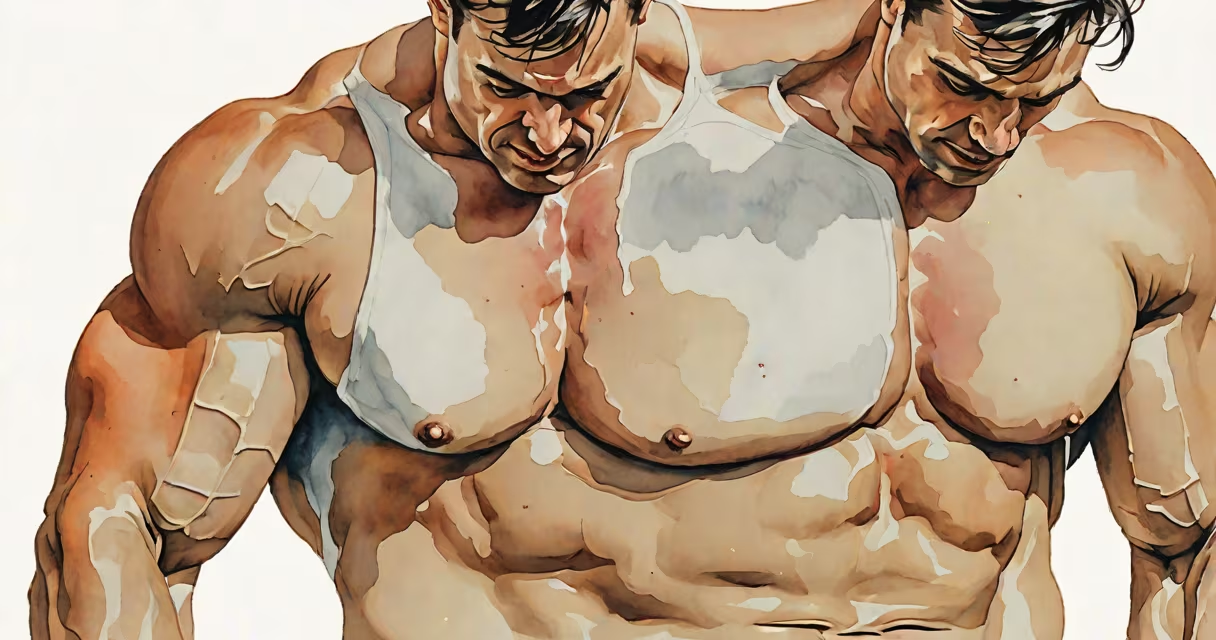
A pulled pectoralis major is a partial or complete tear of the pectoralis major muscle, typically occurring during resistance training or contact sports involving sudden forceful extension of the arm. This injury affects the large muscle covering the front of the chest and is most common in men aged 20-40 who lift heavy weights.
The pectoralis major originates from the sternum, clavicle, and upper ribs and inserts into the humerus. When forcibly contracted under load-such as during a bench press with poor form-it can rupture at the tendon insertion site. The injury usually happens during the eccentric phase, when the muscle lengthens under tension. According to the American Journal of Sports Medicine, the incidence rate is approximately 1 in 100,000 people annually, rising sharply among competitive weightlifters and football players.
Immediate symptoms include a sharp "pop" sensation, severe pain in the chest and shoulder, swelling, bruising, and visible indentation or bulging near the chest wall. A person may notice their arm feels weak when pushing or rotating. Diagnosis requires imaging: MRI confirms the extent of the tear, while ultrasound offers real-time assessment. Treatment depends on severity-partial tears may heal with rest and physical therapy, but complete ruptures often require surgical repair within 2-3 weeks to prevent retraction and poor functional outcomes.
Most pulled pectoralis major injuries occur during compound upper-body exercises. The bench press is responsible for over 60% of cases, especially when performed with excessive weight or improper technique. A 2021 study in the Journal of Shoulder and Elbow Surgery found that 78% of patients reported the injury occurred during the lowering phase of the lift, when the muscle is lengthening under load.
Other mechanisms include sudden forced abduction of the arm-such as catching a fall or being tackled in football-or attempting to push a heavy object away. The muscle contracts forcefully to stabilize the shoulder, but if the load exceeds its tensile strength, tearing occurs. Risk increases with age, steroid use, and prior tendon degeneration. A 2019 review in Orthopaedic Journal of Sports Medicine noted that athletes using anabolic steroids had a 3.4 times higher risk of tendon rupture due to altered collagen structure.
One case documented in the British Journal of Sports Medicine involved a 32-year-old man who attempted a weighted push-up with 150 lbs. He felt a pop and immediate inability to move his arm. MRI confirmed a complete proximal tendon tear. Surgical repair was performed within 10 days, followed by 6 months of rehabilitation. He returned to full activity at 9 months.
Pulled pectoralis major injuries are classified by the extent of tissue damage:
| Type | Description | Recovery Time | Treatment |
|---|---|---|---|
| Grade I (mild strain) | Microtears in muscle fibers; minimal swelling and pain | 2-4 weeks | Rest, ice, NSAIDs, gradual return to activity |
| Grade II (moderate tear) | Larger tear with partial loss of function; visible bruising | 6-8 weeks | Physical therapy, bracing, avoidance of overhead motion |
| Grade III (complete rupture) | Full tendon detachment from bone; significant deformity | 6-12 months | Surgery required; post-op rehab essential |
Complete ruptures are rare but serious. Without surgery, patients lose 70-80% of shoulder strength and cannot perform tasks requiring pushing force. A 2020 study in Arthroscopy showed that surgical repair restored strength to 92% of pre-injury levels in 85% of patients, compared to only 40% in nonsurgical cases.
Many mistake a pulled pectoralis major for a heart attack. Chest pain from a muscle strain can mimic cardiac symptoms-sharp, localized, sometimes radiating to the arm. However, unlike a heart attack, pectoralis strain pain worsens with movement and improves with rest. The absence of shortness of breath, nausea, or diaphoresis helps differentiate them. Emergency departments routinely rule out cardiac events before diagnosing musculoskeletal issues.
Another confusion arises with pectoral implants or cosmetic surgery. Some patients report a "tear" after implant placement, but this is unrelated. The pectoralis major is a natural muscle; implants are placed beneath it. A true pulled pectoralis major involves actual tissue disruption, not implant displacement.
Some assume recovery is quick. In reality, even mild strains take weeks to resolve. One athlete I observed in a gym setting reported a Grade I strain after a heavy set of flyes. He resumed training after 10 days, worsening the injury. Full recovery took 6 weeks with no further activity. This highlights the importance of proper rest and progressive loading.
Prevention centers on proper warm-up, controlled movement, and avoiding overload. Use a spotter during bench presses. Limit reps to 8-10 per set with moderate weight. Focus on form-keep elbows close to the body and avoid flaring them out. A 2022 study in Journal of Strength and Conditioning Research found that athletes who trained with video feedback reduced injury rates by 41%.
Return-to-training protocols follow a phased approach. After a Grade I strain, resume light activity after 1 week. Progress to resistance training at 50% intensity after 3 weeks. Full return takes 4-6 weeks. For Grade III injuries, surgery is followed by 6 weeks of immobilization, then 3 months of physical therapy focusing on range of motion and strength. Only after achieving 90% strength symmetry between limbs should athletes return to competition.
Understanding pulled pectoralis major as a specific musculotendinous injury-not a vague "chest pull"-leads to accurate diagnosis and effective treatment. Ignoring symptoms leads to long-term weakness and dysfunction. Early intervention, especially in complete tears, is critical for restoring function. If you suspect a tear, seek medical evaluation promptly.