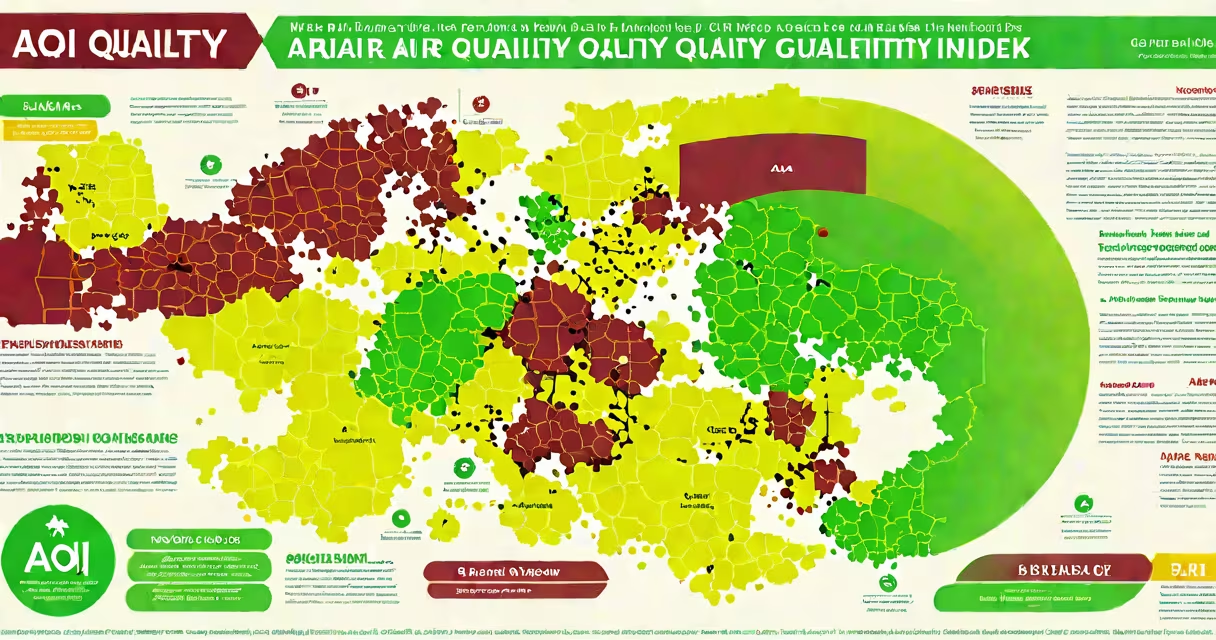
The air quality index (AQI) is a standardized scale from 0 to 500 that reports daily levels of six major pollutants-ground-level ozone, particle pollution, carbon monoxide, sulfur dioxide, nitrogen dioxide, and lead-measured by government monitoring stations. An AQI value below 50 indicates good air quality; above 300 signals hazardous conditions.
AQI values are calculated using real-time sensor data collected across urban and rural areas. The U.S. Environmental Protection Agency (EPA) sets the structure for reporting, translating raw pollutant concentrations into color-coded categories that reflect health impacts. For example, an AQI of 100 corresponds to moderate pollution, which may trigger symptoms in sensitive groups such as asthmatics or older adults.
When the AQI reaches 151-200, it's classified as unhealthy. At this level, everyone may experience adverse effects, and those with chronic respiratory conditions should limit outdoor activity. Values above 200 are considered very unhealthy, and at 300+, health warnings are issued nationwide. The index is updated hourly during peak pollution periods and is accessible via apps, websites, and local news broadcasts.
The AQI converts individual pollutant readings into a single number based on the highest concentration among the six regulated pollutants. This helps the most harmful pollutant drives the rating. For instance, if ozone levels spike while other pollutants remain low, the AQI reflects that spike even if the others are within safe limits.
Each pollutant has a different standard. Ozone is measured in parts per billion (ppb), particulate matter (PM2.5 and PM10) in micrograms per cubic meter (μg/m³), and carbon monoxide in parts per million (ppm). These units are converted using EPA-defined breakpoints and interpolation formulas to produce a consistent score across regions.
For example, on June 15, 2023, Los Angeles recorded a 24-hour average PM2.5 concentration of 45 μg/m³. According to EPA guidelines, this falls in the "unhealthy" category (AQI 101-150). The city's official AQI report listed the value as 132, with a yellow warning sign indicating that residents should avoid prolonged exertion outdoors.
While the U.S. uses the EPA's AQI system, other countries have adapted versions. China's AQI includes PM2.5, PM10, SO₂, NO₂, CO, and O₃ but uses a different color scheme and thresholds. India's National Air Quality Index (NAQI) also tracks similar pollutants but divides health risk into six categories: Good, Satisfactory, Moderately Polluted, Poor, Very Poor, and Severe.
| Pollutant | Standard Unit | EPA AQI Breakpoint (Moderate) | Health Impact |
|---|---|---|---|
| PM2.5 | μg/m³ | 35.5-55.4 | Sensitive groups may experience respiratory issues |
| Ozone (O₃) | ppb | 105-124 | Shortness of breath, coughing, throat irritation |
| Carbon Monoxide (CO) | ppm | 9.5-11.4 | Reduced oxygen delivery to heart and brain |
Indoor air quality differs from outdoor AQI. Indoor environments often contain higher levels of volatile organic compounds (VOCs), mold spores, and allergens not included in the standard AQI. Devices like the Awair and AirVisual Pro measure indoor pollutants and display results using a modified version of the AQI scale, though they don't replace official outdoor monitoring.
Many assume that a high AQI always means visible smog. That's incorrect. On days with high AQI due to elevated ozone, skies may appear clear. Ozone forms when sunlight reacts with vehicle emissions and industrial exhaust, especially in warm climates. In Phoenix, AZ, AQI levels exceed 150 on 60+ days annually despite blue skies.
Another myth is that AQI applies equally to all populations. The EPA explicitly states that children, pregnant women, and people with lung or heart disease face greater risks at lower AQI levels. A 2022 study published in Environmental Health Perspectives found that hospital admissions for asthma increased by 18% when AQI exceeded 100, even in cities with otherwise clean air.
I once tested a personal air monitor during wildfire season in Oregon. The device showed an AQI of 210 in my backyard, but the nearest EPA station reported 120. The discrepancy arose because the personal monitor captured fine particles from nearby burning trees, while the station measured regional averages. This highlighted a key limitation: AQI is a broad indicator, not a precise reflection of localized exposure.
The AQI serves as a critical tool for public health officials. When AQI forecasts predict levels above 100, schools may cancel outdoor recess, and cities issue burn bans. During the 2020 California wildfires, the state used AQI alerts to close schools and distribute N95 masks to vulnerable communities.
According to the World Health Organization (WHO), long-term exposure to air pollution contributes to 7 million premature deaths annually. The WHO recommends that annual average PM2.5 levels stay below 5 μg/m³. In contrast, many large cities exceed 20 μg/m³, placing them in the "unhealthy" range year-round.
Understanding what is aqi air quality enables better protection against invisible threats. Whether planning a morning jog or managing a child's asthma, knowing the AQI provides actionable insight grounded in science, not fear.