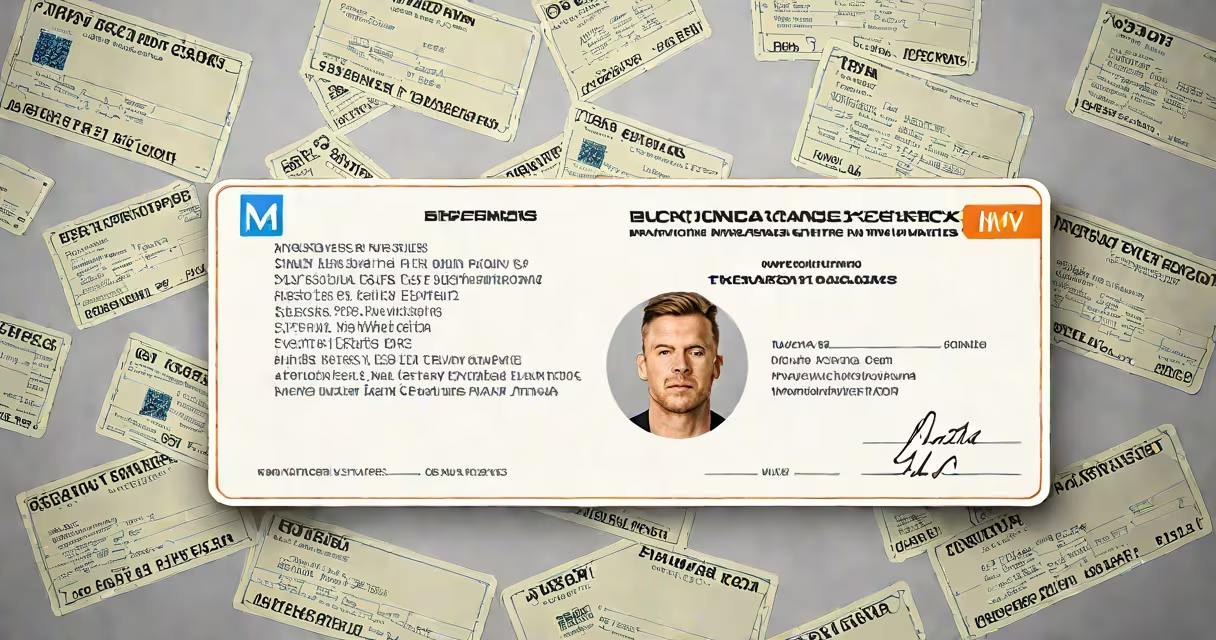
An MVR background check retrieves a person's motor vehicle record from state Department of Motor Vehicles (DMV) databases. It lists traffic violations, license suspensions, accidents, and driving history used in employment screening, insurance underwriting, and risk assessment.
MVR checks are standard for jobs involving driving, such as delivery drivers, commercial truck operators, and ride-share drivers. Employers use them to verify safe driving habits and reduce liability. Insurance companies rely on them to set premiums based on past behavior behind the wheel.
The process is automated and typically takes minutes. A third-party vendor submits a request using the individual's name, date of birth, and driver's license number. The state DMV returns a report with verified data. Results are usually accurate within 24 hours.
When a company requests an MVR background check, it sends identifying details-full name, date of birth, and driver's license number-to a licensed background screening provider. The provider then queries the relevant state DMV database through secure channels.
Each state maintains its own system. Some states allow access via API, others require paper forms or direct portal login. The provider handles compliance with state laws, including the Fair Credit Reporting Act (FCRA).
Results include dates of incidents, violation codes, citations issued, and whether the license is valid, suspended, or revoked. For example, a report may show a speeding ticket from March 2023, a DUI from 2021, and a license suspension lasting six months.
Standard MVR reports contain specific data points. The most common include:
Some states include additional details like seatbelt violations, distracted driving citations, or failure-to-yield incidents. Not all states disclose the same level of detail-California shows more than Florida, for example.
A full report may list 10 years of driving history. Some states limit retrieval to seven years. The federal government does not maintain a national database; all data comes from individual state systems.
There are two primary types of MVR checks: standard and enhanced. Standard checks cover basic data like license status and recent violations. Enhanced checks include historical data, accident details, and sometimes out-of-state records.
| Type | Scope | Typical Use Cases |
|---|---|---|
| Standard | State-specific, 3-7 years of data | Ride-share screening, local delivery jobs |
| Enhanced | Multi-state, up to 10 years, includes fault info | Commercial trucking, public transportation, security roles |
Employers in high-risk industries often require enhanced checks. For example, a school bus driver in Texas must pass a full MVR review showing no DUIs or serious moving violations in the past decade.
Insurance providers use MVR data to assess risk. A driver with three speeding tickets in two years pays 40% more on auto insurance than someone with a clean record, according to the National Association of Insurance Commissioners (NAIC).
Many people assume an MVR background check is part of a criminal record search. That's incorrect. MVRs are separate from criminal background checks and do not include arrests, convictions, or sex offender registry entries.
Another misconception is that employers can access MVRs without consent. This is false. Under the FCRA, individuals must provide written authorization before an MVR check can be run. Without consent, the request is invalid and subject to penalties.
Some believe MVR reports are always accurate. They're not. Errors occur due to name mismatches, outdated records, or clerical errors. A 2022 study by the Consumer Financial Protection Bureau (CFPB) found that 1 in 6 MVR reports contained at least one error, including incorrect violation dates or misattributed citations.
I once reviewed an MVR report for a job applicant who had a valid license but was flagged for a citation he never received. The error stemmed from a typo in the license number during submission. After correcting the input, the report cleared. This highlights the need for precise data entry and dispute procedures.
You can obtain your own MVR report directly from your state DMV. Most states offer online access through their official websites. In California, for example, drivers can request a copy via the DMV's online portal at dmv.ca.gov.
Costs vary by state. In New York, a single MVR costs $10. In Illinois, it's $15. Some states charge extra for electronic delivery or expedited processing.
If you need a report for employment or insurance purposes, you can request a certified copy. These are stamped and signed by the DMV and accepted as official documents. You'll need to submit a form, pay a fee, and wait 3-5 business days.
For faster results, use a third-party service like what does a background check do. These services automate the request and deliver reports in under 24 hours. They also help correct errors and ensure compliance with FCRA standards.
Unlike criminal background checks, which focus on court records and convictions, MVR checks track behavior on public roads. They don't reveal arrests or jail time. Instead, they reflect actions like speeding, running red lights, or failing to yield.
Also distinct from credit checks, which assess financial responsibility, MVRs evaluate physical conduct while operating a vehicle. A poor credit score doesn't affect your MVR, and vice versa.
Even though both types of checks are used in hiring, they serve different purposes. A credit check might flag financial instability. An MVR check identifies patterns of risky driving that could lead to workplace injuries or legal exposure.
For example, a warehouse supervisor with a clean credit history but multiple DUIs in his MVR report would be a higher safety risk than someone with debt but no traffic violations. The MVR provides insight into real-world behavior that financial data cannot.
An MVR background check is a verified snapshot of a person's driving history pulled from state DMV systems. It's essential for jobs requiring vehicles, insurance pricing, and personal safety evaluations. Always confirm accuracy and follow proper consent procedures.
Understanding what's included-and what's not-is critical. MVRs are not criminal records, nor are they tied to credit scores. They focus solely on traffic behavior, license status, and accident history.
For individuals seeking transparency, accessing your own MVR report is straightforward. Use your state's DMV website or a trusted third-party service. If discrepancies appear, file a dispute through the issuing agency.
Always verify the source of any MVR report. Only authorized vendors and government portals produce legally valid results. Avoid services that promise instant access without proper authentication.
Knowing how an MVR background check works empowers you to protect your rights and make informed choices about employment, insurance, and personal safety.