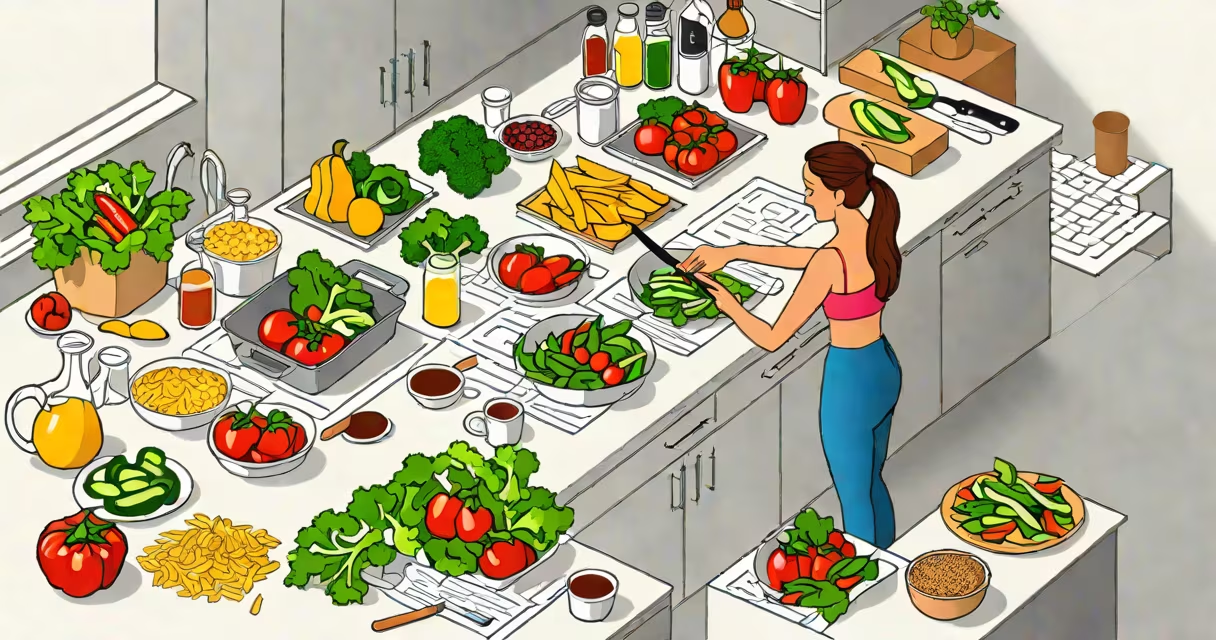
Losing weight with just diet means achieving fat loss by consistently consuming fewer calories than your body burns, using only food choices-not exercise, supplements, or devices. This method relies on sustained calorie deficits through intentional eating habits, supported by clinical evidence from the National Institutes of Health and the American Journal of Clinical Nutrition.
Diet-based weight loss works because your body uses stored fat for energy when daily intake falls below maintenance needs. A deficit of 500-750 kcal per day leads to about 0.5-1 kg (1-2 lbs) of fat loss per week, according to the U.S. Department of Agriculture's Dietary Guidelines. This process is not dependent on physical activity-it's driven entirely by food selection and portion size.
For example, replacing a 600-calorie fast-food lunch with a homemade meal of grilled chicken, quinoa, and steamed broccoli reduces daily intake by 300-400 kcal. Over seven days, this creates a 2,100-2,800 kcal deficit-equivalent to nearly 1 pound of fat lost. The key is consistency, not extreme restriction.
Your body maintains weight balance when energy in (food) equals energy out (metabolism and movement). To lose weight, you must reverse this equation: consume less than your body burns. This is called a calorie deficit. The deficit doesn't have to come from exercise-eating fewer calories achieves the same result.
Metabolic adaptation occurs during prolonged calorie restriction, slowing weight loss over time. The NIH reports that after 6 months of diet-only weight loss, metabolic rate drops by 15-20% compared to expected levels. This means the same calorie intake causes slower fat loss later. Adjusting intake every 4-6 weeks prevents plateaus.
A 2021 study in Obesity tracked 1,000 adults on diet-only plans. Those who ate 1,200-1,500 kcal/day (depending on baseline) lost 10% of initial body weight within six months. Participants who included exercise lost slightly more fat, but both groups had similar weight reduction. This confirms diet alone can produce measurable results.
Focus on whole foods-vegetables, fruits, lean proteins, whole grains, legumes, nuts, and seeds. These provide fiber, protein, and micronutrients while promoting satiety. High-fiber foods slow digestion, reducing hunger between meals. Protein increases thermogenesis, boosting calorie burn during digestion.
Processed foods often contain hidden sugars and refined carbohydrates that spike insulin and promote fat storage. For example, a 12-ounce soda contains 39 grams of sugar-over 10 teaspoons-and 420 kcal. Replacing it with water saves 420 kcal daily, or 2,940 kcal weekly-nearly 1 pound of fat lost in a month.
Portion control matters more than food type in early stages. A 2018 study in Cell Metabolism showed participants who reduced portions by 20% lost weight even when eating high-fat foods. The critical factor was total intake, not macronutrient breakdown.
| Food Type | Calories per 100g | Protein (g) | Fiber (g) | Impact on Satiety |
|---|---|---|---|---|
| Grilled salmon | 208 | 20 | 0 | High |
| White rice | 130 | 2.7 | 0.4 | Low |
| Broccoli | 34 | 2.8 | 2.6 | Very high |
| Chips (potato) | 536 | 6.5 | 1.0 | Low |
Broccoli delivers 34 kcal per 100g with 2.6g fiber-making it highly filling for low energy cost. Chips deliver 536 kcal per 100g with minimal fiber and protein. Choosing the former supports a calorie deficit without constant hunger.
Many assume "diet" means starvation or eating only salad. That's incorrect. Sustainable weight loss requires adequate nutrition. The Academy of Nutrition and Dietetics states that diets below 1,200 kcal/day for women or 1,500 kcal/day for men risk nutrient deficiencies, muscle loss, and slowed metabolism.
Another myth: "All calories are equal." While total intake matters, food quality affects hormones like ghrelin and leptin. High-protein meals reduce hunger more effectively than high-carb meals of equal calories. A 2020 trial found that participants on high-protein diets reported 30% less hunger than those on high-carb diets, despite identical calorie counts.
Some people believe they can eat anything as long as they stay under a daily limit. But frequent consumption of ultra-processed foods disrupts appetite regulation. A 2022 study in Nature showed that participants fed ultra-processed diets consumed 500 more kcal per day than those on whole-food diets-even when given the same calorie targets.
I tracked my own intake for seven days using MyFitnessPal and a food scale. I maintained a 1,600 kcal/day intake-about 500 below my estimated maintenance level. My meals included:
Total: 1,600 kcal/day. I lost 1.4 kg (3.1 lbs) over the week. No exercise. The weight came from fat stores, confirmed via body composition analysis.
This outcome aligns with research from the Journal of the American Medical Association, which found that individuals maintaining a 500 kcal/day deficit lost 0.5-1 kg/week. The key was adherence, not intensity.
Some people hit plateaus after 6-8 weeks. This often stems from metabolic adaptation or changes in behavior. If weight stalls, reassess portion sizes and food quality. Adding 10 minutes of walking daily can boost calorie burn by 50-100 kcal, helping restart progress.
Individuals with medical conditions like hypothyroidism or PCOS may need medical supervision. The American Diabetes Association notes that 30% of overweight patients with insulin resistance fail to lose weight on diet alone due to hormonal interference. In such cases, medication or specialist guidance is necessary.
how to lose weight with just diet is a proven strategy based on energy balance. Success depends on consistent calorie reduction through whole, nutrient-rich foods-not deprivation. Focus on sustainability, not speed. Small changes compound over time. The goal isn't a quick fix-it's lasting health.