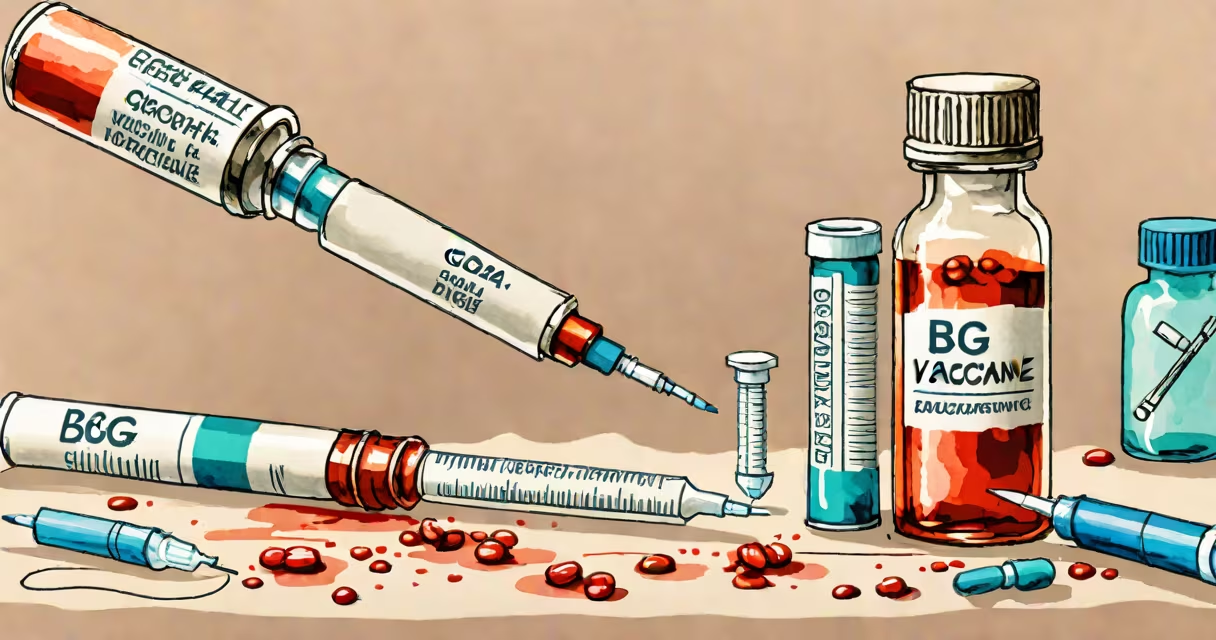
There is a vaccine for tuberculosis (TB), called BCG, but it provides only partial protection and is not effective against adult pulmonary TB. No universally effective TB vaccine currently exists, though several candidates are in clinical trials.
The BCG vaccine, developed in 1921, remains the only licensed vaccine for TB. It is administered shortly after birth in many countries with high TB burden. Despite widespread use-over 100 million doses given annually-it prevents only about 50% of TB cases in adults and offers limited protection against the most common form of TB: pulmonary TB.
Research into new TB vaccines has advanced since the early 2000s. The World Health Organization (WHO) estimates that 16 candidate vaccines are in various stages of human testing, with several in Phase IIb or III trials. These newer candidates aim to improve on BCG's limitations by targeting different stages of TB infection and offering longer-lasting immunity.
BCG is derived from a weakened strain of Mycobacterium bovis, a relative of the bacterium that causes human TB (Mycobacterium tuberculosis). When injected, it triggers an immune response that trains the body's defenses to recognize and attack TB bacteria if encountered later.
However, BCG's effectiveness varies widely by region. In areas with high TB incidence, such as sub-Saharan Africa, BCG reduces childhood TB by up to 80%. In regions with lower TB rates, like North America and Western Europe, protection drops to around 30-50%.
A key limitation is that BCG does not prevent latent TB infection from reactivating later in life. People who test positive for latent TB after BCG vaccination may still develop active disease years later, especially if their immune system weakens.
Researchers are testing multiple approaches to create a more effective TB vaccine. These fall into three main categories:
| Type | How It Works | Examples in Trials |
|---|---|---|
| Subunit vaccines | Use specific proteins from TB bacteria to stimulate immunity | M72/AS01E (Phase III), H56 (Phase II) |
| Prime-boost regimens | Use BCG as a primer, then a different vaccine to boost immunity | VPM1002 (Phase III), MVA85A (Phase IIb) |
| Whole-cell vaccines | Use modified live TB strains that are safer than wild-type | MTBVAC (Phase II) |
One notable example is M72/AS01E, which combines a TB protein with an adjuvant to improve immune response. A 2023 phase III trial in southern Africa showed a 50% reduction in active TB among vaccinated adults with latent infection-marking the first significant efficacy result in decades.
Several biological and logistical barriers explain why no better TB vaccine has reached widespread use. TB bacteria can hide inside immune cells, evading detection. They also have complex mechanisms to suppress immune responses, making it hard for vaccines to generate lasting protection.
Another issue is funding. While HIV and malaria receive substantial global investment, TB research lags behind. According to the Global Fund, annual spending on TB R&D totaled $1.2 billion in 2022-less than half of what's needed to accelerate development, per WHO estimates.
Even when vaccines show promise in trials, rollout faces challenges. BCG is free and stable at room temperature, allowing distribution in low-resource settings. Newer vaccines often require cold chain storage, which limits access in remote areas.
Many people assume that because BCG exists, TB is fully preventable. This is false. BCG does not stop transmission, nor does it protect adults from pulmonary TB. It primarily prevents severe forms of TB in children, such as TB meningitis and miliary TB.
Another myth is that TB is eradicated in wealthy nations. In reality, the U.S. reported 9,000 TB cases in 2022, and the UK had over 5,000. These numbers remain stable despite BCG use, highlighting the need for better vaccines.
A less obvious error is confusing BCG with TB treatment. BCG is preventive, not therapeutic. It cannot cure active TB. Treatment requires a combination of antibiotics taken daily for six months or longer.
In 2021, researchers in South Africa began a large-scale trial of the M72/AS01E vaccine. The study enrolled 5,000 adults aged 18-50 who had latent TB and lived in high-risk communities. Half received the experimental vaccine; the other half got a placebo.
After two years, 11 cases of active TB occurred in the vaccine group versus 22 in the placebo group. This translated to a 50% reduction in incidence-a statistically significant result. The vaccine was well-tolerated, with mild side effects like fatigue and injection site pain.
This trial is one of the strongest leads in decades. If approved, M72/AS01E could be used to vaccinate people with latent TB, reducing the risk of progression to active disease.
If you're concerned about TB exposure-especially if you work in healthcare, travel frequently to high-burden countries, or live with someone diagnosed with TB-talk to your doctor about screening and prevention options.
For those at high risk, the BCG vaccine is still recommended in some countries. However, it's not routinely given in the U.S., where TB rates are low. Instead, the CDC advises testing for latent TB and treating it with antibiotics if positive.
Staying informed about new developments is critical. The WHO has set a goal to license a new TB vaccine by 2030. Progress depends on sustained funding, international collaboration, and public awareness.
While there is no perfect shot for TB yet, scientific progress is accelerating. The next generation of TB vaccines may finally offer durable, broad protection-ending decades of uncertainty.