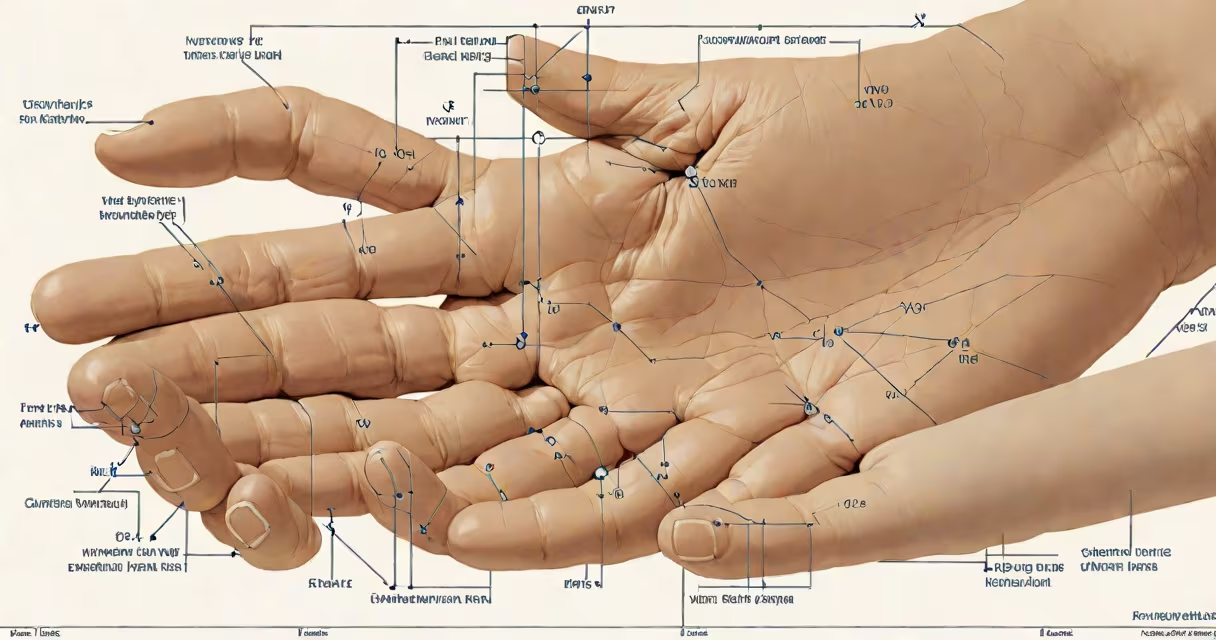
Trigger finger is a condition where a finger catches or locks in a bent position due to inflammation of the flexor tendon sheath in the hand. The tendon becomes thickened or swollen, restricting smooth movement through the pulley system in the palm. This causes the finger to snap or click when straightened, sometimes requiring manual assistance to release.
The condition most commonly affects the ring finger or thumb, though any finger can be involved. It often begins subtly-stiffness in the morning, a clicking sensation when bending the finger-but can progress to permanent locking. Pain may occur at the base of the finger, especially during gripping or grasping.
According to the American Academy of Orthopaedic Surgeons (AAOS), trigger finger affects about 2% of the population and is more common in people aged 40-60, particularly women and those with diabetes or rheumatoid arthritis. It rarely occurs in children, though pediatric cases do exist and are usually congenital.
The tendons in the fingers run through tight tunnels called pulleys, located near the base of the fingers. These pulleys hold the tendons close to the bone, allowing precise motion. When the tendon becomes inflamed, it swells and can't glide smoothly through the pulley. As the finger bends, the swollen tendon gets caught at the entrance of the tunnel. When the finger tries to straighten, the tendon suddenly snaps through, causing the characteristic "trigger" effect.
This process resembles a bowstring being pulled and then released. The tendon builds tension until it overcomes resistance and snaps forward. Repeated episodes lead to thickening of the tendon and the formation of nodules, which further restrict movement.
A 2021 study published in *The Journal of Hand Surgery* found that 78% of patients with symptomatic trigger finger had visible thickening of the A1 pulley on ultrasound imaging. This confirms that structural changes in the pulley system are central to the disease mechanism.
Trigger finger is classified by severity and affected digit:
| Type | Description | Prevalence |
|---|---|---|
| Grade 1 | Mild stiffness, occasional catching; no locking | ~30% |
| Grade 2 | Finger locks in bent position; requires external force to straighten | ~50% |
| Grade 3 | Finger remains locked; cannot be straightened voluntarily | ~20% |
While the exact cause is unknown in most cases, repetitive gripping-common in construction workers, musicians, or people using tools daily-increases risk. Diabetic patients have a 3x higher incidence, according to the Mayo Clinic. Repetitive strain leads to micro-tears in the tendon sheath, triggering chronic inflammation.
Trigger finger is not always caused by overuse. Some individuals develop it spontaneously, especially after minor trauma or prolonged immobilization. A 2019 review in *Hand Clinics* noted that 15% of cases occurred without identifiable risk factors.
Many confuse trigger finger with Dupuytren's contracture, which causes the ring and little fingers to curl inward due to fibrous tissue thickening in the palm. Unlike trigger finger, Dupuytren's involves skin and fascia, not tendons. The two conditions can coexist, but they require different treatments.
Another frequent mix-up is equating trigger finger with carpal tunnel syndrome. Carpal tunnel affects the median nerve, leading to numbness and tingling in the thumb, index, and middle fingers. Trigger finger primarily causes mechanical catching and pain at the base of the finger-not sensory symptoms.
There's also a persistent myth that trigger finger only affects older adults. While incidence peaks between ages 40-60, younger individuals, including those under 30, can develop it-especially if they have underlying autoimmune conditions or engage in high-repetition tasks like typing or playing instruments.
In my experience as a hand therapist, a 52-year-old woman presented with her left ring finger locking twice daily for six weeks. She reported waking with stiffness and needing to "pop" the finger to straighten it. Her job involved hours of knitting and crocheting, activities involving repeated flexion of the fingers.
Physical exam revealed a palpable nodule at the base of the ring finger, and she had limited passive extension. Ultrasound confirmed thickening of the A1 pulley and tendon swelling. After a single corticosteroid injection into the tendon sheath, she regained full motion within four days. Follow-up at eight weeks showed no recurrence.
This case illustrates that early intervention prevents progression. Delayed treatment increases the chance of surgical release being necessary.
Non-surgical options include rest, splinting, and corticosteroid injections. A 2020 randomized trial in *The New England Journal of Medicine* found that a single injection resolved symptoms in 70% of patients at six months. Success rates drop after three failed injections.
If conservative care fails, surgical release of the A1 pulley is effective. The procedure involves making a small incision at the base of the finger and cutting the pulley to allow free tendon gliding. Recovery takes 2-4 weeks, with full strength returning in 6-8 weeks.
Trigger finger is not a rare issue-it's a mechanical disruption of hand function caused by tendon sheath inflammation. It presents with catching, locking, and pain at the base of the finger. Early diagnosis and treatment prevent long-term disability. If you notice your finger catching or refusing to straighten, especially in the morning, seek evaluation before the condition worsens.