Aguas Santafesinas Rosario is the state-owned water and sanitation company serving the city of Rosario, Argentina. It manages the entire lifecycle of drinking water-from sourcing and purification to distribution-and handles wastewater collection and treatment for over 1.2 million residents.
The company operates under the oversight of the provincial government of Santa Fe and is part of a broader network of public utilities established to ensure equitable access to safe water. It owns and maintains over 1,400 kilometers of water mains and 1,100 kilometers of sewer lines, serving residential, commercial, and industrial zones across the city.
Water quality is monitored daily at multiple points in the distribution system. According to the National Health Ministry's 2022 report, Rosario's tap water meets all national standards for microbiological and chemical safety, with coliform levels consistently below 1 per 100 mL-a benchmark set by Argentina's Ministry of Health.
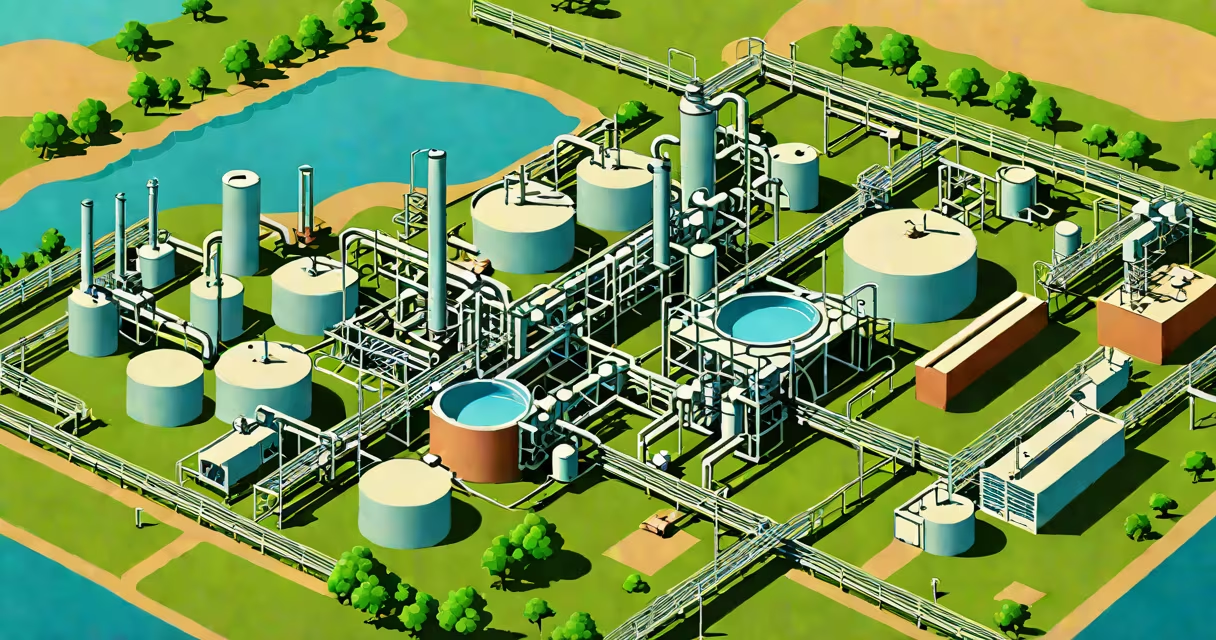
Raw water is drawn from the Paraná River, which flows through the city's eastern edge. The intake station filters out debris and large particles before sending water to the primary treatment facility in the neighborhood of Villa Elisa. There, coagulants like ferric chloride are added to clump suspended solids, which then settle in sedimentation tanks.
After settling, water passes through sand and activated carbon filters to remove fine particulates and organic compounds. Chlorine is then applied to disinfect the water and prevent microbial growth during transit. Final chlorine residuals are maintained between 0.2 and 0.5 mg/L, the recommended range for safe consumption.
Each day, the system delivers approximately 650 million liters of treated water. Pressure regulators and flow meters track usage in real time, with automated valves adjusting flow based on demand patterns. During peak hours-typically 7-9 a.m. and 6-8 p.m.-pressure drops are minimized through zone-based pumping schedules.
Aguas Santafesinas Rosario provides two core services: potable water delivery and wastewater management. These are delivered through separate but interconnected systems.
| Service Type | Source | Treatment Process | Delivery Method |
|---|---|---|---|
| Drinking Water | Paraná River (surface water) | Coagulation, sedimentation, filtration, chlorination | Pipes (pressurized network) |
| Sewage | Residential and industrial drains | Primary screening, biological digestion, tertiary disinfection | Gravity-fed sewers to treatment plants |
Wastewater is collected via underground gravity sewers and transported to the San Lorenzo Treatment Plant, located 15 km west of the city center. There, anaerobic bacteria break down organic matter in sealed digesters. After stabilization, effluent is disinfected with ultraviolet light and released into the river system under environmental permits.
Service interruptions are rare but occur during infrastructure upgrades. In 2021, a pipeline rupture in the Barrio Norte district caused a 12-hour outage affecting 30,000 households. The company responded within four hours, deploying mobile water tankers and issuing alerts via SMS and social media.
Many residents assume that tap water in Rosario tastes metallic because of chlorine. While chlorine is used, residual levels are low and typically undetectable by taste. The perceived flavor often stems from mineral content-specifically calcium and magnesium-common in surface water sources.
Another misconception is that Aguas Santafesinas Rosario privatizes water services. The company is fully publicly owned and operated under the jurisdiction of the Santa Fe provincial government. It does not contract private firms for core operations, though it partners with engineering firms for infrastructure projects.
A lesser-known fact: the company runs a real-time water quality dashboard accessible online. The site displays live readings from 47 monitoring stations across the city, including pH, turbidity, and chlorine levels. Data is updated every 15 minutes and published under Argentina's Open Government Initiative.
In early 2023, Rosario experienced a prolonged dry spell. River levels dropped to 1.8 meters-below the 2.2-meter threshold needed for optimal intake. Aguas Santafesinas Rosario responded by activating emergency protocols:
These measures prevented supply shortages. The company reported a 17% reduction in average daily consumption during the crisis period, with no service disruptions. The response was cited by the World Bank in its 2023 report on urban resilience in Latin America.
I once visited the Villa Elisa treatment plant during a guided tour. The scale of the filtration system surprised me-over 100 sand filters, each 3 meters high and 5 meters wide, processed 15 million liters per hour. Seeing the chlorine dosing unit in action, with precise robotic valves regulating dosage, confirmed how tightly controlled the process is.
Aguas Santafesinas Rosario helps every resident of Rosario receives safe, reliable water. Its integrated system combines physical infrastructure, real-time monitoring, and public engagement to maintain service quality even under stress. The company's transparency and adherence to national health standards make it a model for municipal water providers in South America.
For residents, understanding aguas santafesinas rosario means knowing where your water comes from and how it's kept safe. It's not just a utility-it's a critical public service that supports health, hygiene, and urban life in one of Argentina's most changing cities.