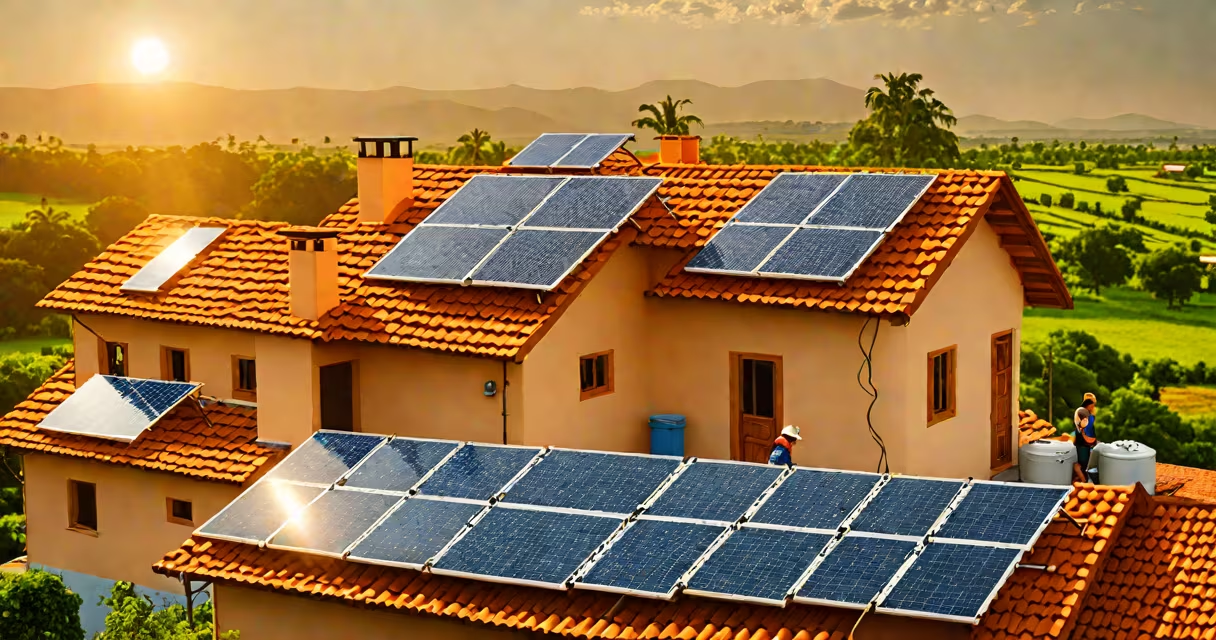
Sustainable Development Goal 7 (SDG7) is a United Nations initiative to ensure universal access to affordable, reliable, sustainable, and modern energy by 2030. It targets eliminating energy poverty and expanding renewable energy infrastructure globally.
SDG7 addresses a core challenge: nearly 700 million people still lack electricity access, primarily in sub-Saharan Africa and South Asia. The goal focuses on both supply and affordability, requiring investments in solar, wind, hydro, and geothermal systems alongside grid modernization and off-grid solutions.
The UN defines SDG7's three pillars: access to modern energy services, increased share of renewable energy in the global mix, and improved energy efficiency. Progress is tracked through indicators like electrification rates, renewable energy consumption, and energy intensity (energy use per unit of GDP).
SDG7 operates through national policies, international funding, and private-sector partnerships. Countries set targets aligned with the 2030 deadline, often integrating energy plans into broader climate and development strategies.
National programs prioritize energy access in remote areas. For example, Bangladesh's Solar Home Systems program installed over 4 million solar kits between 2003 and 2020, providing electricity to 20 million people. These systems are financed through microloans and government subsidies, making them affordable for low-income households.
At the global level, the International Renewable Energy Agency (IRENA) tracks progress. Their 2023 report shows that renewable energy accounted for 30% of global power generation in 2022, up from 20% in 2010. However, this growth is uneven-sub-Saharan Africa still gets less than 10% of its electricity from renewables.
SDG7 encompasses four key elements: electrification, renewable energy deployment, energy efficiency, and clean cooking solutions. Each serves different populations and contexts.
| Type | Primary Use | Examples | Target Region |
|---|---|---|---|
| Grid-connected renewables | Large-scale power supply | Wind farms in Morocco, solar plants in India | Urban and peri-urban centers |
| Off-grid solar systems | Household lighting and small appliances | Solar lanterns, home solar kits | Rural villages, displaced communities |
| Modern cooking solutions | Health and safety in homes | Biogas stoves, solar cookers | Sub-Saharan Africa, South Asia |
| Energy efficiency upgrades | Reduced energy demand | LED lighting, efficient refrigerators | Residential and commercial buildings |
Off-grid systems are critical for reaching remote populations. In Kenya, M-KOPA's pay-as-you-go solar system allows users to pay $1 per day via mobile money. Over 1 million households have adopted this model since 2010, reducing reliance on kerosene lamps.
A common misconception is that SDG7 only means solar panels. It includes all forms of clean energy-biomass, hydropower, geothermal-and emphasizes affordability and reliability. A system that generates power but costs 30% of a household's income fails the "affordable" criterion.
SDG7 is implemented in countries with high energy poverty. Nigeria, for example, has 89 million people without electricity. The government's National Electrification Strategy aims to connect 90% of the population by 2030 through a mix of grid expansion and mini-grids.
International finance plays a role. The World Bank's Energy Sector Management Assistance Program (ESMAP) supports 60+ countries in policy design and project implementation. In 2022, ESMAP helped launch 12 mini-grid projects in Indonesia, serving 45,000 people.
Non-governmental organizations also drive progress. The Global Off-Grid Lighting Association reports that 1.2 billion people now use LED lighting instead of kerosene, reducing indoor air pollution and fire risk. This shift directly advances SDG7's health and environmental goals.
Many assume SDG7 is solely about building solar farms. In reality, it prioritizes energy access for the poorest. A solar farm in a city may meet technical targets but fail if nearby slums remain unconnected.
Another error is equating "clean energy" with "renewable." While renewables are central, SDG7 includes clean fossil fuel technologies when they're part of transitional systems. For example, natural gas plants can provide stable backup for intermittent solar and wind-but only if paired with carbon capture and storage.
A lesser-known fact: energy efficiency improvements deliver faster results than new generation capacity. According to the International Energy Agency (IEA), doubling energy efficiency gains could reduce global CO₂ emissions by 40% by 2050-more than any single renewable source.
I once visited a solar microgrid in northern Uganda. The system powered five clinics and a school. But during the rainy season, battery degradation reduced output. We found that maintenance training and spare parts were missing. This highlighted a flaw in many SDG7 projects: focus on hardware, not long-term operation.
Progress toward SDG7 is measured using three indicators:
As of 2023, 90% of the global population had electricity access-up from 83% in 2010. But regional gaps persist: Sub-Saharan Africa's access rate remains at 58%. The renewable share rose to 29%, close to the 30% target. Energy intensity improved by 1.6% per year-slightly below the required pace.
These numbers show momentum but also urgency. Without accelerated investment, especially in fragile states, the 2030 deadline will be missed.
Meeting SDG7 requires coordinated action across governments, financiers, engineers, and communities. It's not just about technology-it's about inclusion, equity, and sustainability. The goal is not to build more power stations, but to ensure every person can light their home, cook safely, and power their future.