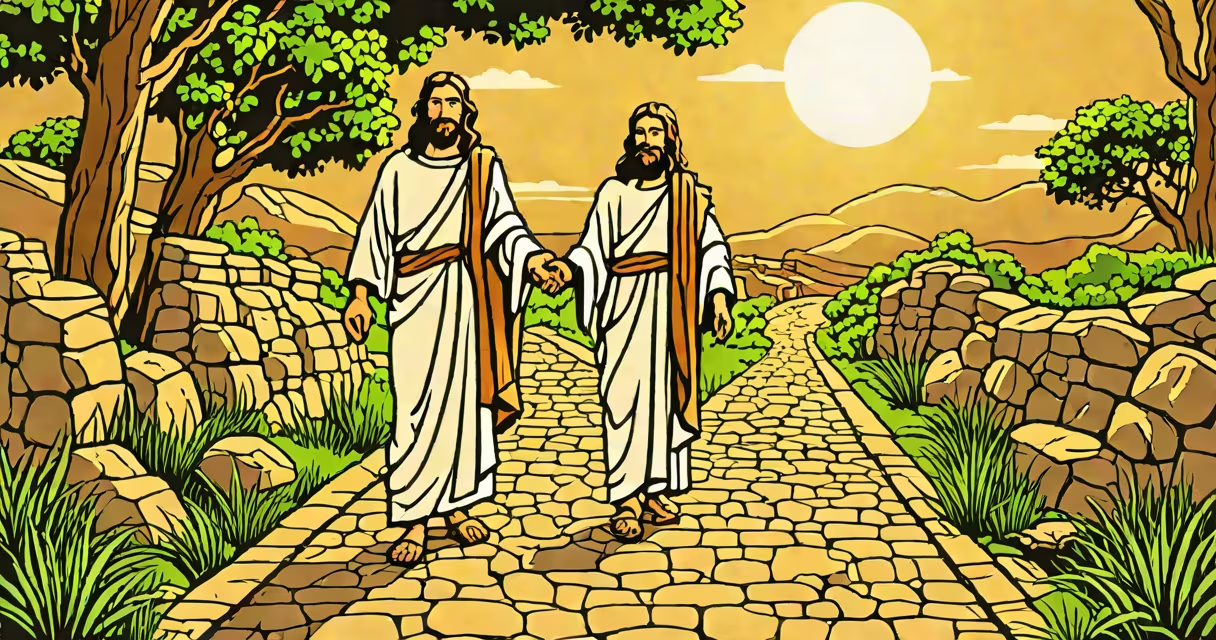
"Take my yoke upon you" is a direct invitation from Jesus in Matthew 11:29, calling followers to accept His guidance and shared burden as a path to spiritual rest. The phrase uses agricultural imagery from first-century life, where a yoke connected two animals to work together. Jesus reframes this tool as a symbol of partnership, not oppression.
The original Greek word for "yoke" is *zugon*, referring to a wooden frame placed across the necks of oxen to distribute labor evenly. In Jewish tradition, the yoke represented obedience to God's law. Jesus redefines it-not as a heavy obligation, but as a shared load. He says, "For my yoke is easy, and my burden is light" (Matthew 11:30).
This teaching appears in a passage where Jesus addresses those who are "weary and burdened." He offers relief not through escape, but through alignment. The yoke is not a replacement for responsibility-it's a redirection of effort toward a purposeful relationship with Him.
Jesus speaks these words after declaring, "Come to me, all you who are weary and burdened, and I will give you rest." The sequence matters: weariness leads to invitation, which leads to acceptance of the yoke. This is not a one-time offer-it's a recurring posture of surrender.
When Jesus says "take my yoke," He doesn't demand compliance. He invites participation. The yoke is not imposed; it's accepted. The act of taking it implies choice, awareness, and willingness to walk alongside Him. It's not about becoming passive-it's about joining a movement.
A modern parallel is teamwork in a high-pressure job. One person may carry a heavy workload alone. Another chooses to share it with a colleague. The load doesn't disappear-but it becomes manageable because it's distributed. Jesus offers the same principle: burden-sharing through connection.
The yoke Jesus describes is not a physical device. It's a metaphor for relational structure. Its components are trust, mutual dependence, and shared purpose. Unlike oppressive systems, it's designed to reduce strain, not increase it.
Two key elements define this yoke:
Paul later echoes this idea in Galatians 6:2: "Carry each other's burdens, and in this way you will fulfill the law of Christ." The concept extends beyond individual discipleship-it's communal. The yoke enables accountability, support, and growth within community.
Many assume "take my yoke" means accepting strict religious rules. That's incorrect. The yoke is not a list of prohibitions. It's not about legalism. Jesus contrasts His yoke with the Pharisees' heavy burdens (Matthew 23:4), showing that His system is lighter, not heavier.
Another mistake is thinking the yoke removes effort. It doesn't. Jesus says His burden is light-not absent. The work continues. But the nature of the work changes. Instead of striving to earn approval, believers now serve out of gratitude and alignment.
A third error is treating the yoke as optional. It's not. When Jesus says "come to me," He's describing a transformational shift. Taking the yoke is not a side activity-it's central to discipleship. Those who reject it remain under the weight of their own efforts.
In practice, "take my yoke upon you" means choosing daily surrender. It shows up in decisions: staying patient during conflict, forgiving quickly, giving generously, or speaking kindly even when tired.
Consider a small church volunteer who feels overwhelmed by organizing events. She prays, "Lord, I'm carrying too much alone." She begins attending weekly Bible study, asking others to help. Over time, she stops seeing tasks as her personal burden and starts viewing them as shared responsibilities. Her stress decreases not because the work vanishes, but because she's walking under the yoke of Christ's peace and community.
Another example: a man struggling with anxiety after losing his job. He turns to prayer, not to fix everything instantly, but to align his thoughts with Jesus' promise: "I will give you rest." He starts journaling Scripture, attends a support group, and slowly rebuilds confidence. The yoke isn't a magic solution-but it provides stability and clarity.
Confusion often arises between "take my yoke" and similar expressions. Here's how they differ:
These phrases sound similar but operate in different domains. "Take my yoke" belongs to theology, not logistics or medicine.
I once led a youth group where members felt disconnected from faith. I tried programs, activities, and lectures. Nothing stuck. Then I began leading discussions centered on Matthew 11:29. We didn't just read the verse-we discussed what it meant to "take the yoke."
One student said, "I've always thought being a Christian meant doing more. Now I see it's about letting go." That moment changed our changing. We stopped trying to perform and started focusing on presence. The group grew quieter, deeper, more consistent. The yoke wasn't a rule-it was a relationship.
The New International Version of Matthew 11:29-30 states: "Take my yoke upon you and learn from me, for I am gentle and humble in heart, and you will find rest for your souls. For my yoke is easy and my burden is light." This translation reflects the original Koine Greek, where "easy" means "well-fitting" or "suitable," not "simple."
According to the International Standard Bible Encyclopedia, the yoke symbolized covenantal commitment in ancient Israel. It was not a sign of slavery, but of unity. Jesus repurposes this symbol to emphasize grace over duty.
The NIV Study Bible notes that Jesus' offer of rest is not passive. It requires engagement. "To come to Christ is to enter into a relationship where His leadership brings relief, not additional pressure."
"Take my yoke upon you" is not a command to endure suffering. It's an invitation to exchange struggle for partnership. The burden remains-but it's shared. The effort continues-but it's guided. The rest comes not from stopping, but from walking with Him.
Understanding this phrase transforms how people engage with faith. It shifts focus from performance to relationship. From fear to freedom. From isolation to belonging.