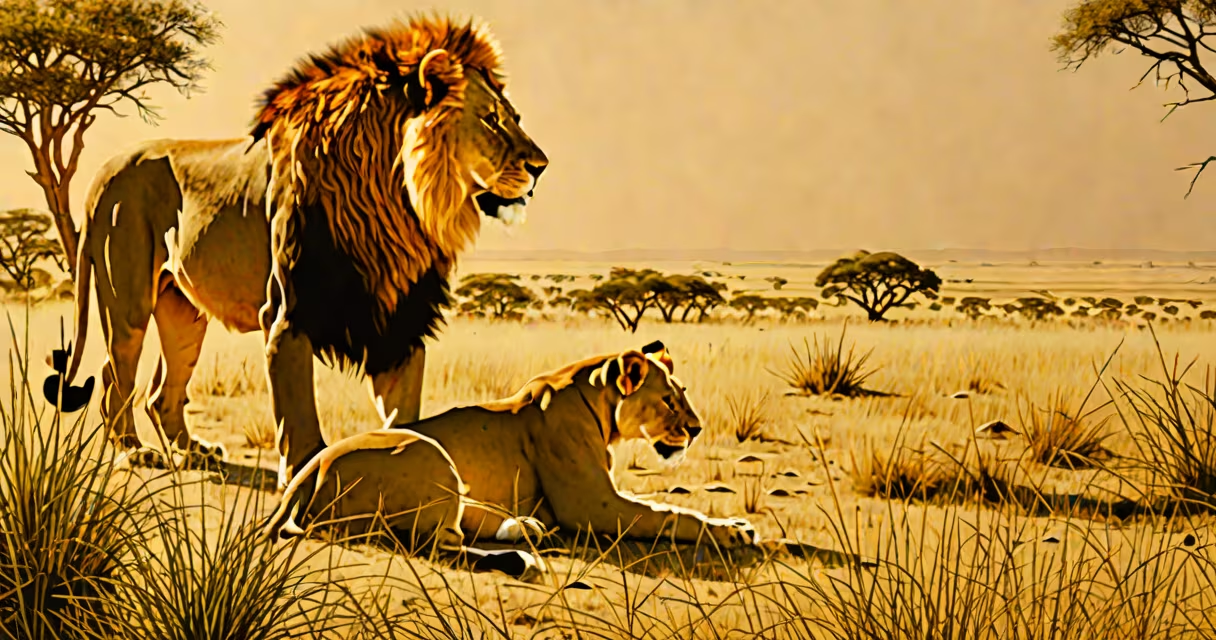
A species is a group of living organisms that share a common gene pool and can reproduce with one another to produce fertile offspring. This definition forms the basis of biological classification and underpins how scientists understand biodiversity.
The concept of species dates back to Carl Linnaeus's 18th-century system of taxonomy, which organized life into hierarchical categories. Today, the most widely accepted definition is the biological species concept, which emphasizes reproductive isolation. Organisms belonging to the same species can mate and produce viable, fertile offspring under natural conditions. If they cannot, they are considered separate species.
For example, domestic dogs (Canis lupus familiaris) belong to the same species as gray wolves (Canis lupus), despite differences in appearance and behavior. They can interbreed and produce fertile puppies. In contrast, horses (Equus caballus) and donkeys (Equus asinus) can mate, but their offspring-the mule-is sterile. This reproductive barrier confirms they are distinct species.
Biologists use multiple criteria to determine species boundaries. The biological species concept relies on reproductive compatibility. However, this model has limitations when applied to asexual organisms, extinct species, or organisms that live in isolated environments.
Alternative approaches include the morphological species concept, which groups organisms based on physical traits such as size, shape, and color. This method is practical for fossils or rare animals where breeding data is unavailable. For instance, paleontologists classify dinosaur species primarily by skeletal features.
The phylogenetic species concept defines species based on shared ancestry and genetic divergence. A species is a group of organisms that share a unique evolutionary history and form a monophyletic clade. DNA sequencing enables precise comparisons. A study published in Nature found that even closely related bird species differ by 2-3% in mitochondrial DNA sequence, a key marker for species differentiation.
Scientists apply different species concepts depending on context. The table below outlines the major models and their typical uses.
| Concept | Definition Basis | Best For | Limitations |
|---|---|---|---|
| Biological | Reproductive compatibility | Animals, sexually reproducing organisms | Fails for asexual species, hybrids, fossils |
| Morphological | Physical characteristics | Fossils, rare species, field identification | Subjective; ignores genetic diversity |
| Phylogenetic | Shared evolutionary lineage | Genetic analysis, microbial diversity | Requires extensive genomic data |
When studying bacteria, researchers often rely on the phylogenetic approach. A 2021 study in Science Advances identified over 1,000 new bacterial species using whole-genome sequencing, revealing that many previously grouped strains were genetically distinct enough to qualify as separate species.
Many people assume that species are fixed, unchanging units. In reality, species evolve. What we call a species today may not have existed 10,000 years ago. The process of speciation-where one species splits into two-can take thousands of years. For example, the African elephant was long considered a single species, but genetic research confirmed two distinct species: Loxodonta africana and Loxodenta cyclotis.
Another misconception is that all members of a species look identical. Human populations vary greatly in skin tone, hair texture, and facial structure, yet all belong to Homo sapiens. Genetic diversity within a species is normal and essential for adaptation. The global human population contains about 0.1% genetic variation between individuals-enough to explain differences in disease susceptibility and drug response.
Some confuse species with subspecies or breeds. A breed is a human-created variant within a species, such as the German Shepherd or Siamese cat. These are not separate species because they can still interbreed with other members of the same species. Subspecies, like the Florida panther (Puma concolor coryi), represent geographic variants with minor genetic differences but remain part of the same species.
The red wolf (Canis rufus) illustrates how species status can be debated. Once widespread across the southeastern United States, it declined due to habitat loss and hunting. By the 1970s, it was nearly extinct in the wild.
Conservationists captured the last known wild red wolves and initiated a captive breeding program. But genetic analysis revealed that red wolves carry significant DNA from coyotes (Canis latrans). Some experts argue they are not a pure species but a hybrid population. Others maintain that their distinct morphology and historical range justify species status.
This debate affects conservation policy. If red wolves are recognized as a valid species, they receive stronger legal protection under the U.S. Endangered Species Act. The U.S. Fish and Wildlife Service currently lists them as endangered, acknowledging their ecological and genetic uniqueness despite hybridization.
Species are foundational to ecology, conservation, and medicine. Biodiversity assessments depend on accurate species counts. The Intergovernmental Science-Policy Platform on Biodiversity and System Services (IPBES) estimates that around 1 million species face extinction due to human activity. Without clear species definitions, monitoring and protecting them becomes impossible.
In medicine, identifying pathogen species is critical. For example, distinguishing between different strains of Salmonella helps track outbreaks and develop targeted treatments. The CDC reports that Salmonella enterica serovar Typhimurium causes approximately 1.3 million infections annually in the U.S., while other serovars cause fewer cases but higher fatality rates.
I once observed a field team in Costa Rica identify a new frog species during a biodiversity survey. They collected vocalization recordings, measured toe webbing, and sequenced mitochondrial DNA. Only after confirming reproductive isolation and genetic distinctness did they publish the findings. That moment reinforced how rigorously science defines what a species means.
Understanding what does species mean allows us to interpret evolution, protect ecosystems, and manage resources responsibly. Whether through genetics, morphology, or reproductive behavior, the concept remains central to biology.
Knowing what does species mean helps clarify how life is categorized and conserved. This structure supports both research and policy decisions worldwide.