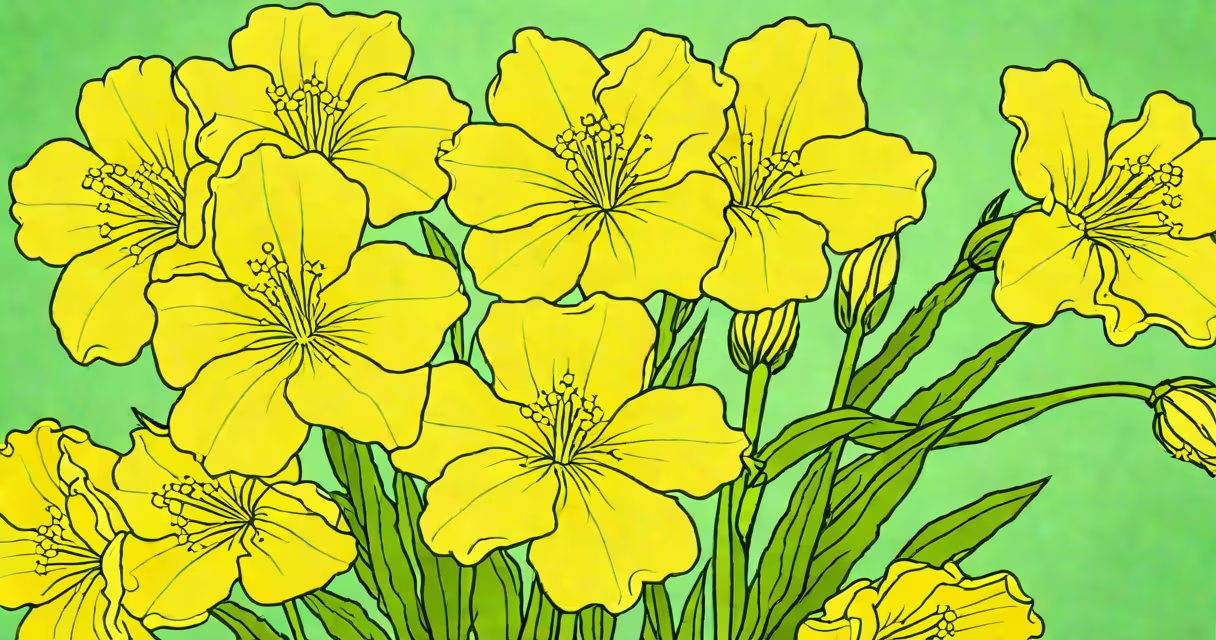
The primrose symbolizes new beginnings, youthful love, and the arrival of spring. In Victorian flower language, it conveyed affection and the idea of "I am thinking of you." This small, early-blooming flower holds layered meanings rooted in European tradition, botany, and cultural memory.
Primroses (scientific name: *Primula vulgaris*) emerge in late winter to early spring, often pushing through snow-covered ground. Their bright yellow or pale pink blossoms appear before most other flowers, marking the return of warmth. This timing gave them symbolic weight in ancient and medieval Europe, where they were associated with rebirth and renewal. The Romans linked them to Venus, goddess of love and fertility, due to their early blooming and delicate form.
In the 19th century, the language of flowers became formalized in Britain and France. The primrose was assigned specific emotional meanings: yellow primroses meant "I am thinking of you," while white ones suggested purity and innocence. These coded messages were written into poetry, letters, and gifts. A bouquet of primroses could express quiet longing or gentle affection without saying a word.
British folklore attributes protective qualities to primroses. In rural England, people believed placing a primrose under a child's pillow could ward off nightmares. Some traditions held that the flower could reveal hidden truths-those who wore a primrose during a dream might wake with insight. These beliefs reflect a broader pattern: many cultures assign spiritual or emotional significance to plants based on their appearance, scent, or seasonal behavior.
Germanic traditions saw the primrose as a sign of hope. In parts of Germany and Scandinavia, children would gather primroses on Easter morning and place them on graves as offerings. This practice tied the flower to both remembrance and the promise of resurrection. The color mattered: yellow primroses represented joy and optimism, while purple variants-rare in nature but cultivated-were linked to dignity and reverence.
Native American tribes such as the Ojibwe and Cherokee used primrose relatives in herbal medicine. Though not the same species, these plants shared similar growth patterns and were used to treat respiratory ailments. While not part of the original primrose symbolism, this usage shows how plant meaning shifts across contexts-medicine, ritual, and aesthetics all contribute to a single species' cultural identity.
Not all primroses carry the same meaning. Different varieties have distinct visual traits and historical associations:
| Type | Color | Symbolism | Origin |
|---|---|---|---|
| Common primrose (*Primula vulgaris*) | Yellow, pinkish-white | New beginnings, affection, springtime | Western Europe |
| Primrose (garden hybrid) | Red, purple, blue | Dignity, admiration, rare beauty | Bred in 19th-century UK |
| Primrose (Alpine variety) | Pale blue, lavender | Peace, serenity, quiet strength | High mountain regions |
Yellow primroses remain the most widely recognized. They're frequently used in wedding bouquets to represent fresh starts and enduring love. White primroses appear in memorial arrangements, honoring lost youth or unfulfilled potential. Purple primroses, though less common, are sometimes given to mark personal milestones-like graduations or first jobs-where dignity and quiet pride are valued.
Many assume the primrose always means "love" or "romance." That's incomplete. While it did convey affection in Victorian times, its primary message was often anticipation-waiting for something good to come. The flower blooms early, before the season is fully warm. It stands out because it dares to flourish in uncertain conditions.
Another misconception is that primroses are native to North America. They are not. Native Americans had similar-looking plants-such as *Primula sect. Dodecatheon*-but these are different genera. Confusing them leads to misinterpretation of indigenous practices. For example, the Navajo used *Dodecatheon* species in purification rituals, but never as a romantic token. The symbolic roles differ drastically between continents.
A lesser-known fact: primroses are sensitive to soil pH. In alkaline soils, they turn pale or fail to bloom. This biological detail affects their symbolic presence. In areas with high limestone content-like parts of southern England-the primrose is rare. Its scarcity makes it more valuable in local lore. When found, it's seen as a sign of divine favor or natural balance.
William Shakespeare referenced the primrose in *The Winter's Tale*. In Act IV, Scene 4, Perdita says: "I am sick of this life. Yet I'll not die till I see the primrose bloom." This line reflects the flower's role as a symbol of hope amid despair. Perdita, exiled and pregnant, finds comfort in the idea of spring returning-even if she won't live to see it.
Artistically, primroses appear in still lifes by Dutch painters like Rachel Ruysch. Her 1706 painting *Still Life with Flowers* includes a primrose tucked among violets and tulips. The positioning suggests fragility and fleeting beauty. Scholars note that such arrangements often carried moral lessons-life is short, joy is temporary. The primrose, blooming too soon, embodies that tension.
I once visited a small garden in Kent, England, where a family had planted primroses along a stone path leading to a grave. The stones were worn, the grass overgrown. But each spring, the flowers returned. A note beside the path read: "She loved them. So do I." The gesture wasn't religious-it was personal. The primrose stood not as a symbol of death, but of continuity. It reminded me that meaning isn't fixed. It lives in how we use it.
Modern interpretations of the primrose continue to evolve. In eco-conscious circles, it represents resilience-surviving in urban parks, cracks in sidewalks, or disturbed soil. Environmentalists show its ability to thrive in marginal spaces, making it a metaphor for adaptation. This ecological angle adds depth to its traditional meanings.
According to the Royal Horticultural Society, primroses are among the top ten most popular spring flowers in UK gardens. Over 45 million are sold annually in the UK alone. Their popularity stems from ease of care and symbolic versatility. People don't just grow them for beauty-they choose them for what they say.
For those exploring floral symbolism, the primrose offers a clear example of how culture, biology, and emotion intersect. It's not just a pretty flower. It's a marker of time, a carrier of memory, and a silent communicator. Whether given to a friend recovering from illness, placed on a birthday cake, or painted in watercolor, the primrose speaks in quiet, persistent tones.
Understanding what primrose symbolizes requires looking beyond surface color. It demands attention to context-season, region, history. The flower's meaning changes depending on where it grows and who sees it. Still, its core message remains consistent: even in cold, uncertain ground, something beautiful can begin.