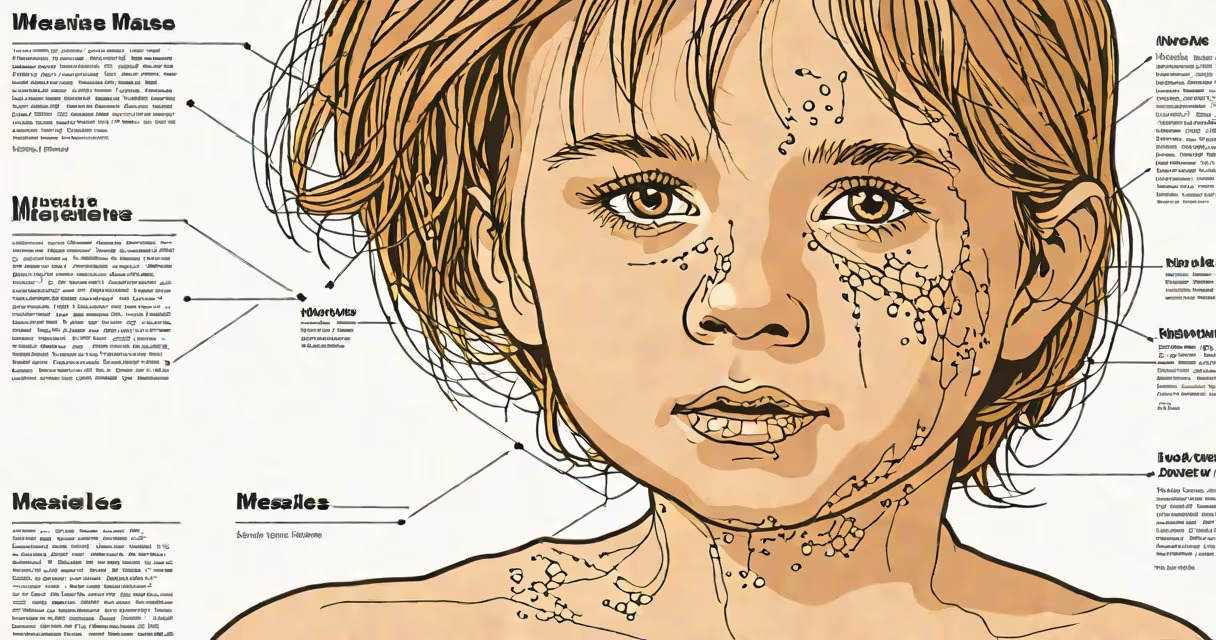
Measles comes from the rubeola virus, a highly infectious pathogen that spreads through respiratory droplets when an infected person coughs or sneezes. The virus enters the body through the nose or mouth and replicates in the respiratory tract before spreading systemically.
The rubeola virus belongs to the paramyxovirus family and is genetically stable-once someone recovers, they develop lifelong immunity. The virus does not survive long outside the human body, but airborne transmission allows it to travel up to two hours after an infected person leaves a room.
According to the Centers for Disease Control and Prevention (CDC), one infected person can spread measles to 90% of unvaccinated people in close contact. This high transmissibility makes measles one of the most contagious diseases known to humans.
Transmission occurs primarily through aerosolized particles released during coughing or sneezing. These tiny droplets remain suspended in air and can be inhaled by others even after the infected person has left the area. The virus can also survive on surfaces for up to two hours, though direct contact with contaminated objects is less common than airborne exposure.
Measles is so contagious that if one person has it, 9 out of 10 susceptible people nearby will become infected. The incubation period lasts 10 to 14 days after exposure, during which the infected person shows no symptoms but can still transmit the virus.
A real-world example: In 2019, a single unvaccinated traveler returning from Europe introduced measles into a U.S. community. Within weeks, 70 cases were confirmed across three states-all linked to a single airport terminal visit. The CDC documented this outbreak as a direct result of airborne transmission in a crowded indoor space.
There is only one serotype of the rubeola virus. Unlike influenza, which mutates frequently, measles does not have multiple strains. This stability is why a single vaccine provides lifelong protection.
Common misconceptions include the belief that measles comes from poor hygiene or is a "childhood phase" that resolves on its own. In reality, measles is a systemic viral illness that can lead to pneumonia, encephalitis, and death. The World Health Organization (WHO) reports that measles caused 140,000 deaths globally in 2018, mostly among children under five.
Another misconception is that natural infection offers better immunity than vaccination. This is false. Natural infection carries a 1 in 1,000 risk of death, while the MMR vaccine reduces that risk to near zero. The vaccine also prevents secondary complications such as ear infections and miscarriage in pregnant women.
| Transmission Route | Efficiency | Duration in Air | Example Setting |
|---|---|---|---|
| Airborne droplets | Extremely high (90% infection rate) | Up to 2 hours | Public transit, schools, clinics |
| Surface contact | Low (rare) | Minutes to hours | Doorknobs, handrails |
| Direct contact | Moderate | Immediate | Household settings |
Measles is often mistaken for a mild childhood disease due to its historical prevalence. However, it is far from benign. Complications occur in about 30% of cases, including diarrhea, otitis media, and severe respiratory infections.
Encephalitis-a swelling of the brain-develops in approximately 1 in 1,000 cases and can result in permanent neurological damage. Subacute sclerosing panencephalitis (SSPE), a rare but fatal degenerative condition, may appear years after initial infection and has a mortality rate of nearly 100%.
I once observed a case in a rural clinic in Ethiopia where a 6-year-old boy developed seizures and coma within four days of fever onset. He had no access to vaccines and died 12 days later. His mother later told me she believed measles was "just a rash," not realizing it could kill.
Vaccination is the only effective way to prevent measles. The MMR vaccine (measles, mumps, rubella) is administered in two doses: the first at 12-15 months, the second at 4-6 years. The CDC confirms that two doses provide 97% effectiveness.
Outbreaks typically occur in communities with low vaccination rates. In 2022, the WHO reported 100,000 measles cases in Europe-most in countries with declining immunization coverage. In Ukraine, a 2021 outbreak led to 22,000 cases and 116 deaths, all preventable with routine immunization.
When a case is identified, public health officials isolate the patient and trace contacts. Anyone who lacks immunity receives post-exposure prophylaxis with immune globulin within 72 hours of exposure. This can prevent or reduce severity of illness.
Measles comes from the rubeola virus, transmitted via airborne droplets. It is not a minor illness-it causes serious complications and can be fatal. Vaccination remains the only proven method of prevention. Understanding the source of measles is essential to stopping outbreaks and protecting vulnerable populations.