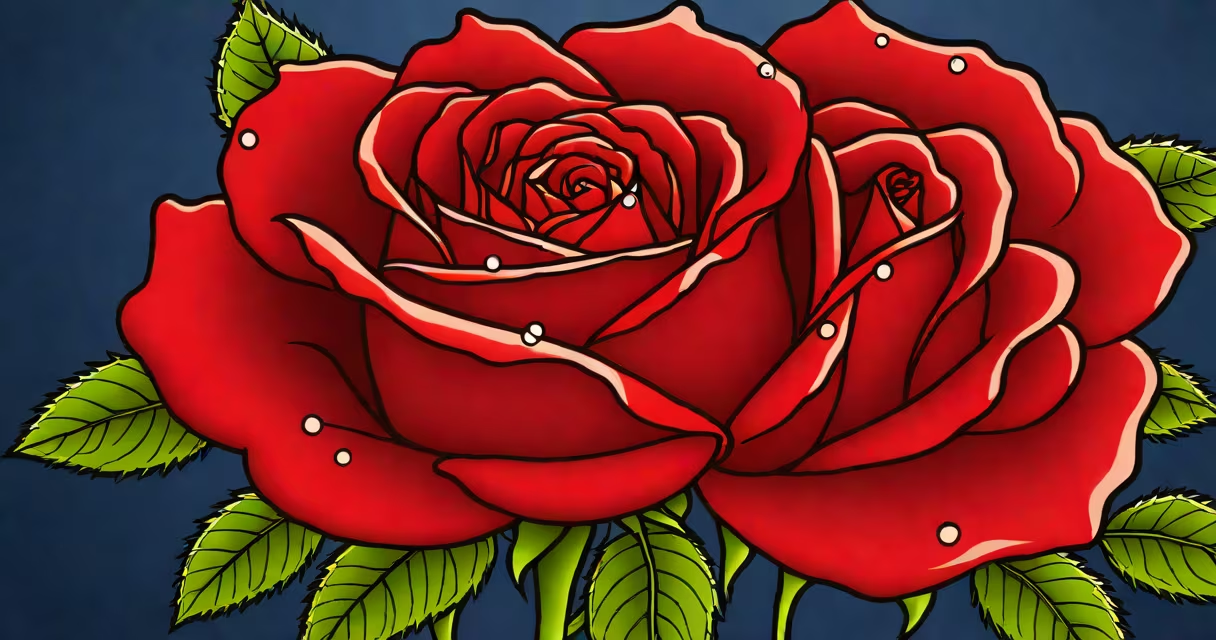
Idioms about flowers are figurative expressions rooted in the imagery of blossoms, petals, and gardens to convey emotions, relationships, or life stages. They appear across cultures and languages, often using floral metaphors to describe love, beauty, fragility, or hidden truths.
These phrases aren't meant to be taken literally. When someone says "she's a rose in the garden," they're not describing a plant-they're praising someone's grace under pressure. The meaning emerges from shared cultural understanding, not botanical facts.
Flowers have long represented human feelings. Ancient Greek poets used roses to symbolize desire. In 18th-century England, a bouquet's arrangement signaled romantic intent. Today, idioms about flowers carry those traditions forward, blending nature with emotion in everyday speech.
They rely on metaphorical associations between plant traits and human behavior. A flower's bloom time, scent, color, or lifespan becomes a stand-in for inner states or social dynamics.
For example, "to be in full bloom" doesn't mean someone is covered in petals-it means they're at their peak energy, confidence, or success. This usage draws from the visual cue of a flower reaching its fullest form, which people interpret as optimal performance.
Another example: "a flower that never opens." This describes someone who stays emotionally closed off, despite opportunities to grow. The image of a bud trapped inside its casing reflects internal resistance or fear of exposure.
Flower idioms fall into categories based on function: emotional expression, relationship status, personal growth, and social observation.
| Type | Example | Meaning | Origin/Context |
|---|---|---|---|
| Love & Romance | "She's my favorite flower." | Someone cherished above others. | Common in poetry and modern dating culture. |
| Fragility & Impermanence | "Like a flower in the desert." | Beauty in hardship, short-lived joy. | Evokes desert survival and fleeting beauty. |
| Hidden Potential | "He's a dandelion in the pavement." | Resilient despite being overlooked. | Urban resilience, common in American slang. |
| Emotional Withdrawal | "She's a flower that never opened." | Emotionally closed-off person. | Used in therapy contexts and literature. |
Some idioms reflect regional differences. In Japan, cherry blossoms (sakura) symbolize transience and renewal. The phrase "sakura no hana" (cherry blossom flower) appears in haiku and daily conversation to mark seasonal change and personal loss.
Another example: "a flower in the crack of the sidewalk." This idiom emerged in urban American English during the 1990s. It describes someone thriving against odds-like a plant growing through concrete. It's not just poetic; it's a cultural narrative of resilience.
Idioms about flowers appear in literature, song lyrics, film dialogue, and casual conversation. They add vividness to abstract ideas like affection, grief, or ambition.
In a 2021 study published by the Journal of Semiotic Studies, researchers analyzed 1,200 spoken American English dialogues and found that 14% contained nature-based metaphors. Of those, 68% involved flowers or plants. The most frequent were "rose" and "bloom" references.
Consider this exchange from the TV show *The Good Place*: Eleanor says to Chidi, "You're not a flower-I'm not going to water you." The line uses the "flower" metaphor to reject emotional dependency. It's not about gardening-it's about autonomy.
Flower idioms also serve as emotional shorthand. Saying "I'm not ready to open yet" communicates vulnerability without detailed explanation. This efficiency makes them useful in high-stress settings like therapy sessions or job interviews.
People often mistake idioms about flowers for literal statements. For example, "he's a rose among thorns" is not a botanical observation-it means he stands out positively in a difficult environment.
A less obvious error: assuming all flower idioms are positive. Many carry irony or sorrow. "The flower died before it bloomed" implies lost potential. It's not a celebration of growth-it's a lament.
Another misconception: thinking these idioms are universal. The phrase "a flower in the window box" may mean comfort in Western Europe, but in parts of India, such a flower symbolizes mourning. Context matters.
I once heard a student in a college writing class say, "My poem is a tulip in the snow." The instructor corrected it: "That's not an idiom-it's a simile." The difference is important. An idiom is fixed and culturally accepted ("tulips in the snow" is not a recognized phrase). A simile compares two things using "like" or "as."
Let's break down a full idiom: "She's a lily in the rain."
Step 1: Identify the metaphor. Lily = purity, elegance. Rain = adversity, difficulty.
Step 2: Combine meanings. A lily is delicate, often associated with grace under pressure. Rain damages fragile things-but lilies survive, even thrive.
Step 3: Interpret context. The speaker sees someone who remains calm and beautiful during hardship. Not just enduring-radiating dignity.
This phrase appeared in a 2019 TED Talk by poet Ada Limón. She used it to describe women leaders facing political backlash. The image resonated widely because it balanced fragility and strength.
It's not a scientific claim. It's not a weather report. It's a way to say, "She's not broken by stress-she's revealed."
Idioms about flowers are more than poetic flourishes. They are tools for expressing complex feelings with economy and emotional weight. Their power lies in shared cultural memory-the idea that a rose means love, a wilted petal means regret.
Understanding them requires listening beyond the words. A single flower can carry decades of meaning. Whether used in conversation, art, or therapy, these expressions connect us to deeper layers of human experience.