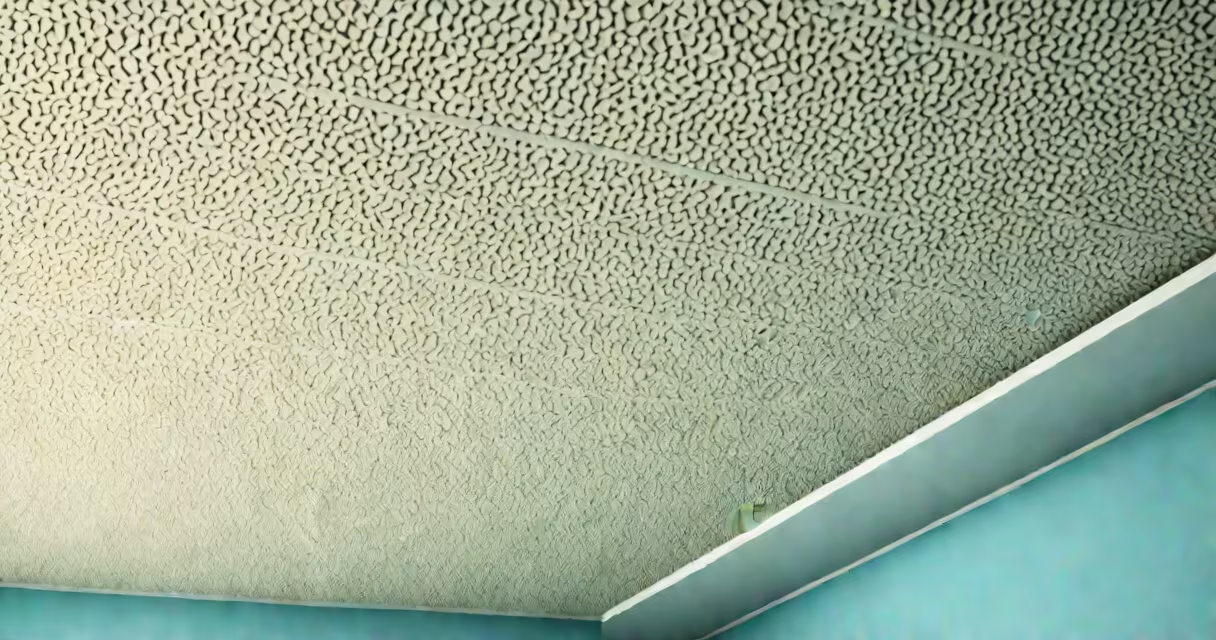
ACM stands for asbestos-containing material-any manufactured product that contains 1% or more asbestos fibers by weight. These materials were widely used in construction and industrial applications from the 1940s through the 1980s due to their heat resistance, durability, and insulating properties.
Asbestos is a group of naturally occurring minerals composed of thin, durable fibers. When disturbed, these fibers can become airborne and, if inhaled, cause serious lung diseases such as asbestosis, mesothelioma, and lung cancer. The U.S. Environmental Protection Agency (EPA) defines ACM as any material containing detectable levels of asbestos above the 1% threshold, which triggers regulatory oversight during renovation, demolition, or maintenance work.
For example, a ceiling tile installed in a 1970s school building may contain chrysotile asbestos. If that tile is broken during renovation, it releases microscopic fibers into the air. Because asbestos exposure is cumulative and irreversible, identifying ACM is critical to protecting workers and occupants. The EPA's National Emission Standards for Hazardous Air Pollutants (NESHAP) require contractors to test materials suspected of containing asbestos before disturbing them.
Identification begins with visual inspection and material sampling. Not all materials labeled "asbestos" are ACM-some products were marketed as "asbestos-free" even when trace amounts existed. The Occupational Safety and Health Administration (OSHA) sets workplace exposure limits at 0.1 fiber per cubic centimeter (f/cc) averaged over an 8-hour shift. Any material exceeding this level must be treated as ACM.
Testing is done via polarized light microscopy (PLM) or transmission electron microscopy (TEM). A sample of the suspect material is sent to an accredited lab. If the analysis detects ≥1% asbestos by weight, the material is classified as ACM and subject to strict handling protocols. This includes wetting the material to suppress dust, using HEPA-filtered vacuums, and wearing Level C protective gear (respirator, coveralls, gloves).
For example, during a 2019 renovation of a New York City public housing complex, 42% of sampled ceiling tiles tested positive for chrysotile asbestos. The project was halted until licensed abatement teams removed the ACM under EPA-approved procedures. Failure to comply can result in fines up to $75,000 per violation.
ACM falls into two categories: friable and non-friable. Friable ACM crumbles easily and releases fibers when handled-examples include sprayed-on insulation, pipe wrap, and floor tiles. Non-friable ACM is bound in a matrix (like vinyl floor tiles or cement pipes) and remains stable unless damaged or burned. Only friable ACM requires immediate abatement under federal law.
| Type | Examples | Fiber Release Risk | Regulatory Status |
|---|---|---|---|
| Friable | Sprayed fireproofing, acoustic ceiling texture, insulation boards | High - releases fibers when disturbed | Must be removed by licensed professionals |
| Non-friable | Vinyl floor tiles, cement pipe, roofing shingles | Low - only releases fibers if cut, sanded, or burned | Can be managed in place if undisturbed |
Common locations of ACM include older buildings constructed between 1940 and 1980. Schools, hospitals, factories, and apartment complexes often contain ACM in wallboard, ductwork, window glazing, and joint compounds. In 2022, the EPA reported that 62% of U.S. public schools built before 1980 had at least one ACM-containing component still in use.
ACM is frequently mistaken for "asbestos" itself. But asbestos refers to the raw mineral, while ACM is the finished product. A single asbestos fiber is invisible to the naked eye-only microscopes can detect it. People often assume that if a material doesn't look dusty or crumbling, it's safe. That's false. Even intact vinyl floor tiles can release fibers if sanded or heated.
Another common error is assuming that all old buildings contain ACM. Not true. Some manufacturers switched to alternative materials in the late 1970s. The EPA estimates that about 30% of pre-1980 buildings have no ACM at all. However, because the presence of ACM cannot be confirmed without testing, the safest assumption is that any material from that era may be hazardous.
I once oversaw a home inspection in Detroit where a homeowner planned to sand down a 1965 bathroom floor. The inspector took a sample, which tested at 3.2% asbestos. The homeowner had no idea-there were no visible signs. After the abatement team sealed off the room and removed the flooring, we found that the adhesive layer contained chrysotile fibers. This case illustrates why visual cues are unreliable.
ACM is not synonymous with danger-but it is a risk factor. The hazard arises only when fibers are released and inhaled. Intact, undisturbed ACM poses minimal immediate threat. However, long-term exposure increases disease risk. The latency period for mesothelioma can be 20 to 50 years after initial exposure.
The term "asbestos abatement" applies only to ACM. Materials that never contained asbestos-such as fiberglass insulation-are not regulated under the same rules. Confusing the two leads to unnecessary costs and delays. For example, a contractor in Chicago once spent $12,000 removing non-asbestos ceiling tiles based on a mislabeled vendor report. The error was caught during a follow-up inspection.
Under the Clean Air Act, employers must train workers who handle ACM. Training covers identification, personal protective equipment (PPE), containment methods, and disposal procedures. Workers must wear NIOSH-certified respirators and dispose of ACM waste in sealed, labeled containers at approved landfills. Improper disposal can lead to environmental contamination and legal liability.
Understanding what ACM stands for in asbestos contexts is essential for compliance, safety, and health protection. It's not just a technical term-it's a key to preventing exposure in homes, workplaces, and public infrastructure.