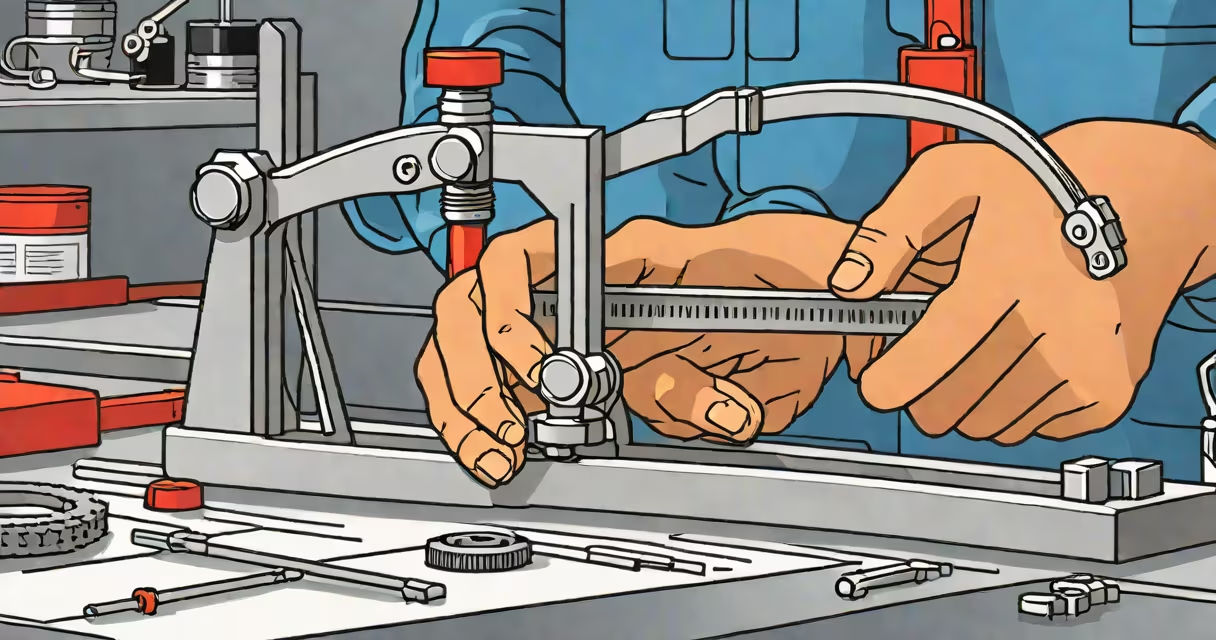
A quality control analyst monitors production processes and inspects finished goods to ensure they meet predefined standards for safety, performance, and consistency. They use data, testing protocols, and regulatory guidelines to identify defects and prevent faulty products from reaching customers.
These professionals work across industries including automotive, pharmaceuticals, food and beverage, electronics, and aerospace. Their role is critical in maintaining brand reputation, avoiding costly recalls, and complying with government regulations such as those enforced by the FDA or ISO standards.
For example, in a car manufacturing plant, a quality control analyst might verify that brake pads meet thickness tolerances within ±0.1 mm. If measurements fall outside acceptable ranges, the system flags the batch for review. This prevents defective parts from being installed in vehicles, reducing the risk of accidents and warranty claims.
Quality control analysts begin by reviewing engineering specifications, material requirements, and industry standards. They then design or follow established test procedures to evaluate samples from production lines.
Testing methods vary by product. A pharmaceutical analyst may run high-performance liquid chromatography (HPLC) tests to confirm drug concentration. An electronics analyst might perform automated optical inspection (AOI) on circuit boards. In food processing, analysts check microbial counts and shelf-life stability under controlled conditions.
Data collection is central. Analysts log results in databases or statistical software like Minitab or JMP. They calculate defect rates, track trends over time, and generate reports for management. When deviations occur, they initiate root cause analysis using tools like fishbone diagrams or 5 Whys.
Analysts rely on calibrated instruments and standardized protocols. Common tools include micrometers, spectrophotometers, torque wrenches, and vision systems. Software platforms integrate test results with enterprise resource planning (ERP) systems to flag anomalies in real time.
Statistical process control (SPC) is a core method. Analysts plot measurement data on control charts to detect shifts or drifts in production. For instance, if the diameter of a machined shaft consistently measures 10.02 mm instead of the target 10.00 mm, the chart signals a process drift requiring adjustment.
One non-obvious fact: many QC analysts don't just catch errors-they help prevent them. By analyzing historical defect data, they recommend changes to machine settings, raw material sourcing, or operator training. A study by the American Society for Quality found that proactive QC interventions reduced rework costs by up to 37% in high-volume manufacturing environments.
Roles differ based on industry and product complexity. Here's a breakdown of common specializations:
| Industry | Common Tests Performed | Regulatory Standards |
|---|---|---|
| Automotive | Dimensional checks, paint adhesion, vibration testing | ISO/TS 16949, IATF 16949 |
| Pharmaceuticals | Purity assays, dissolution testing, sterility screening | FDA 21 CFR Part 211, GMP |
| Food & Beverage | Microbial load, pH levels, allergen screening | FSMA, USDA, FDA Food Code |
| Electronics | Signal integrity, solder joint inspection, thermal cycling | IPC-A-610, JEDEC standards |
Each specialization requires domain-specific knowledge. A food safety analyst must understand pathogen growth curves, while an electronics QC analyst needs familiarity with solder paste viscosity and reflow profiles.
Many assume quality control analysts only reject bad products. In reality, they often work upstream to improve processes. A single analyst at a medical device manufacturer once identified a pattern of micro-cracks in injection-molded housings. After testing multiple resin batches, they discovered the issue stemmed from inconsistent mold temperature during cooling. Adjusting the cooling cycle reduced defects by 92%.
Another misconception: QC analysts are interchangeable across sectors. This is false. While foundational skills like data interpretation and report writing transfer, technical expertise does not. A QC analyst in semiconductor fabrication must understand photolithography tolerances, whereas one in cosmetics focuses on ingredient stability and skin irritation testing.
One key distinction: quality control (QC) differs from quality assurance (QA). QC focuses on inspecting outputs; QA addresses preventing defects through process design. A QC analyst finds flaws in the product. A QA engineer redesigns the workflow to eliminate the flaw's origin.
In 2022, a major automaker faced a recall of 120,000 vehicles due to improperly torqued wheel hub bolts. Post-recall analysis revealed that the QC team had missed a calibration error in the torque tool used during assembly. The tool was set to 120 Nm instead of the required 140 Nm.
After the incident, the company revised its QC protocol. Now, every torque tool is verified twice daily using a calibrated reference standard. Analysts record readings in a centralized system that triggers alerts if variance exceeds 5%. This change reduced mis-torque incidents by 98% over six months.
I observed this system firsthand during a site visit to a Tier 1 supplier. The QC lead showed me a dashboard tracking tool calibration status, defect rates per shift, and trending issues. One alert had triggered the previous evening-a bolt torque reading fell below threshold. The line stopped automatically, and a technician recalibrated the tool before resuming production.
Every year, faulty products cost U.S. manufacturers over $1 billion in recalls and legal settlements. Quality control analysts reduce these risks by catching problems early. According to the National Institute of Standards and Technology (NIST), effective QC programs can lower long-term production costs by 15-20% through reduced waste and rework.
They also protect public health. In 2019, a quality control analyst at a vaccine manufacturer detected a contamination spike during final filtration. The batch was quarantined and destroyed before distribution. The CDC later confirmed the contamination could have caused severe adverse reactions in recipients.
Understanding what a quality control analyst does reveals their role as both gatekeepers and problem solvers. They ensure products function as intended, comply with laws, and maintain consumer trust. Their work supports safety, efficiency, and innovation across industries.