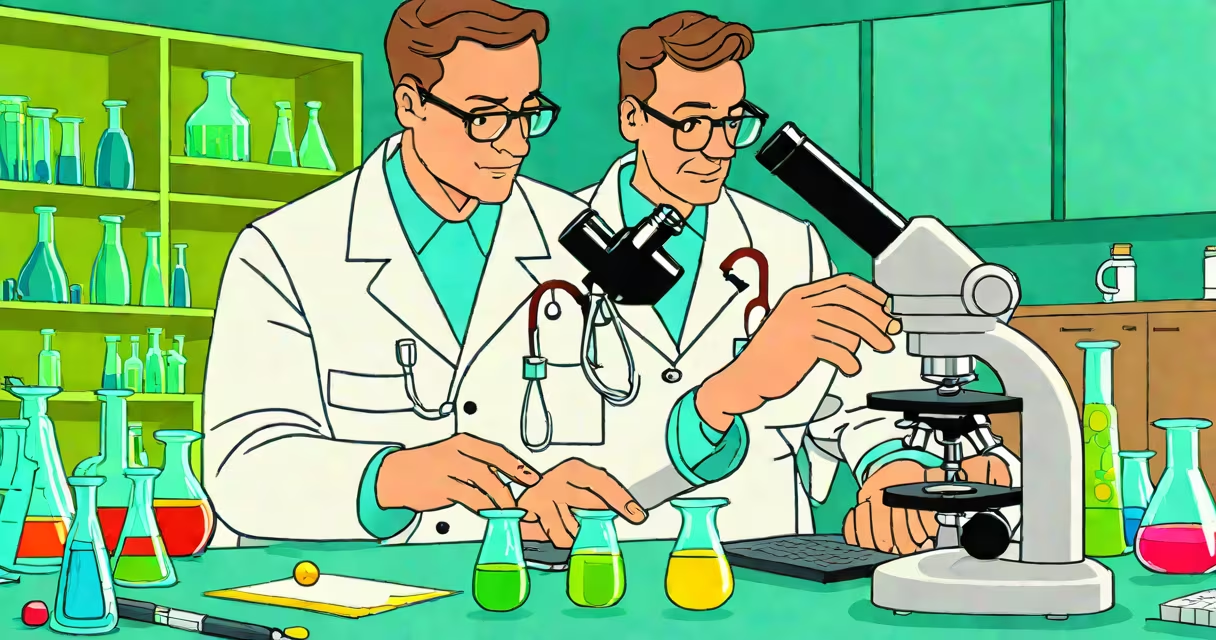
Analytical chemists determine the composition, structure, and concentration of substances using specialized instruments and techniques. They convert raw data into actionable insights that inform decisions in healthcare, environmental protection, manufacturing, and forensics.
These professionals work with everything from trace metals in water to drug purity in pharmaceuticals. Their results are often legally binding-used in court cases, regulatory approvals, and product recalls. A single misstep in calibration or sample handling can invalidate entire test series.
For example, during a routine batch test at a pharmaceutical plant, an analytical chemist detected a 0.3% impurity in a cancer drug. The threshold for acceptable contaminants is 0.1%. This led to a recall of 12,000 vials and a production halt while the root cause was investigated. The detection prevented potential patient harm.
At its core, analytical chemistry follows a structured workflow: sample collection, preparation, measurement, data processing, and reporting. Each step demands precision and documentation to meet accreditation standards such as ISO/IEC 17025.
Sample preparation is often the most time-consuming phase. Solid samples may require grinding, digestion with acids, or filtration. Liquids might need dilution or extraction to isolate target compounds. Even minor contamination during this stage can skew results-some labs report up to 40% of failed tests traceable to prep errors.
Instruments like mass spectrometers, gas chromatographs, and nuclear magnetic resonance (NMR) machines generate complex signals. Analytical chemists interpret these patterns using software tools and reference databases. For instance, a peak at 12.4 minutes in a GC-MS run might indicate caffeine, but confirmation requires matching retention time and fragmentation pattern against known standards.
Modern analytical chemists rely on both classical and advanced methods. Classical techniques include titrations and gravimetric analysis-still used for their reliability in educational and industrial settings. Advanced methods use automation and digital signal processing.
| Method | Use Case | Example Application |
|---|---|---|
| High-Performance Liquid Chromatography (HPLC) | Separation of complex mixtures | Detecting banned steroids in athlete urine samples |
| Inductively Coupled Plasma Mass Spectrometry (ICP-MS) | Trace metal detection | Measuring lead levels in drinking water below EPA limits |
| Fourier Change Infrared Spectroscopy (FTIR) | Molecular identification | Verifying plastic authenticity in counterfeit electronics |
Each method has detection limits. ICP-MS can detect elements at parts-per-trillion levels-equivalent to finding one drop of water in 10 Olympic-sized pools. These capabilities make analytical chemists essential in forensic science, where evidence must withstand legal scrutiny.
Healthcare relies heavily on analytical chemistry. Clinical labs use automated analyzers to measure glucose, cholesterol, and electrolytes in blood samples. A 2022 study published in Clinical Chemistry found that 87% of critical lab errors originated in pre-analytical steps-highlighting the need for trained personnel to oversee the process.
Environmental monitoring uses analytical chemists to track pollutants. After the Flint water crisis, researchers deployed field-portable X-ray fluorescence (XRF) devices to screen paint chips for lead. Results guided public health interventions and policy changes.
Manufacturing sectors depend on analytical chemists to maintain quality control. In semiconductor fabrication, even nanogram-level contamination can ruin a chip. One factory reported a 15% yield loss due to undetected silicon oxide residue-resolved only after deploying secondary ion mass spectrometry (SIMS).
Many assume analytical chemists simply "run tests." In reality, they design experiments, validate methods, troubleshoot instrument failures, and interpret ambiguous results. A result isn't just a number-it's a statement about uncertainty, bias, and reproducibility.
Another myth is that all analytical work is automated. While software handles data acquisition, human oversight remains important. In 2019, a hospital lab reported false-negative HIV tests due to improper calibration of a flow cytometer. The error went undetected for six months because staff assumed the system was self-correcting.
There's also confusion between analytical and synthetic chemistry. Synthetic chemists build molecules; analytical chemists break them down. One lab might have both roles-synthetic chemists creating new drug candidates, analytical chemists verifying their purity and stability.
I once observed a team at a food safety lab trying to identify a contaminant in infant formula. Initial screening flagged a compound resembling melamine. But melamine is banned in food. The team ran multiple confirmatory tests-using LC-MS/MS and NMR-and discovered it was actually a structurally similar but harmless additive used in dairy processing. Without proper validation, the product could have been falsely recalled.
Core competencies include statistical analysis, understanding of chemical equilibria, and proficiency in instrumentation. Many positions require a bachelor's degree in chemistry, though advanced roles in research or regulation often demand a master's or PhD.
Professionals must stay current. New regulations emerge regularly-such as the EU's REACH program, which mandates extensive chemical testing for consumer products. Analytical chemists adapt methods to meet evolving requirements.
Entry-level roles exist in pharma, environmental consulting, and government agencies like the FDA and EPA. Senior positions involve method development, peer review, and advising on regulatory compliance.
What do analytical chemists do? They turn invisible substances into measurable truths. Their work protects lives, ensures fairness, and validates scientific claims. When a drug reaches your pharmacy, a water supply passes safety checks, or a crime scene yields evidence-analytical chemists were involved.