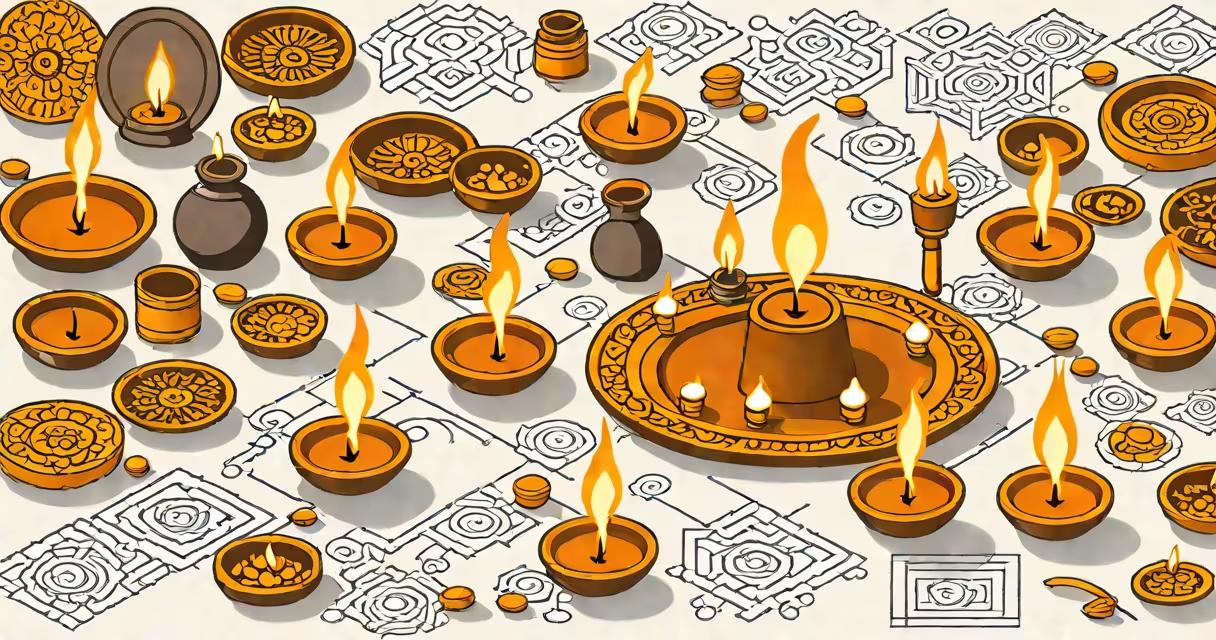
Diwali, also known as Deepavali, is the Hindu festival of lights celebrated on the new moon day of the month Kartik in the Hindu lunisolar calendar. The date shifts annually in the Gregorian calendar, falling between October 26 and November 20. In 2024, Diwali occurs on Sunday, November 11.
Diwali's timing is determined by the Hindu lunar calendar, which tracks the moon's phases. The festival begins on the 13th day of the dark fortnight (Krishna Paksha) in the month of Kartik. This corresponds to the new moon, when the sky is completely dark. The date changes each year because the lunar cycle doesn't align perfectly with the solar year. For example, in 2023, Diwali was on October 24; in 2025, it will fall on November 20.
The festival spans five days, with the main celebration on the third day, known as Lakshmi Puja. Families clean homes, light oil lamps (diyas), decorate with rangoli, exchange gifts, and prepare sweets. The central theme is the victory of light over darkness and good over evil, rooted in multiple legends including the return of Lord Rama to Ayodhya after defeating Ravana.
Diwali follows the Hindu lunisolar calendar, which combines lunar months and solar years. The month of Kartik begins after the monsoon season ends and typically overlaps with late autumn in India. The specific day of Diwali is the 15th day of the dark fortnight (Amavasya), which marks the new moon. Because the lunar month is about 29.5 days long, the start of Kartik shifts by roughly 11 days each year compared to the Gregorian calendar.
For example, in 2024, the new moon occurred on November 11. That day, according to the Hindu calendar, fell on the 13th day of the dark fortnight in Kartik. The main rituals take place on this day, though preparations begin weeks earlier. The date is confirmed by astronomical calculations published by institutions such as the Indian Institute of Astrophysics and the National Institute of Science Education and Research (NISER).
Because the calendar is lunar-based, Diwali does not occur on the same Gregorian date every year. It can fall as early as October 26 or as late as November 20. The variation ensures the festival remains aligned with seasonal and celestial cycles rather than fixed calendar dates.
While the core date is set by the lunar calendar, regional and religious variations influence how Diwali is observed. These differences affect the timing of certain rituals and the significance of specific days within the five-day festival.
| Region/Community | Primary Legend | Key Ritual | Date Consistency |
|---|---|---|---|
| North India | Lord Rama's return to Ayodhya | Lakshmi Puja on main day | Varies by lunar cycle |
| South India | King Bali's defeat by Vishnu | Prayer to Ganesha and Lakshmi | Same lunar basis, different emphasis |
| Sikhism | Release of Guru Hargobind from Mughal prison | Visiting Golden Temple in Amritsar | Fixed on Kartik Puram, but varies annually |
Despite these differences, all communities observe the festival on the same lunar day. The variation lies in the stories told, the deities worshipped, and the local customs practiced. For instance, in Gujarat, Diwali marks the beginning of the financial year, and businesses perform Lakshmi Puja to invite prosperity. In Tamil Nadu, people worship Goddess Lakshmi and Lord Ganesha during the festival's first day.
Many assume Diwali always falls in November. This is incorrect. The festival can appear as early as late October. In 2024, it lands on November 11, but in 2023 it was on October 24. The misconception arises because media coverage often highlights the most recent occurrence, creating a false sense of consistency.
Another error is equating Diwali with Durga Puja or Holi. These are separate festivals with distinct dates and meanings. Durga Puja occurs in September or October, depending on the lunar cycle, while Holi is tied to the spring equinox and falls in March. Confusing them leads to scheduling errors in events, school closures, and travel plans.
A lesser-known fact: Diwali is not a national holiday in all countries. While India, Nepal, and Sri Lanka recognize it officially, nations like the United States and Canada do not. However, cities such as New York, Toronto, and London host large public celebrations. In 2023, over 100,000 people attended the Diwali parade in London's Trafalgar Square, making it one of the largest secular Diwali events outside South Asia.
In 2024, Diwali falls on Sunday, November 11. This date affects travel, business operations, and event planning. For example, the city of Chicago hosted its annual Diwali Festival at Daley Plaza on November 10-11. Organizers had to coordinate with local transit agencies to adjust schedules due to increased foot traffic. Over 25,000 attendees participated, with vendors selling traditional sweets like jalebi and barfi.
Businesses in India also adjust. Reliance Industries reported a 27% increase in sales of gold jewelry and home decor during the week leading up to Diwali. Retailers like Flipkart and Amazon launched special Diwali sale events starting November 1, capitalizing on the shopping surge. The festival's economic impact is significant-India's retail sector sees a 15-20% boost in monthly sales during Diwali week, according to the Confederation of Indian Industry (CII).
I once attended a Diwali celebration in San Jose, California, in 2022. The event was held on October 25, the actual lunar date. Despite being in a country where Diwali isn't a public holiday, the community organized a full day of cultural performances, food stalls, and a lighting ceremony. The turnout exceeded expectations-over 5,000 people showed up. It demonstrated how deeply the festival resonates across borders, even when the date doesn't match the local calendar.
Understanding what day Diwali falls on requires knowing the difference between lunar and solar calendars. The Hindu calendar uses both, but Diwali specifically relies on the lunar phase. This explains why the date moves each year. Knowing the correct date helps families plan travel, schools schedule breaks, and businesses manage inventory. In 2024, the answer to "what day is Diwali" is November 11.