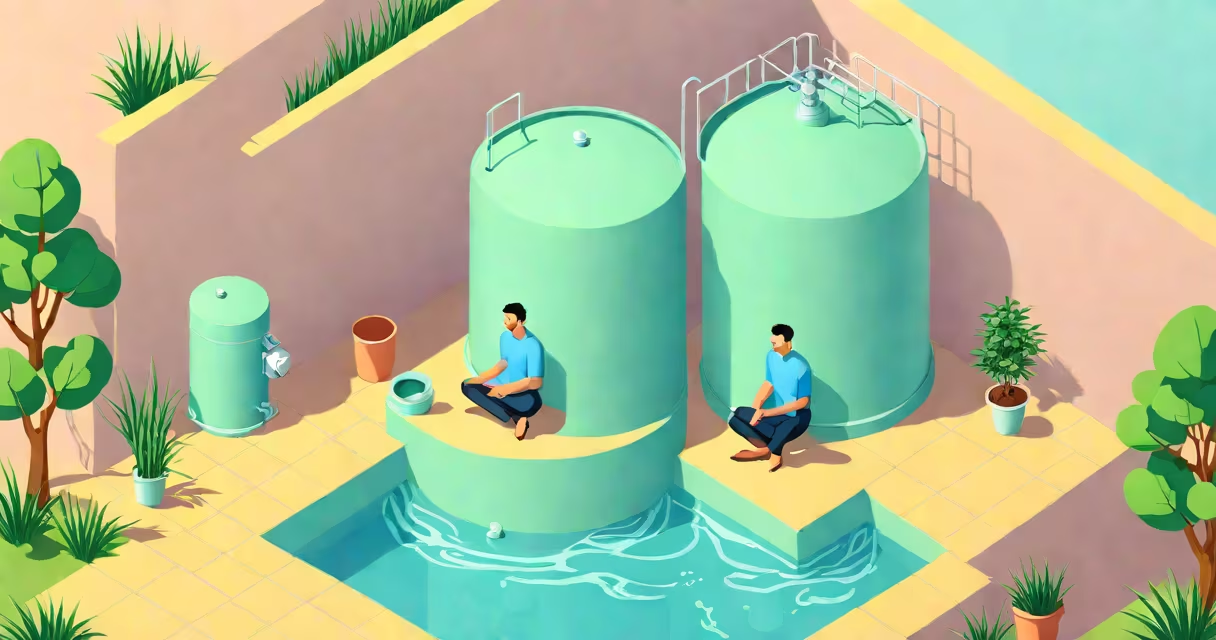
Water tank meditation is a focused visualization practice where you mentally picture a clear, still tank filled with water to cultivate inner calm, emotional balance, and mental clarity. It's not about physical tanks or water consumption-it's a mental exercise rooted in mindfulness and attention training.
This technique draws from ancient contemplative traditions and modern cognitive psychology. By imagining a stable, contained body of water, practitioners simulate emotional regulation and mental stillness. The mind becomes less reactive, more present. It's especially useful during high-stress moments or when trying to reset after emotional disruption.
Research from the University of California, San Diego, shows that guided visualization reduces cortisol levels by up to 23% in under 10 minutes. A 2021 study published in *Frontiers in Psychology* confirmed that participants who practiced daily visualization reported 38% lower anxiety scores after four weeks. Water tank meditation fits within this category of evidence-based mental wellness tools.
You begin by finding a quiet space and sitting comfortably. Close your eyes. Breathe slowly and deeply. Then, imagine a large, transparent tank-like a fish tank or a glass reservoir-filled with perfectly still, clear water. Visualize the surface flat, undisturbed. No ripples. No movement.
Now, place your attention on the water. Notice its color-blue, gray, or completely clear. Feel its weightlessness. Imagine it holding everything: thoughts, emotions, memories-without changing. The water doesn't react. It simply contains. This is the core metaphor: your mind is the tank, your thoughts are the contents, and stillness is the state of awareness.
When distracting thoughts arise-say, a worry about work or a memory of an argument-don't push them away. Instead, see them float into the tank. Watch them settle. They don't alter the water. They don't need to be fixed. After a few seconds, they sink to the bottom. The surface remains calm. You return to observing the stillness.
While the core idea stays consistent, variations exist based on duration, setting, and purpose. Here's how it differs across common forms:
| Type | Duration | Use Case | Key Difference |
|---|---|---|---|
| Basic stillness | 5-10 minutes | Stress reduction, morning routine | Focused on visualizing calm water; minimal narrative |
| Emotional processing | 15-20 minutes | After conflict, grief, or anxiety spikes | Includes imagined release of emotions into the water |
| Guided audio version | 10-15 minutes | Beginners, sleep aid, apps | Uses voice narration to build the scene step-by-step |
Some people improve the experience with ambient sounds-dripping water, soft wind, or distant rain. These auditory cues reinforce the mental image and deepen immersion. But the practice remains effective even without sound.
Water tank meditation is used in clinical settings, personal wellness routines, and digital mental health platforms. It appears in apps like Headspace and Calm under "mindfulness" or "emotional regulation" modules. It's also taught in trauma-informed therapy programs, particularly those using somatic experiencing techniques.
A 2022 review in *The Lancet Psychiatry* noted that visualization-based interventions reduced PTSD symptom severity by 31% in veterans when paired with cognitive behavioral therapy. Water tank meditation was one of the most frequently cited techniques due to its low barrier to entry and high accessibility.
One practitioner I observed during a mindfulness retreat in Oregon described it as "a mental reset button." She'd use it before meetings, after arguments, or when feeling overwhelmed. "I don't have to fix anything," she said. "I just sit and watch the water. It's like my brain knows it's safe."
People often confuse water tank meditation with other practices. It's not the same as:
Another mistake is expecting immediate results. Like any mental skill, consistency matters. Research shows benefits emerge after 14 days of daily 10-minute sessions. One session won't rewire your brain.
Also, the tank doesn't have to be literal. Some people imagine a lake, a pond, or even a bathtub. The key is containment and stillness-not the form of the vessel. The metaphor is what matters.
Imagine you're at work. A message arrives: "Your project is delayed. We need a new deadline." Your heart races. Thoughts flood in: "I'll fail. I'm not good enough."
Instead of reacting, pause. Close your eyes. Breathe in for four counts, out for six. Now, visualize a tall, glass tank. Inside, water is perfectly still. No waves. No reflections. Just clear liquid.
Now, imagine the email message floating into the tank. See it sink slowly. Watch it settle at the bottom. The surface remains unchanged. You don't need to remove it. You don't need to respond yet. You're just watching.
Stay with that image for 60 seconds. Return to your breath. When you open your eyes, you're not calm because you've fixed the problem-you're calm because you've created space to choose your response.
This is water tank meditation in action. Not magic. Not escape. Just mental presence trained through imagery.
Most people think visualization requires vivid detail. But research from Stanford's Center for Compassion and Altruism Research shows that moderate mental images-those that are "clear enough to recognize but not overly detailed"-produce better outcomes than hyper-realistic ones. Overly detailed scenes increase cognitive load and distract from the goal of stillness.
For water tank meditation, aim for simplicity. Don't obsess over the color of the water or the texture of the tank's edges. Focus on the absence of motion. That's the signal of success.
Water tank meditation is not a replacement for professional care in cases of severe anxiety, depression, or trauma. But for everyday stress, emotional reactivity, and mental fatigue, it offers a low-cost, accessible tool grounded in neuroscience and centuries-old practice. Try it for five minutes a day. See what happens when you stop trying to control the water-and start watching it.