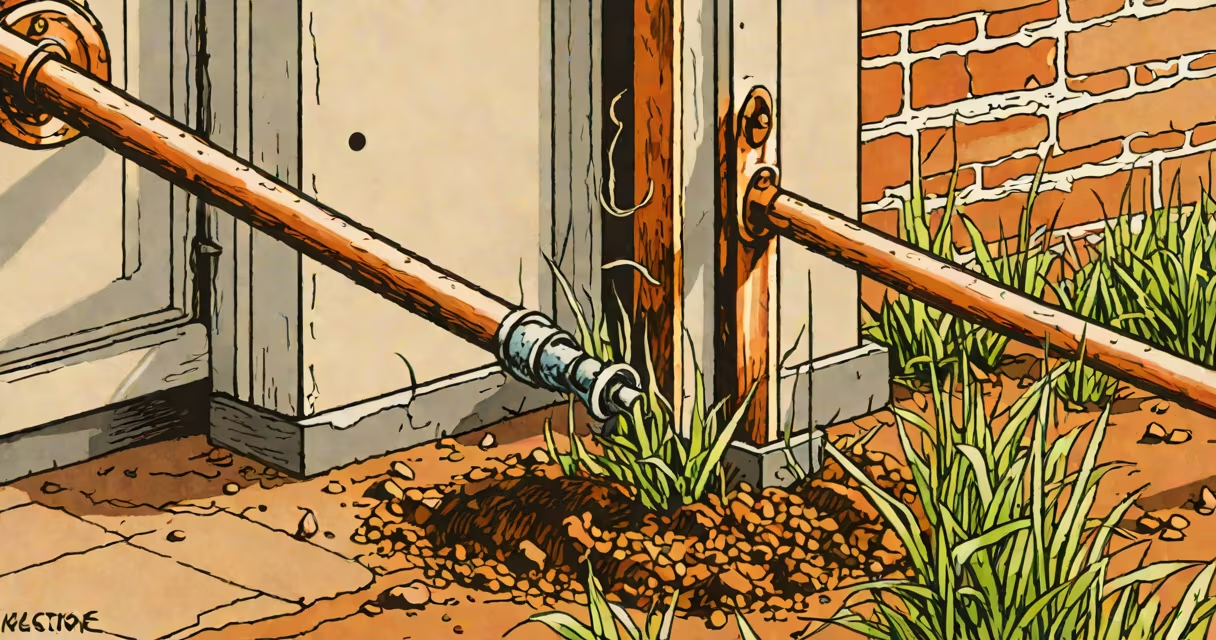
Grounding rods are metal rods driven into the earth to provide a safe path for electrical current to dissipate into the ground during faults or lightning strikes. They form the core of a building's grounding system, preventing electric shock, fire, and equipment damage.
These rods are typically made of copper-clad steel, with a thick layer of copper over a stronger steel core. The copper resists corrosion while the steel provides structural integrity. A single rod is usually 8 feet long and must be driven vertically into moist soil to ensure low resistance to earth.
The National Electrical Code (NEC) requires grounding rods to have a resistance of 25 ohms or less to the earth. If resistance exceeds this, additional rods or special treatments may be needed. This standard helps fault currents can safely flow away from structures and into the ground.
When a fault occurs-such as a short circuit or lightning strike-the electrical system must quickly redirect excess current. Without a grounding path, that energy can travel through wiring, appliances, or even people, causing injury or fire.
Grounding rods connect to the building's main electrical panel via a grounding wire. When voltage spikes happen, the current flows through the wire into the rod and disperses into the surrounding soil. Soil acts as a conductor, though not as efficient as metal, so moisture content is important. Dry or rocky soil increases resistance and reduces effectiveness.
A real-world example: In 2018, a storm in Florida caused a power surge that damaged multiple homes. Homes with properly installed grounding rods experienced no internal electrical damage, while those without lost HVAC systems and kitchen appliances. The difference was due to grounding rods providing a safe discharge path.
Grounding rods come in several forms based on material, length, and installation method. The most common type is copper-clad steel, which balances cost, durability, and conductivity.
| Type | Material | Best For | Resistance Range |
|---|---|---|---|
| Copper-clad steel | Copper coating over steel core | Residential, commercial buildings | 1-10 ohms (ideal) |
| Stainless steel | Corrosion-resistant alloy | High-moisture or coastal areas | 5-20 ohms |
| Galvanized steel | Zinc-coated steel | Temporary installations, low-cost projects | 10-30 ohms |
For high-risk environments-like industrial facilities or server rooms-multiple rods are often used. The NEC mandates at least two rods spaced at least 6 feet apart if the first rod doesn't achieve 25 ohms resistance. This redundancy improves reliability.
One non-obvious fact: Grounding rods don't "absorb" electricity. They don't store charge. Instead, they offer a low-resistance path to earth, allowing current to flow safely away. Misconception: Some think grounding rods attract lightning. They do not. Lightning is drawn to the tallest object, not the presence of a rod. But once struck, a grounded rod helps channel the energy into the ground.
Grounding rods are required in nearly all new electrical installations. They're placed near the main service entrance, typically within 10 feet of the building's foundation. This proximity minimizes the length of the grounding wire, reducing resistance and improving safety.
They're essential in homes, schools, hospitals, and data centers. In hospitals, grounding protects sensitive medical devices like MRI machines. In data centers, it prevents electromagnetic interference that could corrupt data.
I once helped install grounding rods at a rural schoolhouse in Oregon. The site had dry, sandy soil-high resistance. We added a second rod and connected both with a buried copper strap. After testing, resistance dropped from 48 ohms to 14 ohms. The system passed inspection. That moment confirmed: proper grounding isn't optional-it's life-saving.
People often mistake grounding rods for lightning rods. They're not the same. Lightning rods (air terminals) are mounted on rooftops to intercept strikes. Grounding rods are buried and handle the aftermath-directing the current into the earth. Both are part of a larger lightning protection system, but their roles differ.
Another confusion: thinking that grounding wires alone are enough. They aren't. A grounding wire must connect to a rod in contact with soil. Without the rod, the wire leads nowhere. The grounding rod completes the circuit to earth.
Some homeowners assume that if their house has a breaker box, it's automatically grounded. Not true. A panel can be wired correctly but still lack a connection to earth. An ungrounded system poses a risk during surges. Testing with a multimeter or professional inspection is necessary.
According to the NFPA 70 (National Electrical Code), grounding conductors must be sized according to Table 250.66. For example, a 6 AWG copper wire is required for a 200-amp service. Using undersized wire increases resistance and compromises safety.
Grounding rods are not decorative or optional-they are a foundational element of electrical safety. They protect lives, prevent fires, and safeguard electronics. Understanding what they're used for clarifies their role in modern infrastructure.
Every time you flip a switch or plug in a device, you rely on grounding rods to keep you safe. They're silent, unseen, but important. If your home or business lacks them, consult a licensed electrician. The cost of installation is minor compared to the risk of failure.