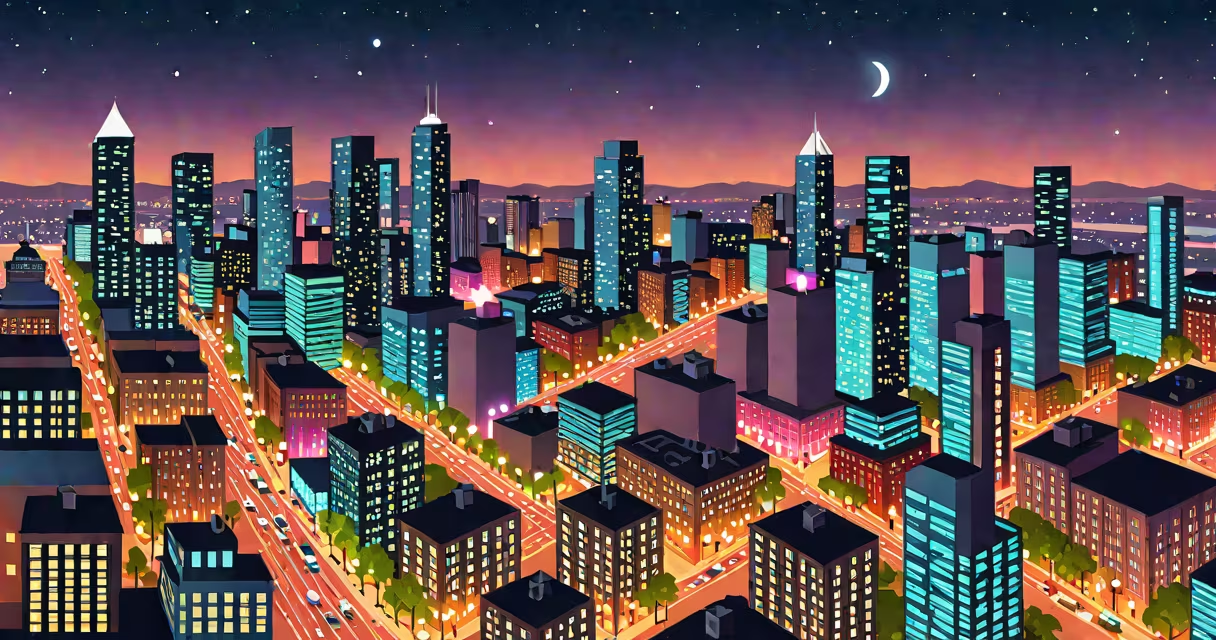
Ways to reduce light pollution involve designing outdoor lighting to emit light only where and when needed, minimizing upward or sideways spill. This includes using fully shielded fixtures, reducing brightness, and turning lights off after hours. Proper implementation lowers energy waste and protects ecosystems.
Light pollution stems from excessive or misdirected artificial light. When light escapes upward or sideways, it scatters in the atmosphere, creating a glow that obscures stars and disrupts natural cycles. The International Dark-Sky Association (IDA) reports that over 80% of the global population lives under light-polluted skies, with urban areas seeing nearly complete loss of visible night skies.
Effective reduction focuses on three core principles: direction, intensity, and duration. Fixtures should direct light downward, use low-intensity bulbs, and operate only during necessary hours. Cities adopting these standards see measurable improvements in sky clarity and reduced energy consumption.
Shielded lighting prevents light from escaping above the horizontal plane. A fully shielded fixture emits light only toward the ground, eliminating skyglow. Unshielded or poorly designed fixtures send 30% to 60% of their output upward, contributing to atmospheric scattering.
Lowering luminance reduces both skyglow and glare. Using LED bulbs with color temperatures below 3000K minimizes blue light emission, which is most disruptive to circadian rhythms in humans and animals. Blue-rich light also scatters more efficiently in the atmosphere, worsening visibility of celestial objects.
Timers and motion sensors control duration. Lights activated only when needed cut energy use by 40% to 60% compared to continuous operation. In residential zones, motion-activated porch lights prevent constant illumination while maintaining safety.
There are three primary categories of lighting controls: shielding, spectral management, and scheduling. Each targets a different aspect of light pollution.
| Solution Type | How It Works | Impact Example |
|---|---|---|
| Full cutoff shielding | Fixtures direct light strictly downward, blocking upward emission. | City of Flagstaff, Arizona, reduced skyglow by 35% after retrofitting all streetlights with full cutoff designs. |
| Low-color-temperature LEDs | Use warm-white LEDs (≤3000K) instead of cool-white (≥4000K). | Observatories near Tucson, Arizona, report clearer night skies due to municipal LED replacements. |
| Automated controls | Timers and motion sensors limit operation to required times. | A 2022 study in Nature Sustainability found that automated lighting in parks reduced nighttime light levels by 52% compared to manual systems. |
These measures are not isolated. A single streetlight equipped with all three features-full shielding, warm LEDs, and motion sensing-can reduce its environmental footprint by over 70% compared to older models.
Cities adopt light pollution reduction strategies to preserve public health, save energy, and protect biodiversity. The World Health Organization (WHO) identifies disrupted melatonin production from nighttime light exposure as a risk factor for sleep disorders and metabolic conditions.
Wildlife suffers disproportionately. Sea turtles hatchlings in Florida orient away from the ocean and toward lit beaches because they mistake artificial light for moonlight. Migratory birds collide with illuminated buildings in high numbers-up to 90 million birds die annually in North America from such collisions, according to the U.S. Fish and Wildlife Service.
Urban planners prioritize shielded lighting in new developments. The IDA certifies communities as "Dark Sky Places" based on lighting policies. As of 2023, over 180 locations worldwide hold this designation, including Sedona, Arizona, and the island of Tenerife in Spain.
Many assume brighter lighting equals safer streets. Evidence contradicts this. A 2018 study published in The Journal of Experimental Criminology found no significant correlation between increased lighting and reduced crime rates in urban neighborhoods. In fact, excessive lighting may create shadows and glare that hinder visibility.
Another myth is that LED lighting automatically solves light pollution. While LEDs are more energy-efficient, many early models used high-blue-content white light. Without proper filtering or temperature control, they worsened skyglow. The IDA warns that unmanaged LED adoption can increase light pollution by up to 20% if not paired with shielding and color control.
One non-obvious fact: Light pollution affects astronomy more than people realize. The National Optical Astronomy Observatory notes that light pollution has made it impossible to observe faint galaxies from ground-based telescopes in over 90% of the continental United States. Even remote observatories like Mauna Kea in Hawaii face increasing interference from regional lighting.
In 2019, the city of Los Angeles began replacing 140,000 streetlights with fully shielded, 3000K LEDs. The project cost $15 million but saved $10 million annually in energy and maintenance. After two years, satellite data showed a 22% drop in nighttime light emissions across the city's central districts.
Residents reported improved sleep quality and better visibility of stars. The city also saw a 15% reduction in bird strike incidents at major intersections. These outcomes were tracked through the Los Angeles Department of Water and Power's monitoring system and confirmed by independent environmental audits.
On a personal note, I installed shielded, motion-activated path lights around my home in rural Oregon. Within a month, nocturnal insects returned to the garden, and I noticed more fireflies-species previously absent for five years. The change was subtle but measurable.
Ways to reduce light pollution differ from general "energy efficiency" efforts. Energy savings are a benefit, not the goal. A 100-watt bulb turned off at midnight saves power but contributes to skyglow if left unshielded. The focus is on directional control, not just wattage.
Also distinct from "dark sky tourism," which promotes stargazing destinations, light pollution reduction is about systemic change. It's not about visiting remote areas-it's about making cities and towns less intrusive to the night environment.
Implementing ways to reduce light pollution requires coordination among municipalities, utility providers, and citizens. But the results-clearer nights, healthier ecosystems, and lower energy bills-are tangible and immediate. The solution isn't complex; it's practical, proven, and widely deployable.