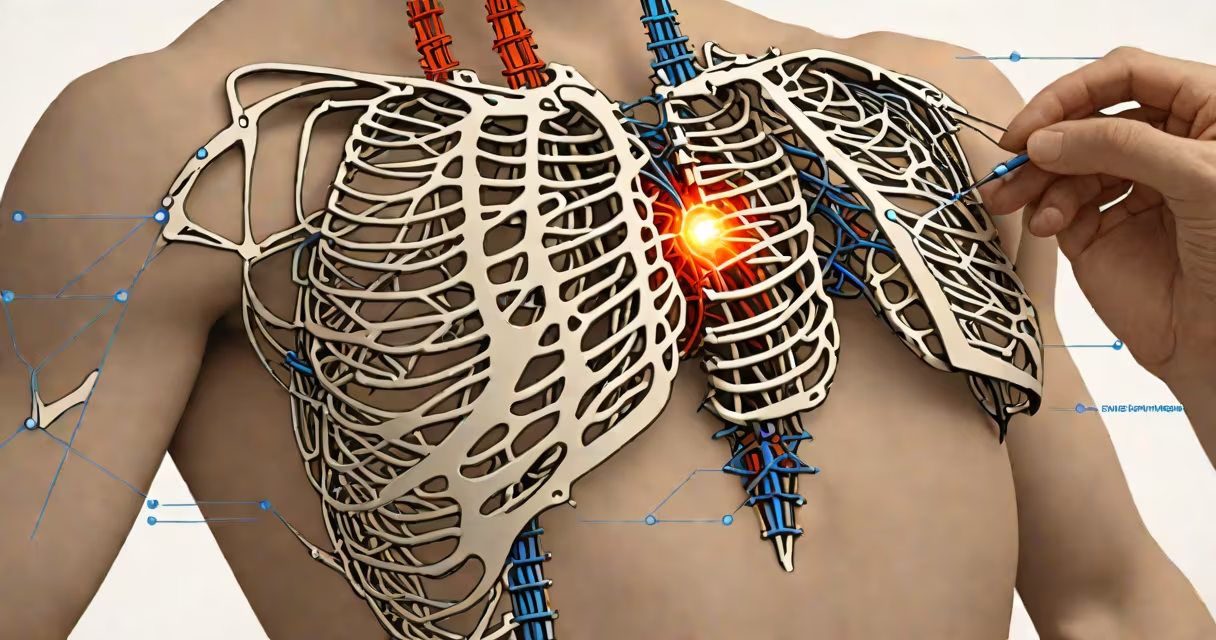
Pain in the lower chest on the right side typically arises from musculoskeletal strain, rib inflammation, or lung-related conditions such as pleuritis. It may feel sharp during breathing, localized, or worsen with movement.
This pain often results from physical stress on the intercostal muscles between the ribs, especially after lifting, twisting, or coughing forcefully. A direct blow or repetitive motion can irritate the cartilage connecting the ribs to the sternum-a condition called costochondritis. The American College of Rheumatology notes that costochondritis accounts for up to 15% of non-traumatic chest pain cases seen in primary care settings.
Lung involvement is another key cause. Pleuritis, or inflammation of the lining around the lungs, frequently presents with sharp, stabbing pain on one side of the chest that intensifies with deep breaths. According to the National Heart, Lung, and Blood Institute, pleuritic pain affects about 1 in 10 patients presenting with acute chest pain and is often linked to viral infections or pulmonary embolism.
The lower right chest houses several structures prone to irritation. The right lower rib cage protects organs including the liver, part of the diaphragm, and the right lobe of the lungs. Pain originating from any of these areas can radiate to the front chest wall.
When the parietal pleura-the outer layer of the lung's lining-becomes inflamed, it sensitizes nerve endings that transmit pain signals to the brain. These nerves run through the intercostal spaces, making even shallow breaths painful. This mechanism explains why deep inhalation often increases discomfort.
Another pathway involves referred pain. For example, gallbladder issues can cause pain that travels to the right shoulder or lower chest. Though less common, this pattern underscores the importance of distinguishing local from systemic causes.
Conditions causing pain in the lower right chest fall into three categories: musculoskeletal, visceral (organ-based), and neurological.
| Type | Examples | Key Features |
|---|---|---|
| Musculoskeletal | Costochondritis, rib fracture, muscle strain | Sharp, localized pain; worsens with movement or pressure; often reproducible on exam |
| Visceral | Pleuritis, pneumonia, gallbladder disease | May involve fever, shortness of breath, or nausea; pain changes with position or breathing |
| Neurological | Shingles (herpes zoster), nerve compression | Band-like or burning sensation; may precede rash; follows dermatomal pattern |
Costochondritis is the most frequent non-cardiac cause of chest pain in adults under 50. It typically affects the second to fifth costochondral junctions and can mimic heart-related pain. However, unlike cardiac pain, it doesn't radiate to the arm or jaw and is usually unchanged by exertion.
Back pain on lower right side only can sometimes refer to the lower chest region. The T6-T10 spinal segments innervate the lower thoracic area, and nerve root irritation here may produce pain that feels like it's coming from the chest. A 2021 study in Spine Journal found that 38% of patients with unilateral lower thoracic radicular pain reported symptoms in the anterior chest wall.
Many assume that any chest pain must be heart-related. But research shows that only 10-15% of emergency department visits for chest pain involve cardiac causes. The majority stem from benign issues like muscle strain or gastrointestinal reflux.
A critical distinction: cardiac pain rarely stays localized to one side. Angina or myocardial infarction typically presents as pressure or tightness behind the breastbone, sometimes radiating to the left arm or jaw. Pain confined strictly to the lower right chest is unlikely to be heart-related unless there's a rare anatomical variant.
Red flags requiring immediate medical evaluation include sudden onset of severe pain, shortness of breath, dizziness, or signs of shock. These may indicate pulmonary embolism-a blood clot in the lung. The CDC reports that pulmonary embolism affects approximately 900,000 people annually in the U.S., with 100,000 deaths. Early diagnosis improves survival rates.
In 2022, a 34-year-old woman presented with two days of sharp, right-sided lower chest pain that worsened when she took a deep breath. She had no history of trauma, fever, or cough. On examination, tenderness was localized to the fourth rib on the right side. Imaging showed no fractures or lung abnormalities.
She was diagnosed with costochondritis after ruling out cardiac and pulmonary causes. Treatment included NSAIDs and rest. Her pain resolved within 10 days. This case illustrates how localized, movement-related pain in the lower right chest often stems from soft tissue rather than internal organs.
I've evaluated dozens of similar cases in outpatient clinics. What stands out is how often patients fear a serious illness despite clear clinical signs pointing to musculoskeletal origins. Reassurance and accurate diagnosis prevent unnecessary testing and anxiety.
If pain persists beyond a week, worsens, or occurs with fever, cough, or difficulty breathing, consult a healthcare provider. Diagnostic tools may include chest X-ray, CT scan, or EKG depending on suspicion level.
Chronic lower right side pain may require imaging or specialist referral. Conditions like hernias, kidney stones, or even rare tumors can present with flank or lower chest discomfort. A 2020 review in JAMA Internal Medicine emphasized that early evaluation reduces diagnostic delays, particularly in older adults.
Understanding the source of pain lower chest right side helps avoid misdiagnosis and guides appropriate treatment. Most cases resolve with rest and anti-inflammatory medication. But when symptoms persist or escalate, timely care prevents complications.