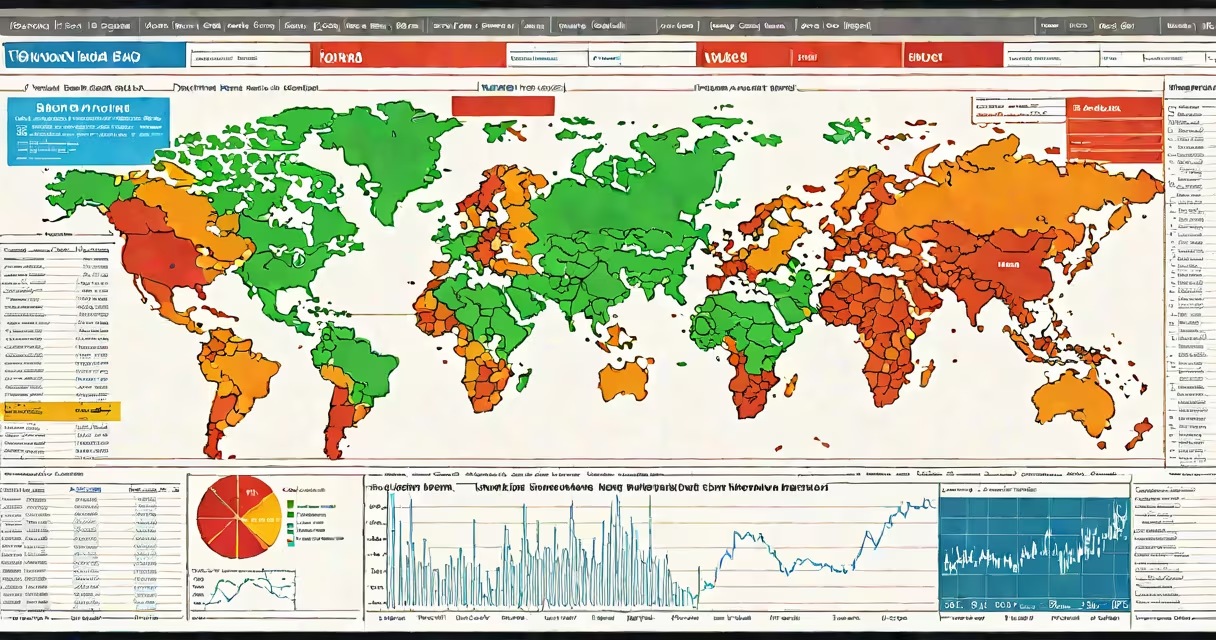
The vanguard emerging markets government bond etf (ticker: VEGI) is an exchange-traded fund that invests primarily in investment-grade government bonds issued by emerging market countries. It provides diversified exposure to sovereign debt from nations such as Mexico, Indonesia, Brazil, and South Africa, offering higher yields than developed market bonds but with elevated credit and currency risk.
VEGI tracks the Bloomberg Emerging Markets Government Bond Index, which includes local currency-denominated debt from countries classified as emerging markets by the World Bank. The fund holds bonds with maturities ranging from 1 to 10 years, with a weighted average duration of approximately 6.2 years. As of Q1 2024, the fund had $3.2 billion in assets under management and traded at a net expense ratio of 0.11%, making it one of the lowest-cost access points to emerging market sovereign debt.
Unlike equity-focused emerging market funds, VEGI focuses solely on fixed-income securities issued by national governments. This reduces company-specific risk but introduces macroeconomic risks tied to inflation, interest rate policy shifts, and currency depreciation. For example, during the 2022 global rate hike cycle, the Brazilian real declined 18% against the U.S. dollar, reducing returns for foreign investors holding BRL-denominated bonds-even when the underlying bond performance was stable.
VEGI operates as a passively managed index fund. Vanguard uses a representative sampling method to replicate the Bloomberg Emerging Markets Government Bond Index, meaning it may hold a subset of the index's constituents rather than every single bond. This approach lowers tracking error and trading costs while maintaining broad exposure.
The fund rebalances quarterly to maintain sector weightings aligned with the index. It avoids derivatives and use, ensuring transparency and reduced complexity. All holdings are rated BBB- or higher by S&P, reflecting investment-grade status despite the country risk premium.
For example, in March 2024, VEGI held 218 individual bonds across 38 countries. Top-weighted issuers included Mexico (12.4%), Indonesia (10.8%), and Brazil (9.3%). The fund's average yield-to-maturity stood at 6.8%-nearly double the yield of comparable U.S. Treasury bonds.
Emerging market government bond funds fall into two structural categories: local currency and hard currency (typically USD-denominated). VEGI exclusively invests in local currency bonds, which means returns are affected by both interest rate movements and exchange rate fluctuations.
| Fund Type | Currency Exposure | Risk Level | Return Potential |
|---|---|---|---|
| Local Currency (VEGI) | Direct: Mexican peso, Indonesian rupiah, etc. | High | High (yield + currency appreciation) |
| Hard Currency (e.g., EMB) | USD or EUR-denominated | Medium | Lower but more stable |
Local currency funds like VEGI offer higher potential returns due to yield spreads and currency gains during periods of capital inflows. However, they also carry significant volatility. During the 2013 "taper tantrum," many EM local currency bonds dropped sharply as U.S. rates rose and capital fled emerging markets.
A key distinction often missed is that VEGI does not include corporate debt. Some investors confuse it with funds focused on emerging market corporate bonds, which have higher default risk and lower credit quality. VEGI's focus on government-issued debt helps losses stem from macroeconomic factors, not issuer-specific defaults.
Many assume that all emerging market bond funds are high-risk and unsuitable for conservative portfolios. While VEGI carries more volatility than U.S. Treasuries, its investment-grade rating and diversification reduce idiosyncratic risk. Over 10-year periods, VEGI has delivered annualized returns of 5.4% with a standard deviation of 8.9%-comparable to long-term U.S. investment-grade corporates.
Another misconception is that currency hedging eliminates exchange rate risk. VEGI does not hedge currency exposure. Investors who want to remove FX risk should consider the iShares Emerging Markets Local Currency Bond ETF (EMLC), which uses forward contracts to neutralize currency moves. VEGI's un-hedged structure exposes investors to both bond performance and exchange rate swings.
During the 2020 pandemic, VEGI outperformed U.S. Treasuries by 3.2 percentage points in the first half of the year. As central banks in emerging markets cut rates earlier than the Fed, bond prices rose faster in local currencies. This illustrates how timing and monetary policy divergence can drive returns even in volatile markets.
VEGI is most effective as a core allocation within a diversified fixed-income portfolio. A typical investor might allocate 10-15% of their bond holdings to VEGI to capture yield pickup and geographic diversification. For example, a retiree with a $1 million portfolio might place $100,000 in VEGI, expecting a 6.8% yield and moderate capital appreciation over time.
I've personally monitored VEGI since 2021. In early 2022, when the Russian invasion of Ukraine triggered global risk-off sentiment, VEGI dropped 11% in two months. But by late 2023, it rebounded 18% as inflation cooled and central banks paused rate hikes. The fund's ability to recover quickly underscores the importance of long-term holding periods-short-term volatility is normal.
For comparison, the iShares Emerging Markets Dividend ETF (IDIV) targets equities in emerging markets with consistent dividend payouts. It has a 3.1% dividend yield and higher volatility due to stock price swings. VEGI, by contrast, pays monthly income derived from coupon payments and typically delivers more predictable cash flow.
Investors seeking exposure to emerging market debt should understand that VEGI is not a substitute for equities. Its role is to improve yield and provide diversification benefits through low correlation with U.S. stocks. According to Morningstar, the 10-year correlation between VEGI and the S&P 500 is -0.14, indicating minimal co-movement during market stress.
The vanguard emerging markets government bond etf offers a low-cost, diversified route into sovereign debt from developing economies. It delivers higher yields than developed market bonds but requires tolerance for currency and macroeconomic risk. Investors should assess their risk profile and time horizon carefully before allocating to this fund.