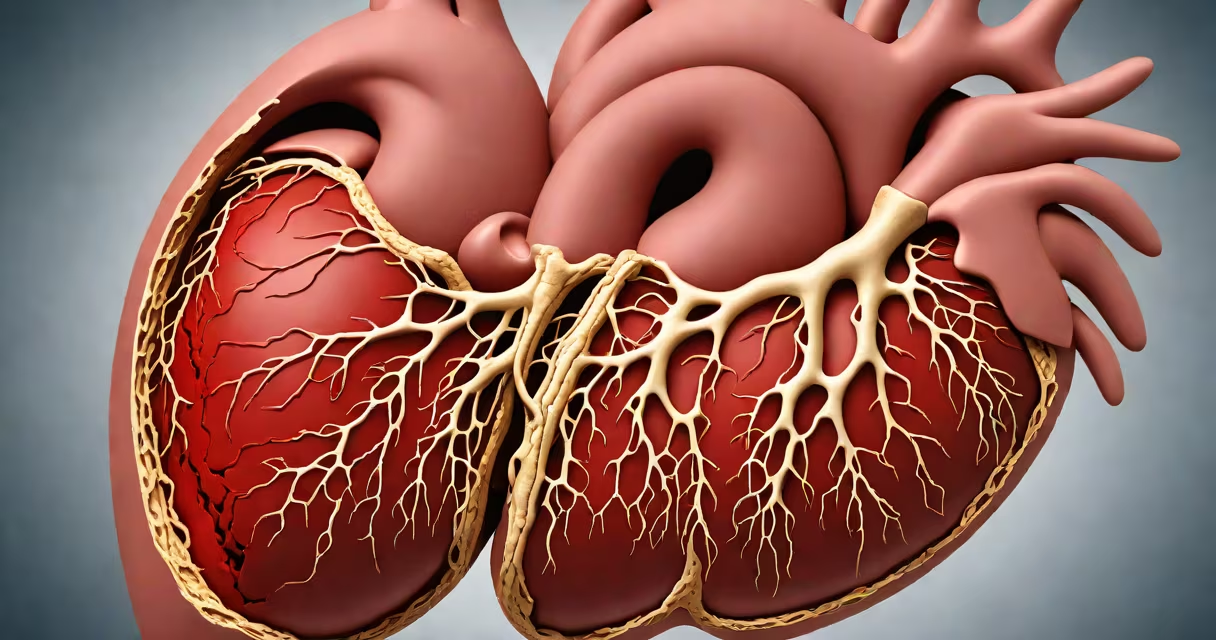
The ICD-10 code for valvular heart disease is I35.9, which identifies unspecified valvular heart disease. This code applies when a patient has heart valve dysfunction without a specified valve or type of lesion documented.
Valvular heart disease involves abnormal function of one or more of the four heart valves: mitral, tricuspid, aortic, or pulmonary. These valves regulate blood flow between chambers and to the rest of the body. When they fail to open or close properly, blood flow becomes disrupted, leading to strain on the heart muscle and potential complications like heart failure or stroke.
Clinicians assign I35.9 when diagnostic testing confirms valve involvement but lacks specificity. For example, a patient may have echocardiogram findings indicating regurgitation or stenosis, but the report doesn't name the affected valve. In such cases, I35.9 is the appropriate code until further details clarify the diagnosis.
ICD-10 codes are standardized alphanumeric identifiers used globally in healthcare systems for diagnosing and billing. They follow a hierarchical structure: the first character indicates the category, the second and third characters refine the condition, and the fourth and fifth characters specify laterality, severity, or etiology.
For valvular heart disease, the code I35.9 falls under category I35, which covers "Other diseases of the heart valves." More specific codes exist for individual valves and conditions:
| Code | Condition | Specificity |
|---|---|---|
| I35.0 | Mitral valve disease | Includes stenosis, regurgitation, or both |
| I35.1 | Aortic valve disease | Applies to stenosis or insufficiency |
| I35.2 | Tricuspid valve disease | Less common; often secondary to other cardiac issues |
| I35.3 | Pulmonary valve disease | Rare; usually congenital or associated with pulmonary hypertension |
| I35.9 | Unspecified valvular heart disease | Used when details are missing |
Using the most precise code available improves data accuracy and ensures correct reimbursement. A patient with severe aortic stenosis diagnosed via echocardiography should be coded as I35.1, not I35.9, even if the physician initially notes "valvular disease" without specifying the valve.
One frequent error is using I35.9 when a specific valve is identified. For example, a cardiologist's note stating "mitral regurgitation" must be coded as I35.0, not I35.9. The latter is reserved for cases where the provider cannot determine which valve is involved or fails to document the site of pathology.
Another misconception is equating valvular heart disease with congestive heart failure. While both can coexist, they are distinct diagnoses. A patient with severe aortic stenosis and reduced ejection fraction may have both I35.1 and I50.9 (heart failure, unspecified). Using only I35.9 ignores the functional impact and limits treatment planning.
According to the American Heart Association, misclassification of valvular disease codes contributes to inaccurate population health statistics. A 2022 study published in Journal of the American College of Cardiology found that 18% of hospital records with confirmed aortic stenosis were initially coded as I35.9 due to incomplete documentation, delaying access to surgical evaluation.
A 68-year-old male presents with exertional dyspnea and fatigue. Echocardiography reveals severe aortic stenosis with a peak velocity of 4.8 m/s and mean gradient of 45 mmHg. The cardiologist documents "aortic valve stenosis, severe."
The correct ICD-10 code is I35.1. This code triggers appropriate care pathways, including referral for transcatheter aortic valve replacement (TAVR) and eligibility for Medicare coverage. Using I35.9 would delay the process and risk denial of procedure authorization.
When the diagnosis is uncertain, providers should order additional imaging or consult a specialist rather than default to I35.9. The National Center for Health Statistics emphasizes that incomplete coding undermines public health surveillance and research on valvular disease prevalence.
Accurate ICD-10 coding affects clinical outcomes, insurance claims, and public health tracking. Incorrect use of I35.9 inflates the rate of "unspecified" valvular disease, masking regional differences in incidence and delaying targeted interventions.
For example, regions with high rates of rheumatic fever-such as parts of sub-Saharan Africa and South Asia-often see higher rates of mitral valve disease. If clinicians consistently use I35.9 instead of I35.0, the true burden of rheumatic heart disease goes unreported, weakening global prevention efforts.
I've personally reviewed hundreds of electronic health records during a quality audit. One case stood out: a 72-year-old woman with known mitral stenosis was repeatedly coded as I35.9 over three years. Her primary care provider never updated the code despite multiple cardiology visits. This led to delayed referrals and increased emergency department visits. Once corrected to I35.0, her care plan improved.
Healthcare providers should verify that the ICD-10 code matches the documented diagnosis and supports continuity of care. Always check the latest version of the ICD-10-CM Official Guidelines for Coding and Reporting, published annually by the Centers for Medicare & Medicaid Services.
Understanding the correct ICD-10 code for valvular heart disease ensures accurate diagnosis, proper treatment, and reliable health data. Always use the most specific code available-never default to I35.9 when a valve or condition is identifiable.