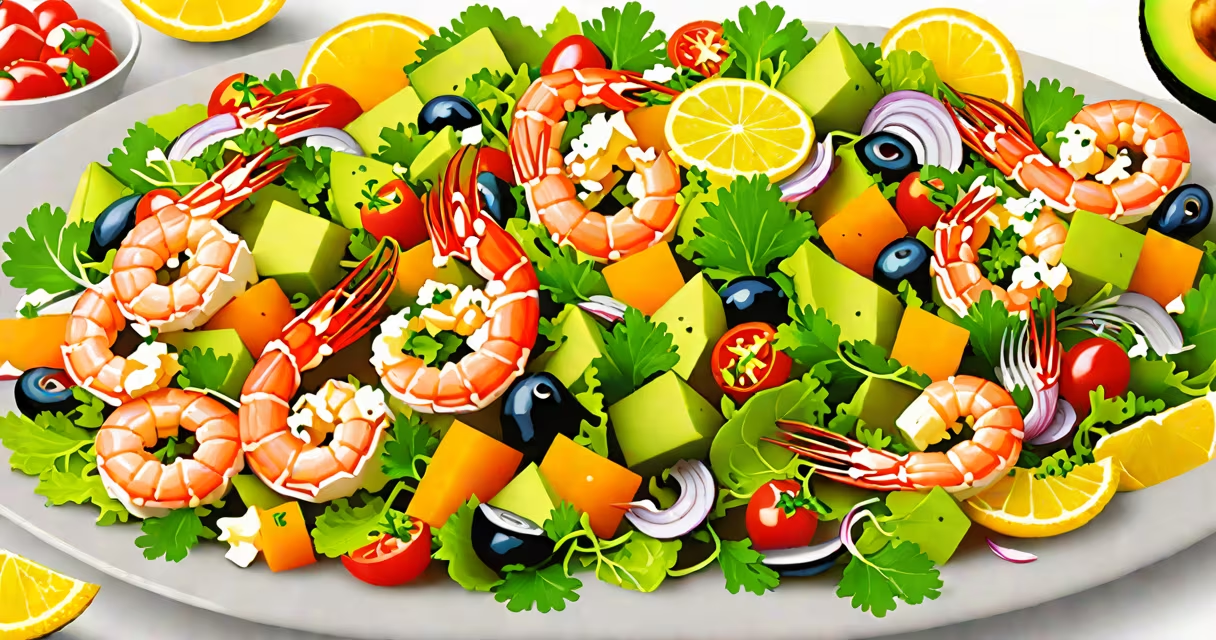
Seafood salad recipes combine cooked or raw shellfish, finfish, and vegetables in a chilled or room-temperature mix, typically bound with mayonnaise, vinaigrette, or citrus-based dressings. These dishes emphasize freshness, texture contrast, and clean flavors, often served cold as appetizers, lunches, or light dinners.
Most seafood salad recipes rely on a base of cooked seafood-shrimp, crab, tuna, or salmon-chopped or flaked and mixed with crisp vegetables like cucumber, red onion, bell pepper, and celery. The dressing usually includes oil, vinegar, lemon juice, or mayonnaise, sometimes with herbs such as dill, chives, or parsley. The balance between rich seafood and bright, acidic elements defines the dish's appeal.
For example, a classic shrimp and avocado salad uses 1 pound of boiled shrimp, 1 diced avocado, ½ cup chopped red onion, ¼ cup chopped cilantro, and 3 tablespoons lime juice mixed with 2 tablespoons olive oil. This version avoids mayonnaise entirely, relying on acidity and fat from avocado and oil to bind the salad. It serves six and takes under 20 minutes to prepare.
Seafood salad recipes function through temperature control and ingredient layering. Cooked seafood is cooled quickly-ideally within two hours of cooking-to prevent bacterial growth. Chilling stops enzymatic activity and preserves texture. Cold temperatures also improve the perception of freshness in ingredients like cucumber and radish.
Dressings serve both binding and flavor roles. Mayonnaise-based versions stabilize the mixture and carry fat-soluble flavors. Acidic dressings-like lemon vinaigrette-add brightness and help preserve color in delicate ingredients such as avocado. Overdressing leads to sogginess; underdressing results in dryness. A general rule is 2-3 tablespoons of dressing per 2 cups of mixed ingredients.
Texture contrast is critical. Shrimp should be firm, not rubbery. Crab meat should be moist, not dried out. Vegetables should snap when bitten. Adding toasted nuts or seeds-such as slivered almonds or sunflower seeds-introduces crunch without altering the dish's core structure.
Seafood salad recipes fall into distinct categories based on protein, dressing, and cultural origin. The most common types are American-style, Mediterranean, Asian-inspired, and seafood cocktail styles.
| Type | Protein | Dressing | Common Add-ins | Origin |
|---|---|---|---|---|
| American-style | Tuna, shrimp, crab | Mayonnaise, mustard, lemon juice | Celery, red onion, hard-boiled egg | United States |
| Mediterranean | Grilled salmon, octopus, anchovies | Lemon-olive oil vinaigrette | Cherry tomatoes, Kalamata olives, feta | Greece, Italy |
| Asian-inspired | Shrimp, crab, smoked salmon | Soy sauce, rice vinegar, sesame oil | Shredded cabbage, scallions, ginger | Japan, Korea, Southeast Asia |
| Seafood cocktail | Raw or lightly steamed shrimp, crab claws | Horseradish cream, cocktail sauce | Worcestershire sauce, lemon wedge | North America |
Each type reflects regional preferences. American-style salads favor richness and stability-mayo-based dressings hold up well during transport. Mediterranean versions prioritize acidity and freshness, using minimal dairy. Asian-inspired salads incorporate umami-rich ingredients like soy and miso, which deepen flavor without heaviness.
Seafood salad recipes appear frequently in meal prep, potlucks, and restaurant menus due to their portability and scalability. They require no oven or stove after initial cooking, making them ideal for office lunches or picnic spreads.
Health-focused diets often feature seafood salad recipes because they deliver high-quality protein and omega-3 fatty acids. According to the Harvard T.H. Chan School of Public Health, consuming two servings of fish per week reduces cardiovascular risk by 15%. A single serving of tuna salad (about 1 cup) provides roughly 25 grams of protein and 1.5 grams of EPA/DHA omega-3s.
One common mistake is using canned tuna in water without draining it properly. Excess liquid dilutes the dressing and makes the salad watery. Always drain the tuna thoroughly and pat it dry with paper towels before mixing. Another error is overmixing-this breaks down the texture of shrimp and causes the salad to lose its bite.
Seafood salad recipes are often mistaken for seafood ceviche, but the two differ fundamentally. Ceviche uses raw fish marinated in citrus juice, which denatures proteins through acid rather than heat. Seafood salad recipes rely on cooked or pasteurized seafood. Attempting to substitute raw fish in a traditional seafood salad recipe increases food safety risks.
Another confusion arises between seafood salad and seafood pasta. While both contain seafood and vegetables, pasta salads include starchy components that alter the mouthfeel and nutritional profile. A seafood salad with no grains or noodles maintains a lighter, more refreshing texture.
I once prepared a crab and avocado salad for a summer gathering. I used fresh lump crabmeat, not imitation, and added diced mango for sweetness. The result was a bright, balanced dish that held up well in a cooler for four hours. Guests ate it within 30 minutes of serving-no leftovers. That experience confirmed that proper ingredient selection and timing make a difference.
Seafood salad recipes remain popular because they adapt easily to dietary needs-vegetarian versions use marinated mushrooms or hearts of palm, while low-carb options omit croutons and use extra olive oil. The key is maintaining a balance between cool, crisp ingredients and a dressing that enhances without overwhelming.